





-
Recent Posts
- “My Partner Wants to Use WordPress Because 50% of the Web Uses It. Help!”
- Does EmDash Solve WordPress’s Problems, or Do You Need UltimateWB?
- How Not to Use AI: Stanford University Can Tell You
- Best Website Builder for SEO: WordPress vs. Wix vs. UltimateWB
- How to Make Sure Your Website Colors Have Enough Contrast for Accessibility
- Mobile-Friendly Website Checklist: 20 Things to Check
- Beehiiv Website Builder Review: The Problem Isn’t the Design – It’s the Lack of Control
- Elementor’s “Angie” AI Is More Than Bloat: Credits, Subscriptions, and a Growing Platform Problem
- How to Pass Google Business Profile Video Verification for Service Businesses
- The Great Deskilling: Why AI Dependence is Turning Developers into Prompt Babysitters
- The Three-Month Fuse: The Everest Forms Pro Attack and Why a Patched Plugin Can Still Put Websites at Risk
- Computer Screen Has Black Bars on the Sides: How to Fix It
- Could AI Make Humans Extinct Within the Next Decade?
- Is Weebly Getting Out of the Website-Builder Business?
- Are You “Leaking SEO” by Linking to Other Websites?
- Wix Harmony Is Now in Google Gemini. So Why Are Users Still Complaining?
- When AI Sounds Confident but Gets It Wrong: The Mount Shasta Rescue
- When AI Agents Start Working Together, Who Is Really in Control?
Categories
Tag Archives: structured data
The Airtable Acquisition Raises a Bigger Question: Do You Really Own the Software Your Business Runs On?

When software becomes deeply embedded in a business, it can stop feeling like software.
It becomes infrastructure.
Your data is there. Your workflows are there. Your employees know how to use it. Your automations run in the background. Your business processes have gradually been shaped around it.
Then the company behind the software gets acquired.
Suddenly, questions that once seemed theoretical become very practical:
What happens to the pricing?
What happens to the features you depend on?
What happens to
... Continue reading
Posted in Technology in the News
Tagged acquisition, airtable, bending spoons, csv export, culture, database, database access, Evernote, export data, Filmic, hosted platform, hosted platforms vs self-hosted, infrastructure, Meetup, mission, mysql, ownership, PostgreSQL, saas, structured data, tech industry, vimeo, WeTransfer, WordPress
Leave a comment
How to Use Google Search Console’s New Generative AI Data to Improve Your SEO

If you run a website, you’ve probably noticed a massive shift in how people find information online. Between AI Overviews at the top of search results and interactive search interfaces like AI Mode, traditional organic search traffic patterns are changing fast.
For a long time, site owners had no clear way to measure this visibility. Google addressed this gap by introducing dedicated Generative AI performance reporting inside Google Search Console (GSC). If the update has rolled out to your Search
... Continue reading
Posted in AI, Search Engine Optimization (SEO)
Tagged AI crawling, ai impressions, ai mode, ai overviews, AI visibility, clicks, crawlers, ctr, Generative AI performance, Google Search Console, Googlebot, gsc, headings, indexing, keyword research, keyword stuffing, keyword targeting, organic traffic, page structure, schema markup, search engine results, search performance, seo, seo strategy, serps, structured data, user experience
Leave a comment
Paying $10,000 a Month for SEO? Here’s How to Tell If You’re Getting Your Money’s Worth

SEO can be expensive.
It's not uncommon for businesses to pay anywhere from a few hundred dollars to well over $10,000 per month for SEO services. Large companies in highly competitive industries often spend even more.
So is that money well spent?
Sometimes, absolutely.
Other times... not so much.
The difference usually isn't the price - it's whether the work being done actually moves the business forward.
A recent discussion on an online marketing forum caught our attention. An in-house
... Continue reading
Posted in Search Engine Optimization (SEO)
Tagged authority, backlinks, bloat, clean code, crawl errors, duplicate content, fast website, google analytics, Google Search Console, high-quality content, internal links, keyword tracking, mobile usability, mobile-friendly, page speed, search intent, search intent match, seo, seo packages, seo pricing, seo services, structured data, technical seo, third-party plugins, user experience
Leave a comment
Do I have to keep adding content for SEO?

"Ask David" Question: "I’ve launched my website and have been focusing on SEO. Do I have to keep adding new content constantly to maintain my search engine ranking and traffic?"
Quick Take:
No - you don’t have to publish new content constantly to maintain traffic. Updating your existing pages, optimizing technical SEO, and building quality backlinks can preserve or even grow your rankings. Fresh content helps, but it’s just one piece of the puzzle.
Detailed Answer:
1. Updating vs.
... Continue reading
Posted in Ask David!, Search Engine Optimization (SEO), Web Content, Website Traffic
Tagged authority, backlinks, build backlinks, clear navigation, easy navigation, engagement, engagement signals, fresh content, high-quality content, keyword targeting, mobile optimization, mobile-friendly, performance, readability, responsive, responsive design, search engine optimization, seo, site speed, structured data, technical seo, user experience, website content
Leave a comment
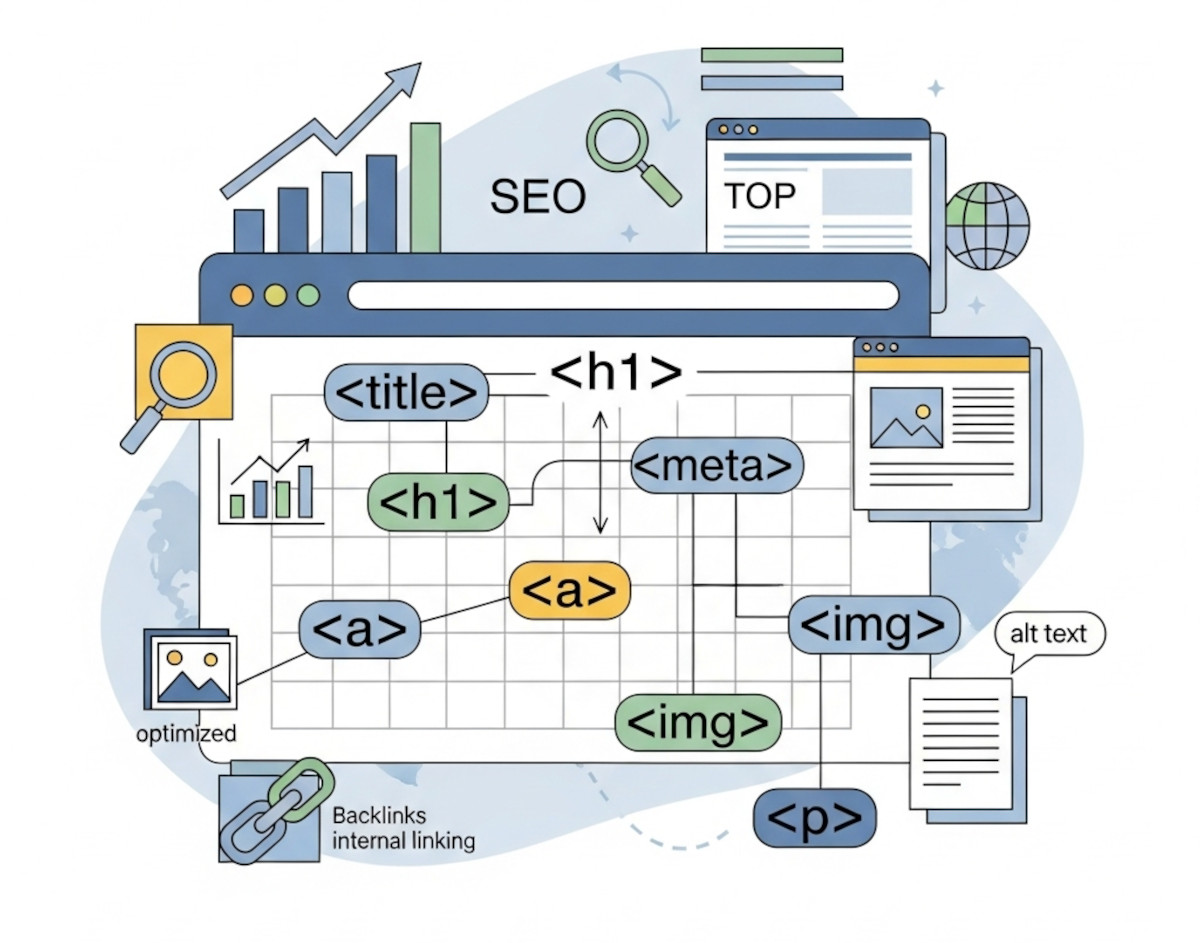
How Clean HTML Can Boost Your SEO (Even Without Coding)

Simple HTML structure tips that can help your site rank better - no coding required
When it comes to SEO, most people think about keywords, backlinks, and blog content. But one of the most overlooked factors behind how your site ranks is the HTML structure.
Even if you’re using a website builder like UltimateWB and never write a line of code, the way your HTML is set up still matters - a lot. The awesome thing
... Continue reading
Posted in Search Engine Optimization (SEO)
Tagged accessibility, alt tag, authority, backlinks, bold, boost traffic, build trust, clean code, click-through rate, ctr, emphasized content, external links, footer, header, headings, high-quality content, html, internal links, italic, keywords, meta description, nav, search engine optimization, search engine ranking, section, semantic tags, seo, structured data, title tag, user experience, valid html
Leave a comment
Best Website Builder for Developers – PHP/MySQL Flexibility with UltimateWB

If you're a developer, you've probably been frustrated by the limitations of most no-code website builders. They’re great for beginners, but when it comes to custom functionality - like PHP scripting, MySQL integration, or direct database access - they hit a wall fast.
Whether you're building a website for a client or launching your own project, you shouldn’t have to choose between convenience and control.
... Continue reading
Posted in Compare Website Builders
Tagged analytics, bloat, clean code, clean urls, cms, coders, css, custom code, database, drag-and-drop alternative, drag-and-drop website builder, dreamweaver, dreamweaver alternative, dreamweaver vs ultimatewb, fast loading times, fast web hosting, fast-loading website, flexibility, friendly urls, html, meta description, meta title, mobile-friendly, mysql, performance, php, plugins, request features, responsive, responsive design, scalability, schema, search engine optimization, seo, squarespace, structured data, ui, user interface, user-friendly, web developer, web hosting, web hosting choice, webflow, webp, webp converter, website speed, weebly, Wix, WordPress
Leave a comment
AIO vs GEO vs SEO: What’s the Difference – and How to Optimize for All Three

If you’ve been online lately and you're a web dev like me, you’ve probably heard a lot of hype around AIO (AI Optimization) and GEO (Generative Engine Optimization). These buzzwords are being tossed around as the "new SEO" — but what do they actually mean? And how do they differ practically from traditional SEO?
If you’ve found yourself scratching your head, this post is for you. Let's break it down and get real about what AIO/GEO mean, how
... Continue reading
Posted in Search Engine Optimization (SEO)
Tagged ai optimization, AI tools, AI-generated content, ai-generated snippets, aio, author, authority, authority signals, backlinks, brand mentions, brand visibility, chatgpt, content clustering, faq, faq sections, featured snippets, forums, generative engine optimization, geo, google ai overviews, Google Business Profile, Google rich snippets, google's ai overview, headings, high-quality content, how-to, internal linking, internal links, keyword research, large language models, llm, mobile friendly, natural language, new seo, organization, perplexity.ai, quora, reddit, responsive, responsive app, schema, schema markup, schema.org, search engine optimization, search engines, seo, structured data, subheadings, technical performance, title tag, topical authority, trust, usability, visibility, website speed, wikidata, wikipedia
Leave a comment
Why Is Google Showing a Competitor’s Website for My Brand Name?

And How to Fix It with SEO & Branding Strategies
When users search for your company name, the last thing you want is for a competitor’s site to show up instead. But that’s exactly what can happen if your brand is new, lesser known, or has a name that’s similar to a larger competitor. A good reason not to choose a similar name even if the trademark rules don't prevent you.
Google’s algorithm often tries to “help” users by showing
... Continue reading
Posted in Search Engine Optimization (SEO)
Tagged backlinks, bounce rate, brand identity, brand signals, branding, breadcrumblist schema, build backlinks, community forums, email newsletters, engagement, forums, google, google ads, google ranking, google search, headers, headings, high-quality content, keyword stuffing, meta description, organic seo, organic traffic, organization schema, page title, ranking signal, schema, schema markup, search engine optimization, search engine ranking, search engine results, seo, seo strategies, seo tipes, social media, socialprofile schema, spammy, structured data, subheadings, trust, typo, user behavior, visibility, website schema
Leave a comment
Can You Increase Organic Traffic Without Building Backlinks? Yes – Here’s How

You’ve probably heard the phrase “content is king” - and it’s true. High-quality content is the foundation of any successful SEO strategy. But many SEO experts still emphasize backlinks as a critical ranking factor. So it’s natural to wonder: Can you increase organic traffic without building backlinks at all?
The answer is yes.
... Continue reading
Posted in Ask David!, Search Engine Optimization (SEO)
Tagged authority, backlinks, boost visibility, bounce rate, convert traffic, easy navigation, engagement, fast loading times, google algorithm, google search autocomplete, Google’s Structured Data Markup Helper, improve visibility, internal links, keywords everywhere, long-tail keywords, metadata, mobile-friendly, on-page seo, organic traffic, responsive, responsive app, rich results, rich snippets, schema markup, search engine optimization, seo, social media, social media signals, structured data, time on site, topical authority, ubersuggest, user experince, value, visibility, visit duration, webp, webp converter, website structure
Leave a comment
SEO Best Practices in 2026: What Has Changed and What Still Matters

Search Engine Optimization (SEO) has changed considerably over the years. Search engines have become much better at understanding language, context, and user intent, while AI is changing how people search and how search results are presented.
But that doesn't mean the fundamentals of SEO have disappeared.
A fast, accessible website with useful, original content, clear organization, and a good user experience is still a strong foundation for search visibility. What has changed is how you approach those fundamentals and how
... Continue reading
Posted in Search Engine Optimization (SEO)
Tagged accessibility, ai-driven algorithms, ai-driven seo, authority, average session duration, backlinks, bert, bounce rate, build trust, click-through rates, closed captions, context, core web vitals, ctr, domain authority, EAT, eat algorithm, engagement metrics, expertise, fast-loading times, google my business, google rankbrain, high-quality content, hyper-local targeting, hyper-localization, interactivity, loading speed, local businesses, local pack, local seo, long-tail keywords, mobile-first indexing, natural language process, nlp, page speed, page views per session, pagespeed insgihts, responsive, responsive app, rich media snippets, rich snippets, schema markup, search engine algorithm, search engine optimization, search engine ranking, search intent, seo, seo tips, serps, structured data, tiktok, trustworthiness, user engagement signals, user experience, user reviews, ux, video content, video search engine optimization, visibility, visual content, visual stability, voice queries, voice search, voice search results, vseo, youtube
Leave a comment