






-
Recent Posts
- “My Partner Wants to Use WordPress Because 50% of the Web Uses It. Help!”
- Does EmDash Solve WordPress’s Problems, or Do You Need UltimateWB?
- How Not to Use AI: Stanford University Can Tell You
- Best Website Builder for SEO: WordPress vs. Wix vs. UltimateWB
- How to Make Sure Your Website Colors Have Enough Contrast for Accessibility
- Mobile-Friendly Website Checklist: 20 Things to Check
- Beehiiv Website Builder Review: The Problem Isn’t the Design – It’s the Lack of Control
- Elementor’s “Angie” AI Is More Than Bloat: Credits, Subscriptions, and a Growing Platform Problem
- How to Pass Google Business Profile Video Verification for Service Businesses
- The Great Deskilling: Why AI Dependence is Turning Developers into Prompt Babysitters
- The Three-Month Fuse: The Everest Forms Pro Attack and Why a Patched Plugin Can Still Put Websites at Risk
- Computer Screen Has Black Bars on the Sides: How to Fix It
- Could AI Make Humans Extinct Within the Next Decade?
- Is Weebly Getting Out of the Website-Builder Business?
- Are You “Leaking SEO” by Linking to Other Websites?
- Wix Harmony Is Now in Google Gemini. So Why Are Users Still Complaining?
- When AI Sounds Confident but Gets It Wrong: The Mount Shasta Rescue
- When AI Agents Start Working Together, Who Is Really in Control?
Categories
Tag Archives: subheadings
How to Optimize Your Webpages So They Get Found by Search Engines and AI (LLMs)?

If you want your website to get noticed online, it’s important to make sure it’s easy to find and understand - not just by search engines like Google, but also by the latest AI technologies powered by something called large language models, or LLMs for short.
These LLMs - including well-known ones like OpenAI’s GPT-4 (used in ChatGPT), Google’s Gemini, Anthropic’s Claude, and Meta’s LLaMA - are advanced AI systems that read and interpret text on the web to answer
... Continue reading
Posted in AI, Ask David!, Search Engine Optimization (SEO)
Tagged accessibility, ai, anthropic, chatgpt, claude, faq, fast loading times, fast website, fresh content, gemini, Google Search Console, google search engine ranking, headings, high-quality conetnt, keywords, llama, llm, meta, meta description, meta tags, meta title, mobile-friendly, OpenAI, responsive, responsive app, schema markup, search snippets, structure, subheadings, trustworthy, usability
Leave a comment
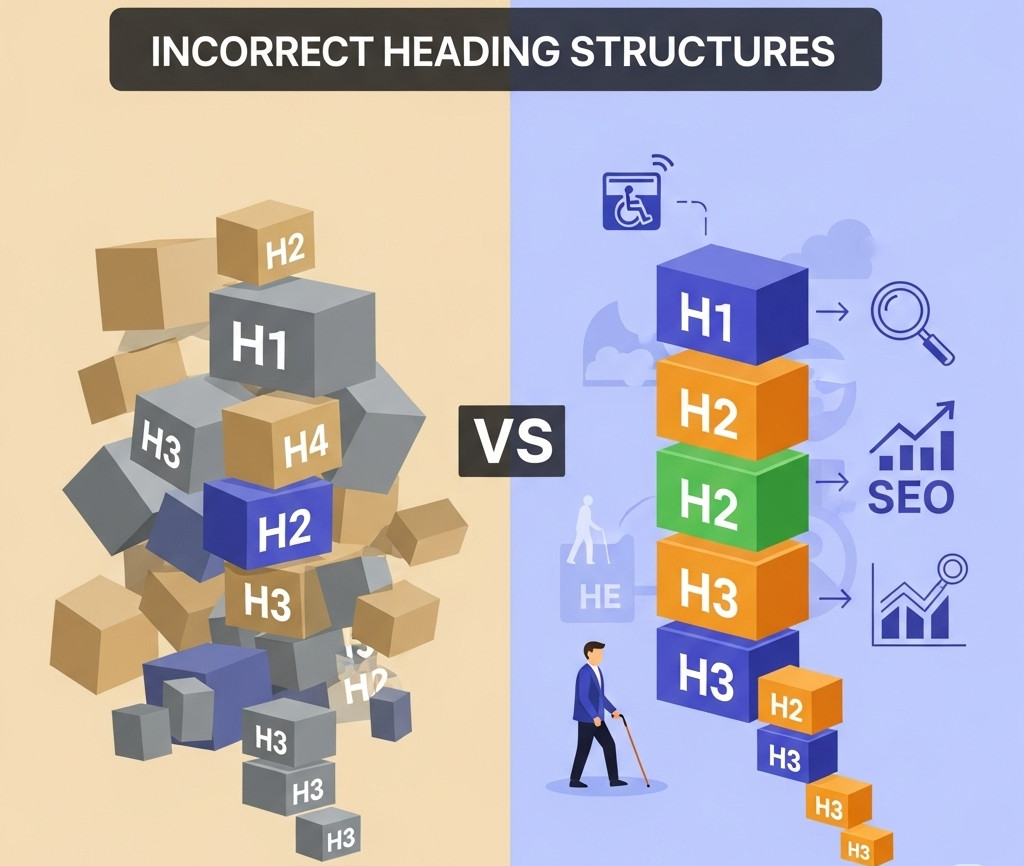
Why an H1 Shouldn’t Come After an H3 – And Why It Matters for SEO and Accessibility

When you're building a website, it's easy to focus on how things look - but how your site is structured under the hood is just as important. One commonly overlooked issue? Incorrect heading order.
We recently came across a website where the first visible heading was an <h3>, and the <h1> appeared after it. While it might not break the layout or cause visible problems, this kind of structure can negatively impact both SEO and accessibility. Here’s why heading
... Continue reading
Posted in Accessibility, Search Engine Optimization (SEO), Website Design
Tagged accessibility, accessibility compliance, assistive technologies, better indexing, clean code, compliance, easy navigation, focus, header, heading, heading order, heading tags, hierarchical structure, hierarchy, indexing, keyword relevance, logical hierarchy, main heading, page quality signals, performance, roadmap, screen readers, search engine optimization, search engine ranking, search engine results, search engines, semantic markers, seo, seo signals, snippets, standards-compliant, subheadings, usability, user experience, visibility, web standards, website structure
Leave a comment
AIO vs GEO vs SEO: What’s the Difference – and How to Optimize for All Three

If you’ve been online lately and you're a web dev like me, you’ve probably heard a lot of hype around AIO (AI Optimization) and GEO (Generative Engine Optimization). These buzzwords are being tossed around as the "new SEO" — but what do they actually mean? And how do they differ practically from traditional SEO?
If you’ve found yourself scratching your head, this post is for you. Let's break it down and get real about what AIO/GEO mean, how
... Continue reading
Posted in Search Engine Optimization (SEO)
Tagged ai optimization, AI tools, AI-generated content, ai-generated snippets, aio, author, authority, authority signals, backlinks, brand mentions, brand visibility, chatgpt, content clustering, faq, faq sections, featured snippets, forums, generative engine optimization, geo, google ai overviews, Google Business Profile, Google rich snippets, google's ai overview, headings, high-quality content, how-to, internal linking, internal links, keyword research, large language models, llm, mobile friendly, natural language, new seo, organization, perplexity.ai, quora, reddit, responsive, responsive app, schema, schema markup, schema.org, search engine optimization, search engines, seo, structured data, subheadings, technical performance, title tag, topical authority, trust, usability, visibility, website speed, wikidata, wikipedia
Leave a comment
Why Is Google Showing a Competitor’s Website for My Brand Name?

And How to Fix It with SEO & Branding Strategies
When users search for your company name, the last thing you want is for a competitor’s site to show up instead. But that’s exactly what can happen if your brand is new, lesser known, or has a name that’s similar to a larger competitor. A good reason not to choose a similar name even if the trademark rules don't prevent you.
Google’s algorithm often tries to “help” users by showing
... Continue reading
Posted in Search Engine Optimization (SEO)
Tagged backlinks, bounce rate, brand identity, brand signals, branding, breadcrumblist schema, build backlinks, community forums, email newsletters, engagement, forums, google, google ads, google ranking, google search, headers, headings, high-quality content, keyword stuffing, meta description, organic seo, organic traffic, organization schema, page title, ranking signal, schema, schema markup, search engine optimization, search engine ranking, search engine results, seo, seo strategies, seo tipes, social media, socialprofile schema, spammy, structured data, subheadings, trust, typo, user behavior, visibility, website schema
Leave a comment
Web Design Fundamentals: A Comprehensive Guide

Introduction
Web design is always evolving, combining creativity, usability, and functionality to build websites that are not just visually appealing, but also easy to use and effective. Whether you're a beginner or an experienced designer looking to refine your skills, understanding the fundamentals of web design is crucial. In this guide, we will explore key concepts and best practices that are
... Continue reading
Posted in Website Design
Tagged accessibility, alt text, aria labels, brand identity, branding, build trust, call to action, color psychology, color scheme, color theory, colors, consistency, contrast, contrasting color, cta, digestible content, easy navigation, fast loading times, font sizes, fonts, goals, header tags, headings, line spacing, logo, mobile friendly, paragraph length, purpose, responsive, responsive app, search engine optimization, search engine ranking, seo, short paragraphs, styles manager, subheadings, target audience, typography, user engagement, user experience, user-centered design, user-friendly, ux, ux design, visual hierarchy, website goals, whitespace
Leave a comment
Best Practices for Improving Search Engine Visibility

Here are some specific best practices you can incorporate into your SEO strategy:
On-Page Optimization
- Keyword Placement: Strategically place your target keywords in your page title, meta description, headings, and body content. Avoid keyword stuffing.
- Content Quality: Create high-quality, informative, and engaging content that meets the search intent of your target audience.
- Page Structure: Use a clear and logical structure with headings and subheadings to improve readability and search engine understanding.
- Image Optimization: Use descriptive alt text for images, compress
Posted in Search Engine Optimization (SEO)
Tagged alt tags, baclinks, clean urls, compress images, fast loading times, headings, high-quality content, image optimization, local seo, mobile friendly, off-page seo, on-page optimization, on-page seo, page speed, page structure, pretty urls, sitemap, sitemap generator, social media, subheadings, target keywords, technical seo, url structure, xml, xml sitemap
Leave a comment
How long is too long for a website homepage?

The ideal length for a website homepage depends on several factors:
- Purpose of the website: A website with a single-page application (SPA) might have a longer homepage, while a traditional website with multiple pages might have a shorter homepage.
- Content: The amount and complexity of content will determine the length. A website with a lot of information or multimedia might require a longer homepage.
- User experience: A long homepage can be overwhelming for users. It's important to break up
Posted in Ask David!, Website Design
Tagged clear, clear content, didn't read, headings, homepage, multi-page website, one-page website, page length, read more, subheadings, too long, user experience, visuals
Leave a comment
What Makes Website Content “High-Quality”? 6 Essential Search Standards

"Ask David!" question: "How do I know if my website content is 'high-quality content'? I want to rank high in Google and get a lot of website traffic."
When managing a site, creating content that actually ranks on search engines and converts visitors comes down to one core factor: quality. Search engine algorithms - specifically Google’s Search Essentials and Quality Rater Guidelines - focus heavily on Experience, Expertise, Authoritativeness, and Trustworthiness (E-E-A-T).
Whether you are launching a new site or
... Continue reading
Posted in Ask David!, Search Engine Optimization (SEO), Web Content
Tagged accuracy, alt tags, and Trustworthiness, ask david, authoritativeness, build trust, clarity, clean code, E-E-A-T, engaging ontent, experience, expertise, factuality, fast website, fresh content, Google’s Search Essentials, headings, high-quality content, high-quality images, interactive, internal links, keyword stuffing, polls, Quality Rater Guidelines, search engine optimization, search intent, seo, subheadings, target keywords
Leave a comment