





-
Recent Posts
- “My Partner Wants to Use WordPress Because 50% of the Web Uses It. Help!”
- Does EmDash Solve WordPress’s Problems, or Do You Need UltimateWB?
- How Not to Use AI: Stanford University Can Tell You
- Best Website Builder for SEO: WordPress vs. Wix vs. UltimateWB
- How to Make Sure Your Website Colors Have Enough Contrast for Accessibility
- Mobile-Friendly Website Checklist: 20 Things to Check
- Beehiiv Website Builder Review: The Problem Isn’t the Design – It’s the Lack of Control
- Elementor’s “Angie” AI Is More Than Bloat: Credits, Subscriptions, and a Growing Platform Problem
- How to Pass Google Business Profile Video Verification for Service Businesses
- The Great Deskilling: Why AI Dependence is Turning Developers into Prompt Babysitters
- The Three-Month Fuse: The Everest Forms Pro Attack and Why a Patched Plugin Can Still Put Websites at Risk
- Computer Screen Has Black Bars on the Sides: How to Fix It
- Could AI Make Humans Extinct Within the Next Decade?
- Is Weebly Getting Out of the Website-Builder Business?
- Are You “Leaking SEO” by Linking to Other Websites?
- Wix Harmony Is Now in Google Gemini. So Why Are Users Still Complaining?
- When AI Sounds Confident but Gets It Wrong: The Mount Shasta Rescue
- When AI Agents Start Working Together, Who Is Really in Control?
Categories
Tag Archives: keywords
Why Have My Indexed Pages on Google Decreased? (Real Causes + Fixes Most Sites Miss)

Seeing your indexed pages drop in Google can feel like your website is quietly disappearing.
One day everything looks stable… the next, your index count is down - and you’re left wondering if your rankings are about to follow.
If you’re asking “Why have my indexed pages on Google decreased?”, here’s the reality:
This is common - but it’s not random.
Google doesn’t just “lose” pages. When your indexed count drops, it’s almost always the result of a decision
... Continue reading
Posted in Ask David!, Search Engine Optimization (SEO)
Tagged broken links, cannibalization, canonicalization, crawl efficiency, crawlability, crawled, disallow, duplicate content, engagement, google search engine ranking, indexed pages, indexing, internal links, keywords, noindex, noindex tags, not indexed, redirect chains, redirect loops, redirect url, relevance, reliability, robots.txt, search engine optimization, seo, sitemap, slow website, target keywords, thin pages, trust, user intent, wasted crawl budget
Leave a comment
How Fast Can Traffic Grow From Only SEO?

If you’ve launched a website and decided to rely only on SEO, you’re probably asking the same question many founders quietly worry about:
Is this growth normal… or am I stuck?
Maybe your site has been live for a month or two. You haven’t promoted it. No ads. No social pushes. Just search traffic. Organic traffic. You’re seeing a few hundred users trickle in, engagement looks good, and things are slowly climbing - but you don’t know what
... Continue reading
Posted in Search Engine Optimization (SEO), Website Traffic
Tagged bloat, bounce rate, build trust, clarity, core web vitals, engagement, engagement metrics, fast loading, fast loading times, fast website, Google Search Console, javascript, keywords, kiss, organic traffic, plugins, search engine optimization, search intent, seo, SEO metrics, simple website design, thin pages, third party plugins, traffic
Leave a comment
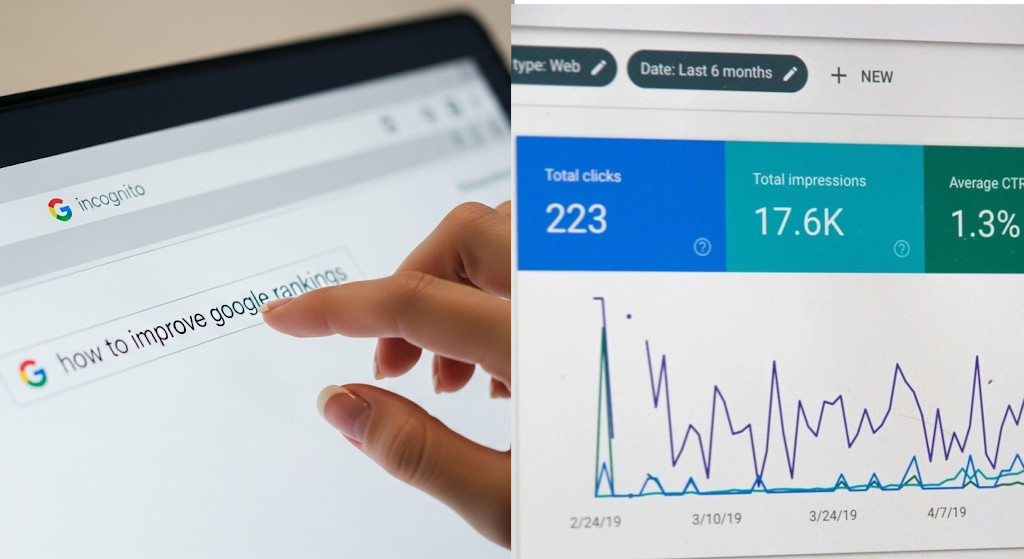
How to Check How Your Web Page or Blog Post is Ranking in Google

If you’ve published a web page or blog post, knowing how it’s performing in search engines is key to improving traffic and SEO. Fortunately, there are several ways to check your ranking. This guide will walk you through the most effective methods.
1. Use Google Search to Check Rankings: Manual Tracking
The simplest way to see how your web page or blog post is performing is to search for it directly. This also allows you to track rankings over
... Continue reading
Posted in Search Engine Optimization (SEO), Website Traffic
Tagged ahrefs, average position, backlinks, blog post ranking, boost traffic, clear cache, click-through rate, clicks, content marketing, content strategy, ctr, featured snippets, google analytics, Google Search Console, google search engine ranking, gsc, impressions, incognito, keyword performance, keyword rankings, keyword tracking, keywords, moz, organic traffic, personalized search, private browsing window, queries, semrush, seo tips, seo tools, target keywords, ubersiggest, web page ranking, website traffic
Leave a comment
‘SEO Optimization’: Redundant Buzz Word or Ranking Secret?

“SEO optimization.” Say it out loud. Doesn’t it sound like saying “PIN number” or “ATM machine”? That’s because it is - SEO already means Search Engine Optimization, so adding “optimization” again is technically repeating yourself.
But here’s the twist: tons of people actually search for “SEO optimization.” Because it’s so common, if you want to get found by those people, you need to write and rank for that phrase too.
Why Do People Say “SEO Optimization”?
It’s simple. SEO
... Continue reading
Posted in Search Engine Optimization (SEO)
Tagged acronym, backlinks, boost ranking, boost traffic, fast website, google search engine ranking, high-quality content, keywords, mobile-friendly, organic traffic, redundant, responsive, responsive app, search engine optimization, search engine ranking., search engine results, seo, seo optimization, seo tips, useful content
Leave a comment
How to Optimize Your Webpages So They Get Found by Search Engines and AI (LLMs)?

If you want your website to get noticed online, it’s important to make sure it’s easy to find and understand - not just by search engines like Google, but also by the latest AI technologies powered by something called large language models, or LLMs for short.
These LLMs - including well-known ones like OpenAI’s GPT-4 (used in ChatGPT), Google’s Gemini, Anthropic’s Claude, and Meta’s LLaMA - are advanced AI systems that read and interpret text on the web to answer
... Continue reading
Posted in AI, Ask David!, Search Engine Optimization (SEO)
Tagged accessibility, ai, anthropic, chatgpt, claude, faq, fast loading times, fast website, fresh content, gemini, Google Search Console, google search engine ranking, headings, high-quality conetnt, keywords, llama, llm, meta, meta description, meta tags, meta title, mobile-friendly, OpenAI, responsive, responsive app, schema markup, search snippets, structure, subheadings, trustworthy, usability
Leave a comment
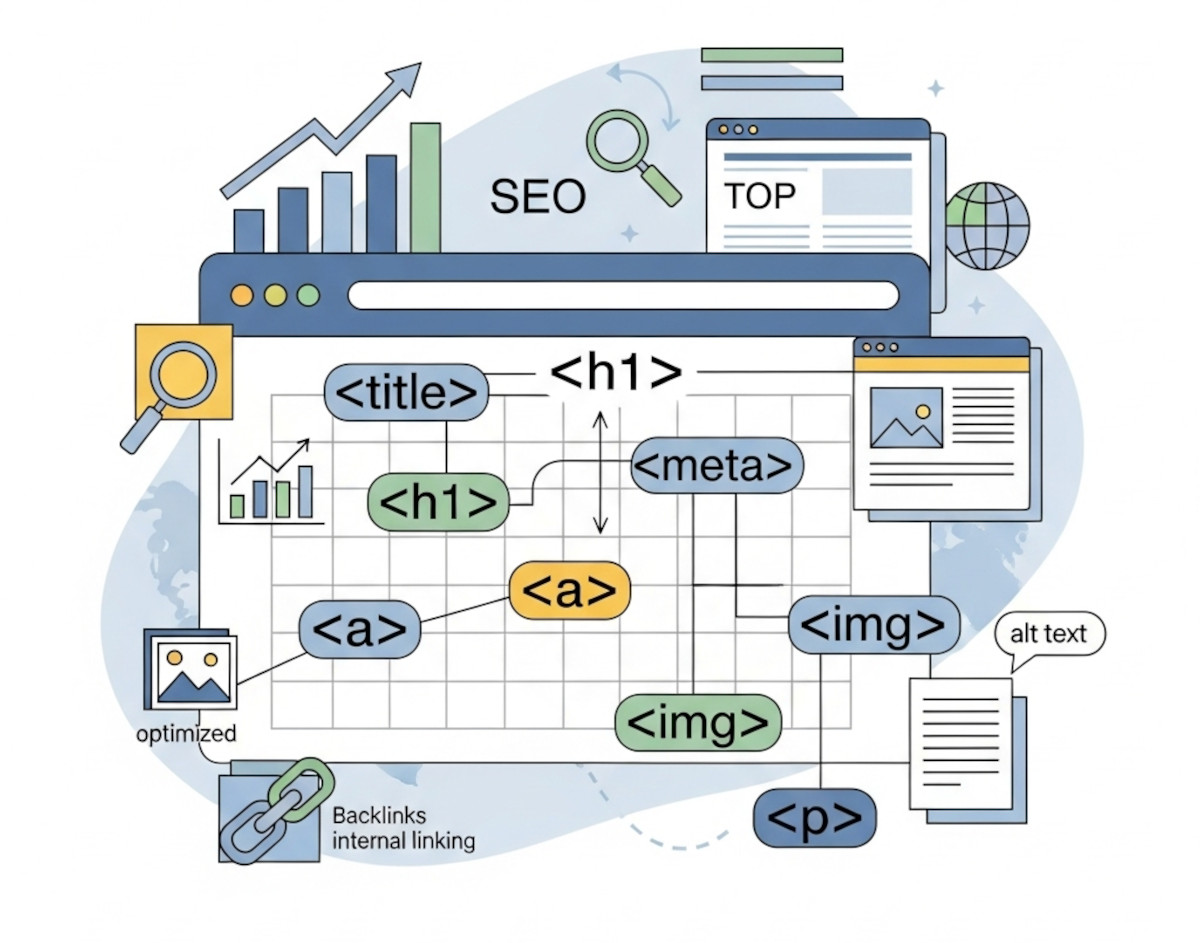
How Clean HTML Can Boost Your SEO (Even Without Coding)

Simple HTML structure tips that can help your site rank better - no coding required
When it comes to SEO, most people think about keywords, backlinks, and blog content. But one of the most overlooked factors behind how your site ranks is the HTML structure.
Even if you’re using a website builder like UltimateWB and never write a line of code, the way your HTML is set up still matters - a lot. The awesome thing
... Continue reading
Posted in Search Engine Optimization (SEO)
Tagged accessibility, alt tag, authority, backlinks, bold, boost traffic, build trust, clean code, click-through rate, ctr, emphasized content, external links, footer, header, headings, high-quality content, html, internal links, italic, keywords, meta description, nav, search engine optimization, search engine ranking, section, semantic tags, seo, structured data, title tag, user experience, valid html
Leave a comment
Do You Really Need a Website to Start a Business in 2025?

These days, it’s not unusual to see people running businesses entirely through social media. Platforms like Instagram, TikTok, and Facebook make it easy to share products, message customers, and even accept payments.
So if that’s possible, is a website still necessary?
This is something a lot of new entrepreneurs are thinking about. And while there’s no one-size-fits-all answer, there are some key reasons many businesses still choose to build a website - whether it’s on day one or
... Continue reading
Posted in Ask David!, Business, Social Media
Tagged backlnks, bloat, boost ranking, branding, build trust, caching, call to action, cdn, clean coding, clean design, credibility, easy navigation, facebook, fast website, google search engine ranking, headings, high-quality content, instagram, keywords, landing page, mobile friendly, responsive, responsive app, scalable, scalable website builder, search engine optimization, seo, social media, tiktok, website speed
Leave a comment
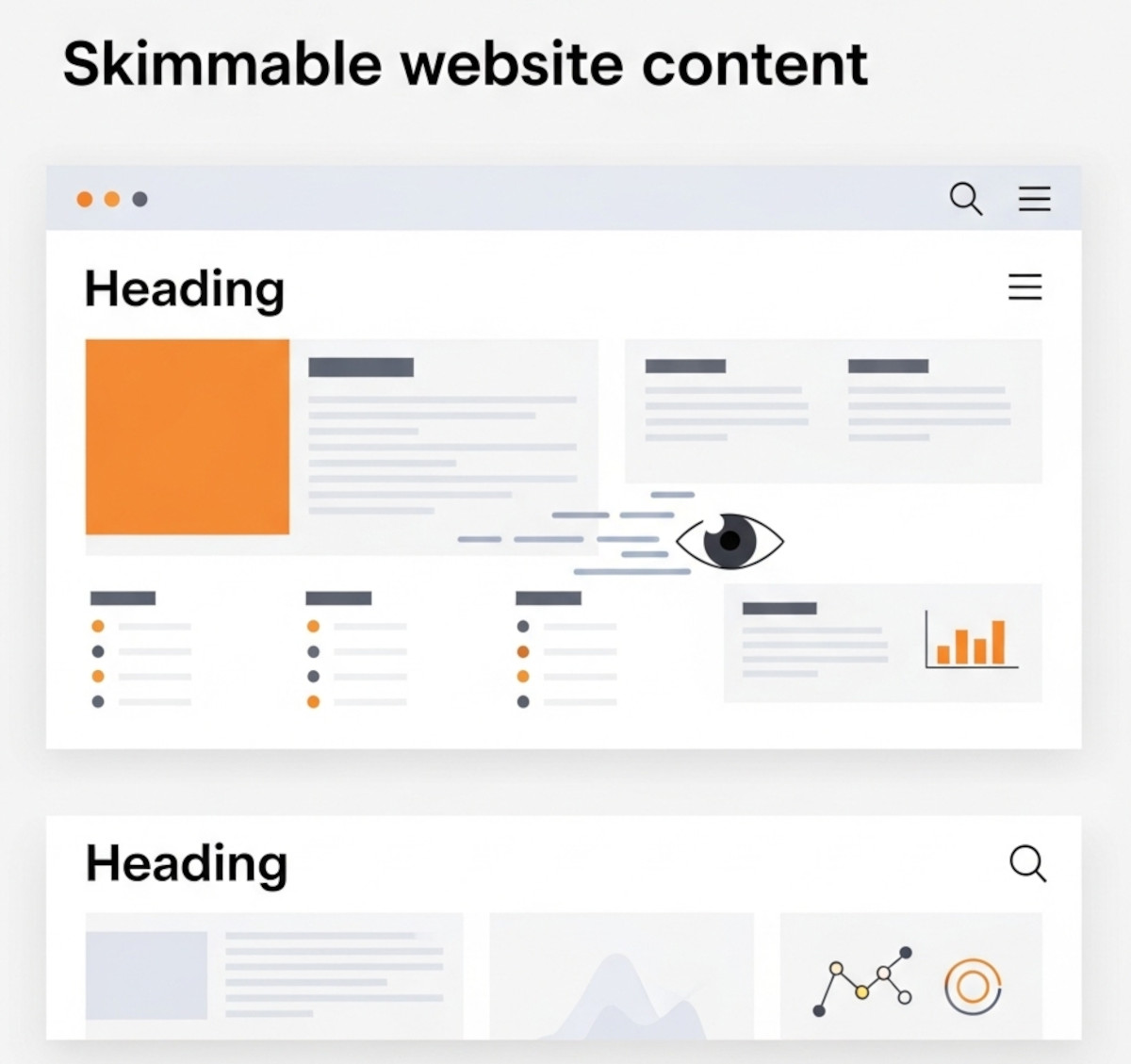
Make Your Website Content Skimmable: Boost Engagement and User Experience

Users rarely read every word on a webpage. Instead, they scan and skim content to quickly find the information they need. If your website content isn’t easy to skim, visitors might get frustrated and leave - fast.
That’s why skimmable formatting is one of the most powerful tools for website owners, designers, and content creators. It improves readability, user experience, and even SEO. At UltimateWB, we believe your website deserves to be easy to read and engaging
... Continue reading
Posted in Search Engine Optimization (SEO), Web Content
Tagged accessibility, bold, boost seo, bounce rates, bullet points, calls to action, cta, engagement, headers, headings, icons, images, infographics, italic, keywords, mobile readability, numbered lists, readability, screen readers, search engine optimization, seo, skimmable content, skimmable formatting, user experience, visual breaks, white space
Leave a comment
How to Set Up Google Search Console for Your Website: A Step-by-Step Guide

If you’re looking to improve your website’s visibility in Google search results, Google Search Console is one of the most important tools you can use - and it’s free.
In this guide, we’ll walk you through how to set up Google Search Console for your website, so you can start tracking performance, identifying issues, and optimizing for better search rankings.
🧰 What Is Google Search Console?
Google Search Console (GSC) is a free service offered by Google that helps you
... Continue reading
Posted in Search Engine Optimization (SEO), Website Traffic
Tagged backlinks, clicks, core web vitals, crawl errors, drive traffic, Google Search Console, gsc, impressions, indexing, indexing issues, keywords, optimize seo, search engine optimization, seo, sitemap generator, submit sitemap, submit url
Leave a comment
Keyword Cannibalization: Real SEO Issue or Overblown Myth?

"Keyword cannibalization sounds made up - is it actually a thing in SEO?"
Short Answer: It’s real - but not always harmful. Let’s unpack when keyword cannibalization matters, how to spot it, and how to fix it strategically.
🧐 What Is Keyword Cannibalization?
Keyword cannibalization happens when multiple pages on your website target and rank for the same (or very similar) keywords. These pages essentially compete with each other in the search engine results pages (SERPs).
🚨 When Keyword Cannibalization
... Continue reading
Posted in Ask David!, Search Engine Optimization (SEO)
Tagged 301 redirect, ahrefs, authority, backlinks, content strategy, diluted authority, Google rankings, Google Search Console, high-quality content, internal linking, keyword cannibalization, keyword overlap, keywords, long-tail keywords, moz, ranking, search engine optimization, search engine ranking, search engine results pages, semrush, seo, SEO audit, seo blog, seo content, seo issues, seo myths, seo signals, seo tips, SERP diversity, serps, target keywords, thin content, topical authority, user intent
Leave a comment