






-
Recent Posts
- “My Partner Wants to Use WordPress Because 50% of the Web Uses It. Help!”
- Does EmDash Solve WordPress’s Problems, or Do You Need UltimateWB?
- How Not to Use AI: Stanford University Can Tell You
- Best Website Builder for SEO: WordPress vs. Wix vs. UltimateWB
- How to Make Sure Your Website Colors Have Enough Contrast for Accessibility
- Mobile-Friendly Website Checklist: 20 Things to Check
- Beehiiv Website Builder Review: The Problem Isn’t the Design – It’s the Lack of Control
- Elementor’s “Angie” AI Is More Than Bloat: Credits, Subscriptions, and a Growing Platform Problem
- How to Pass Google Business Profile Video Verification for Service Businesses
- The Great Deskilling: Why AI Dependence is Turning Developers into Prompt Babysitters
- The Three-Month Fuse: The Everest Forms Pro Attack and Why a Patched Plugin Can Still Put Websites at Risk
- Computer Screen Has Black Bars on the Sides: How to Fix It
- Could AI Make Humans Extinct Within the Next Decade?
- Is Weebly Getting Out of the Website-Builder Business?
- Are You “Leaking SEO” by Linking to Other Websites?
- Wix Harmony Is Now in Google Gemini. So Why Are Users Still Complaining?
- When AI Sounds Confident but Gets It Wrong: The Mount Shasta Rescue
- When AI Agents Start Working Together, Who Is Really in Control?
Categories
Tag Archives: long-tail keywords
Search Engine First vs. People First Content: Why Generic FAQ Dumps Harm Your SEO

For years, a common SEO tactic dominated web design: take a page, scroll to the bottom, and drop in a generic FAQ block.
The strategy seemed logical on paper. If you added ten accordion-style questions loaded with long-tail keywords, you’d hit a higher word count, capture extra search queries, and bump up your page’s relevance.
Today, that exact strategy can actively hurt your site’s search rankings.
Google’s algorithms have evolved to target what they explicitly term "search-engine-first content" - pages
... Continue reading
Posted in Search Engine Optimization (SEO), Web Content
Tagged ai slop, boost conversions, bounce rate, build trust, clean structure, crawlers, engagement signals, faq, fast website, generate value, google algorithm, help center, helpful content, high-quality content, indexing, keyword research, keyword research tool, keyword stuffing, knowledge base, llm, long-tail keywords, people-first content, search engine ranking, search-engine-first content, seo, target keywords, useful content, user experience
Leave a comment
Why Great Content Gets Stuck on Page 8 (And How to Fix It)

You’ve poured time and effort into building a clean website. Your product is superior to what’s on the market, your articles directly answer user questions, and yet when you search for your core target keywords, you're stuck on Page 7 or 8.
When you ask for help, most SEO agencies hand you a cookie-cutter retainer proposal: monthly blog posts you don't need, broad "site optimizations," or generic link-building packages that don't address your actual problem.
If your site is already
... Continue reading
Posted in Search Engine Optimization (SEO)
Tagged 301 redirects, authority, backlinks, bounce rates, crawl, domain authority, fast website, Google Search Console, high-quality content, indexed pages, internal linking, keyword cannibalization, long-tail keywords, mobile-friendly, pogo-sticking, search intent, search signals, seo, seo tips, site structure, target keywords, topical authority, trust signals, user experience, user satisfaction, website optimization
Leave a comment
How to Check Clicks, Impressions, and Rankings for a Specific URL in Google Search Console

There's a little "secret door" inside Google Search Console (GSC) that a surprising number of website owners don't know about.
Most people use Search Console to check whether their pages are indexed, submit sitemaps, or investigate crawl errors. They know where to find the Pages report and the URL Inspection tool. But when it comes to answering one of the
... Continue reading
Posted in Search Engine Optimization (SEO)
Tagged add filter, average position, clicks, crawl errors, Google Search Console, gsc, impressions, indexed, internal links, long-tail keywords, meta description, page stats, seo, site statistics, sitemap, submit sitemap, title, trends, url inspection
Leave a comment
The Right Way vs. The Wrong Way to Do Programmatic SEO (pSEO)

If you’ve been tracking digital marketing trends lately, you’ve likely run across the phrase Programmatic SEO (pSEO). The pitch is incredibly seductive: instead of writing blog posts one by one, you connect a database to a page template, press a button, and instantly deploy thousands of pages targeting long-tail search terms.
Traffic multiplies overnight, you dominate the search engine results pages (SERPs), and you win.
Except, that’s exactly how you get your entire domain penalized and deindexed.
... Continue reading
Posted in Search Engine Optimization (SEO)
Tagged algorithm changes, authority, automated page generation, bloat, core web vitals, database, duplicate content, google algorithm, google algorithm penalties, Google Search Console, google search engine ranking, indexing, long-tail keywords, organic traffic, plugins, programmatic seo, pseo, scalable, scaled content abuse, search engine results pages, seo, serps, spam, thin content, third-party plugins, trust, trustworthy, url structure, visibility, webflow, WordPress
Leave a comment
Is Your Google Search Console “Average Position” Lying to You?

You log into Google Search Console (GSC) and see massive numbers under your daily impressions. Your site is popping up in thousands of search results! Then, you check your sitewide Average Position metric. It hovers somewhere between 10 and 15. On really good days, you might even celebrate hitting the coveted single digits - positions 7–9.
But then you look at your actual traffic, and the click count is surprisingly low.
With AI Overviews and Featured Snippets now eating up
... Continue reading
Posted in Search Engine Optimization (SEO), Website Traffic
Tagged ai overviews, average position, bloat, clean code, click-through rate, clicks, ctr, fast loading times, fast website, featured snippets, Google Search Console, gsc, html, impressions, long-tail keywords, plugins, ranking position, search engine ranking, seo, third-party plugins
Leave a comment
The 10 Easiest Niches to Rank on Google – and the 10 Hardest

If you’ve ever thought about starting a blog or building a website, you’ve probably asked yourself: How hard will it be to rank on Google? The answer depends a lot on the niche you choose. Some niches are flooded with established competitors, while others are surprisingly open for newcomers.
Let’s break down the 10 easiest niches to rank in (low competition, lots of long-tail keyword opportunities) and the 10 hardest niches to rank in (high competition, big-budget players, and strong
... Continue readingHow Hard Is It for a Health and Wellness Blog or Website to Rank on Google?

Starting a health and wellness blog or website can be exciting - you get to share tips on fitness, nutrition, mental health, and overall well-being. But if your goal is to get traffic from Google, there’s a hard truth: ranking in this competitive niche is challenging. Understanding how to rank a health blog effectively is essential for success.
In this post, we’ll explore why ranking a health and wellness blog is difficult, how Google evaluates health content, and practical
... Continue reading
Posted in Ask David!, Search Engine Optimization (SEO)
Tagged ahrefs, alt tag, alt text, authority, backlinks, boost seo, boost traffic, building authority in health niche, competitive health niches, credibility, dwell time, E-A-T, E-E-A-T, eat guidelines, engagement, expertise, fast website, google keyword planner, google search engine ranking, guest posting, health and wellness blog, health blog SEO, health blog traffic, health content strategy, high-quality backlinks, high-quality content, how to rank health blog, influencers, infographics, keyword research, keyword research tool, long-tail keywords, meta description, meta titles, mobile-friendly, multimedia content, niche, on-page seo, podcasts, rank on google, responsive, responsive app, search engine optimization, semrush, seo, SEO for wellness blog, seo mistakes, seo tips, shareable content, styles manager, thin content, trustworthiness, value, videos, wellness website, ymyl, your money or your life
Leave a comment
7 Underrated SEO Strategies That Actually Drive Traffic (With Examples)

When it comes to SEO, the advice often sounds the same: write great content, build backlinks, optimize title tags, speed up your site. While those are foundational, some of the most powerful wins come from lesser-discussed tactics that deliver real results - sometimes with very little effort.
Here are 7 underrated SEO strategies that are actually working for real site owners and marketers right now:
1. Seed Backlinks Through Free Stock Photo Platforms
If you take high-quality,
... Continue reading
Posted in Search Engine Optimization (SEO)
Tagged backlinks, boost ranking, boost traffic, build backlinks, content update strategy, faq, frequently asked questions, Google Search Console, high-quality content, internal linking, internal links, long-tail keywords, organic backlinks, organic traffic, pexels, q&a, search engine optimization, search intent, seo, seo strategies, seo tips, SEO tips 2025, stock photo backlinks, target keywords, title tag, title tag length, title tags, traction, underrated SEO, unsplash, website speed
Leave a comment
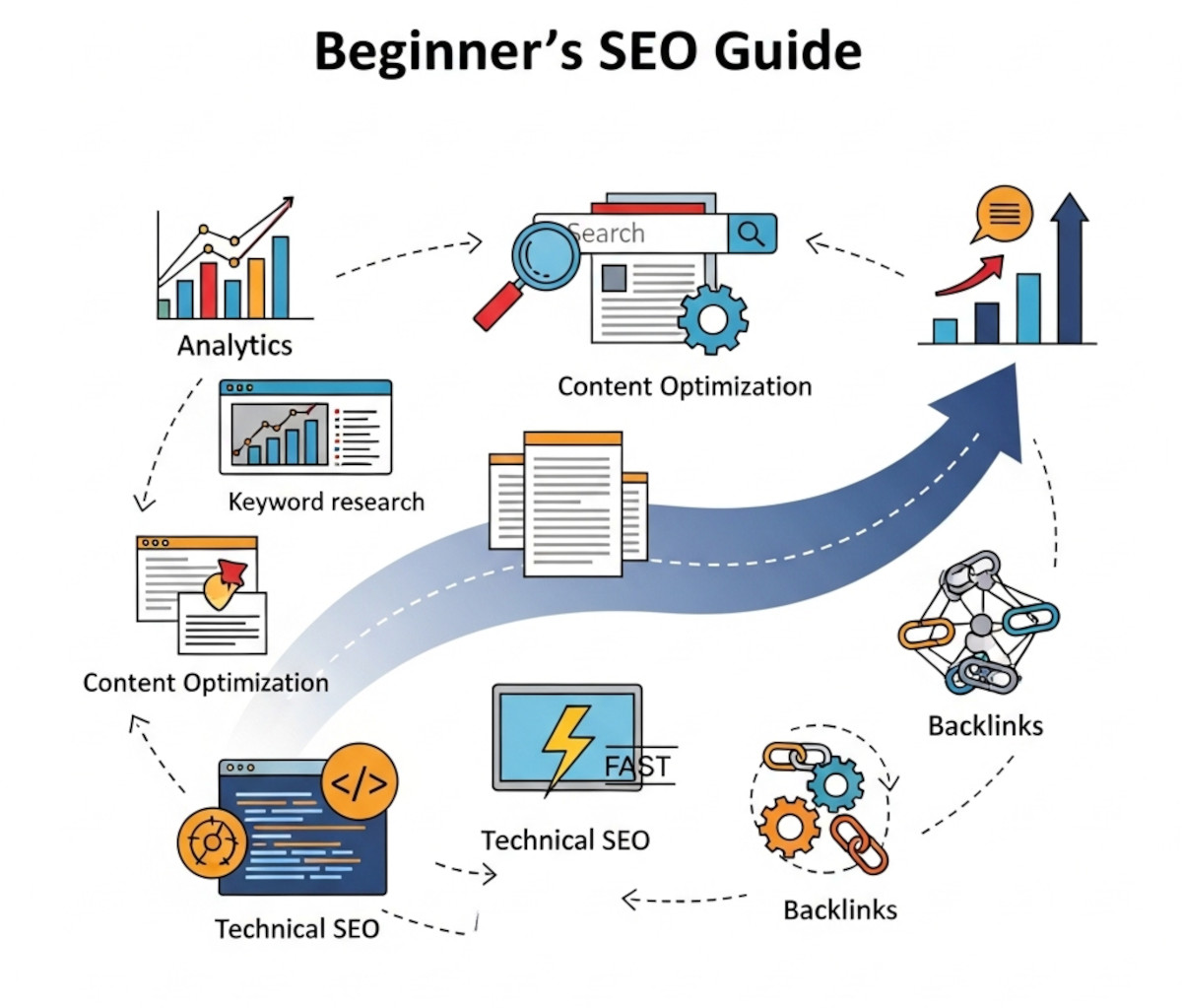
Beginner’s SEO Guide: Step-by-Step Process to Promote Your Business Online

Step 1: Set Up Website Analytics and Tracking
- Why? To understand who visits your site, where they come from, and how they interact with your pages.
- How?
- Create a Google Analytics account and install the tracking code on your website.
- Set up Google Search Console to monitor your website’s presence in Google search results and detect any issues.
Follow these Guides:
... Continue reading
Posted in Search Engine Optimization (SEO)
Tagged ahrefs, alt tag, alt text, authority, backlinks, bloat, bounce rate, broken links, clean code, compress images, conversions, drive traffic, fast load times, fast website, fresh content, google analytics, Google Business Profile, google keyword planner, Google Search Console, headers, headings, https, keyword research, keyword stuffing, lazy-load images, long-tail keywords, meta description, mobile-friendly, plugins, ranking factor, redirect, redirect url, responsive, responsive app, search engine optimization, search engine ranking, secure, seo, short-tail keywords, sitemap generator, sitempa, target audience, target keywords, technical seo, title, tracking, trust, trustworthy, ubersuggest, user experience, webp converter, website analytics, website visitors, xml
Leave a comment
Keyword Cannibalization: Real SEO Issue or Overblown Myth?

"Keyword cannibalization sounds made up - is it actually a thing in SEO?"
Short Answer: It’s real - but not always harmful. Let’s unpack when keyword cannibalization matters, how to spot it, and how to fix it strategically.
🧐 What Is Keyword Cannibalization?
Keyword cannibalization happens when multiple pages on your website target and rank for the same (or very similar) keywords. These pages essentially compete with each other in the search engine results pages (SERPs).
🚨 When Keyword Cannibalization
... Continue reading
Posted in Ask David!, Search Engine Optimization (SEO)
Tagged 301 redirect, ahrefs, authority, backlinks, content strategy, diluted authority, Google rankings, Google Search Console, high-quality content, internal linking, keyword cannibalization, keyword overlap, keywords, long-tail keywords, moz, ranking, search engine optimization, search engine ranking, search engine results pages, semrush, seo, SEO audit, seo blog, seo content, seo issues, seo myths, seo signals, seo tips, SERP diversity, serps, target keywords, thin content, topical authority, user intent
Leave a comment