




-
Recent Posts
- “My Partner Wants to Use WordPress Because 50% of the Web Uses It. Help!”
- Does EmDash Solve WordPress’s Problems, or Do You Need UltimateWB?
- How Not to Use AI: Stanford University Can Tell You
- Best Website Builder for SEO: WordPress vs. Wix vs. UltimateWB
- How to Make Sure Your Website Colors Have Enough Contrast for Accessibility
- Mobile-Friendly Website Checklist: 20 Things to Check
- Beehiiv Website Builder Review: The Problem Isn’t the Design – It’s the Lack of Control
- Elementor’s “Angie” AI Is More Than Bloat: Credits, Subscriptions, and a Growing Platform Problem
- How to Pass Google Business Profile Video Verification for Service Businesses
- The Great Deskilling: Why AI Dependence is Turning Developers into Prompt Babysitters
- The Three-Month Fuse: The Everest Forms Pro Attack and Why a Patched Plugin Can Still Put Websites at Risk
- Computer Screen Has Black Bars on the Sides: How to Fix It
- Could AI Make Humans Extinct Within the Next Decade?
- Is Weebly Getting Out of the Website-Builder Business?
- Are You “Leaking SEO” by Linking to Other Websites?
- Wix Harmony Is Now in Google Gemini. So Why Are Users Still Complaining?
- When AI Sounds Confident but Gets It Wrong: The Mount Shasta Rescue
- When AI Agents Start Working Together, Who Is Really in Control?
Categories
Tag Archives: bounce rates
Why Great Content Gets Stuck on Page 8 (And How to Fix It)

You’ve poured time and effort into building a clean website. Your product is superior to what’s on the market, your articles directly answer user questions, and yet when you search for your core target keywords, you're stuck on Page 7 or 8.
When you ask for help, most SEO agencies hand you a cookie-cutter retainer proposal: monthly blog posts you don't need, broad "site optimizations," or generic link-building packages that don't address your actual problem.
If your site is already
... Continue reading
Posted in Search Engine Optimization (SEO)
Tagged 301 redirects, authority, backlinks, bounce rates, crawl, domain authority, fast website, Google Search Console, high-quality content, indexed pages, internal linking, keyword cannibalization, long-tail keywords, mobile-friendly, pogo-sticking, search intent, search signals, seo, seo tips, site structure, target keywords, topical authority, trust signals, user experience, user satisfaction, website optimization
Leave a comment
How can I avoid “AI SEO sludge”?

The obvious simple answer is: stop using AI entirely, right?!
But that is not the only answer.
If you use AI - don't treat it like an autopilot content machine. The moment you use it as a “set-and-forget” SEO tool, the quality usually collapses.
The web is already flooded with low-value AI-generated filler - repetitive articles written mainly to chase rankings instead of helping people. That’s what we call AI SEO sludge (or AI slop). And guess what? It's not
... Continue reading
Posted in AI, Search Engine Optimization (SEO), Web Content
Tagged ai, ai seo sludge, ai slop, AI-generated content, authority, bounce rates, engagement, experience, expertise, indexed pages, search engine ranking, search visibility, seo, thin content, thin pages, trust, trustworthy, user intent, visibility
Leave a comment
What is the difference between advertising and marketing?

While people often use the terms interchangeably, they represent two different scales of business strategy. In short, marketing is the entire process of getting a product to market, while advertising is a specific component of that process.
1. The Big Picture: Marketing
Marketing is the umbrella term for the collective steps a business takes to understand its customers and build a relationship with them. It is a long-term, ongoing strategy that starts before a product is even created.
It is
... Continue reading
Posted in Advertising, Business, Marketing
Tagged advertising, advertising vs marketing, bounce rate, bounce rates, brand identity, branding, business strategy, click-through rates, concept validation, customer support, data analysis, google ads, market pulse test., market research, marketing, place, pr, price, print media, product, promotion, public relations, smoke testing, social media, social media ads
Leave a comment
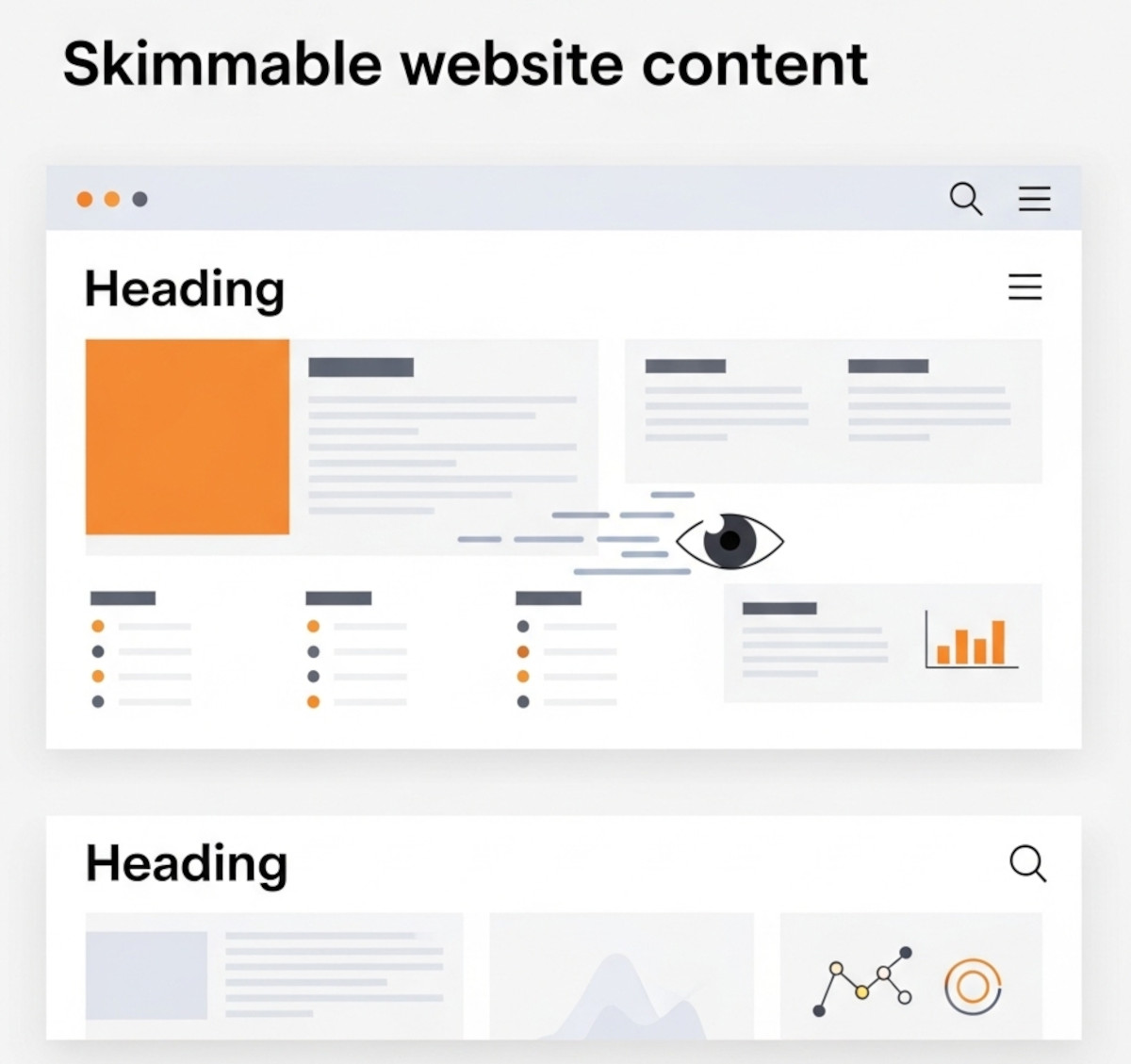
Make Your Website Content Skimmable: Boost Engagement and User Experience

Users rarely read every word on a webpage. Instead, they scan and skim content to quickly find the information they need. If your website content isn’t easy to skim, visitors might get frustrated and leave - fast.
That’s why skimmable formatting is one of the most powerful tools for website owners, designers, and content creators. It improves readability, user experience, and even SEO. At UltimateWB, we believe your website deserves to be easy to read and engaging
... Continue reading
Posted in Search Engine Optimization (SEO), Web Content
Tagged accessibility, bold, boost seo, bounce rates, bullet points, calls to action, cta, engagement, headers, headings, icons, images, infographics, italic, keywords, mobile readability, numbered lists, readability, screen readers, search engine optimization, seo, skimmable content, skimmable formatting, user experience, visual breaks, white space
Leave a comment
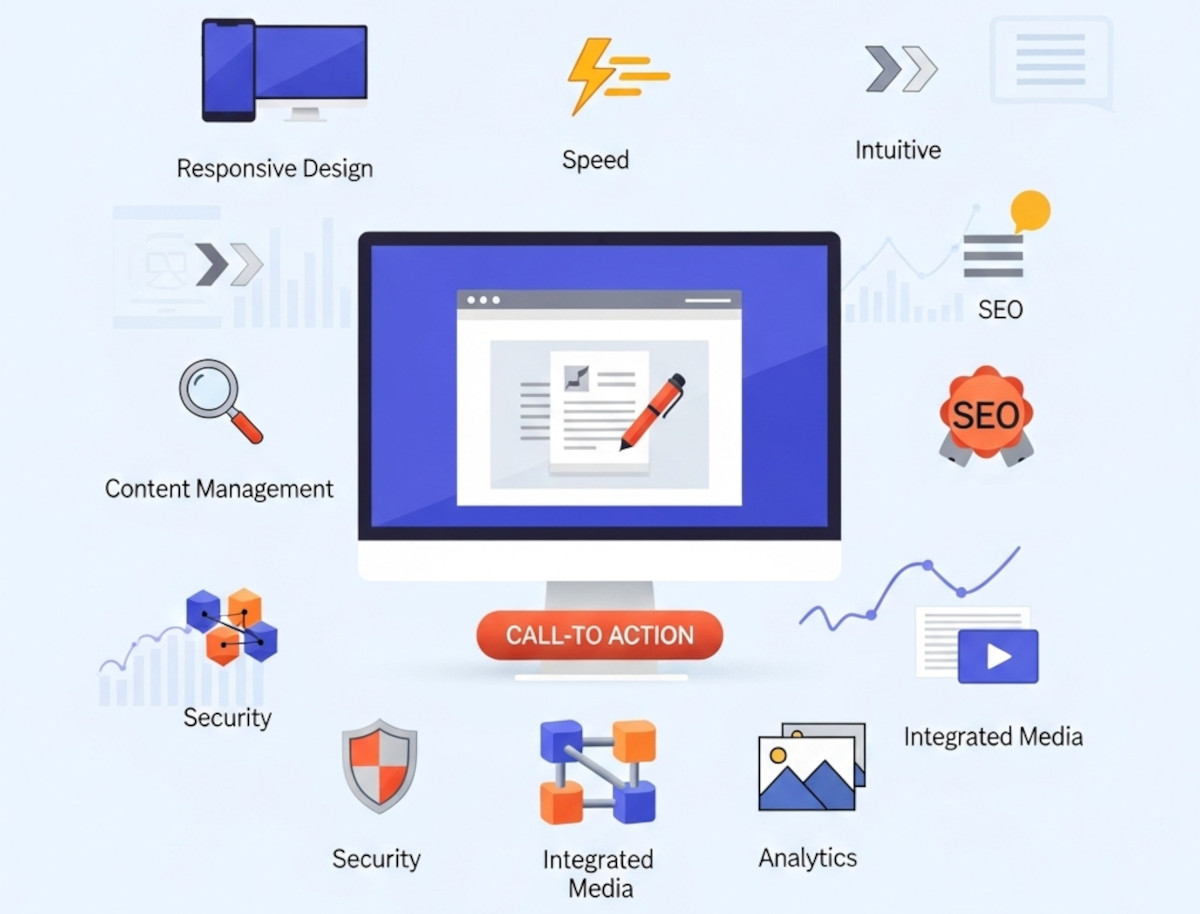
10 Essential Website Design Features Your Website Needs

Whether you're building your first website or looking to upgrade an existing one, understanding the key website design features can make or break your success online. A well-designed site isn't just about looking good - it should function seamlessly, load quickly, and help convert visitors into customers.
At UltimateWB, we know that having the right design features baked into your site is just as important as the content you publish. Here’s our ultimate list of website design features you
... Continue reading
Posted in Website Design
Tagged accessibility, alt text, bounce rate, bounce rates, build trust, built-in features, call-to-action, clean urls, clicks, cms, conversions, cta, easy navigation, easy updates, fast loading times, fast website, flexibility, Google Search Console, https, meta tags, mobile-friendly, responsive, responsive app, responsive design, scalability, search engine optimization, security, seo, sitemap, sitemap generator, spam controls, template lock, user experience, webp, webp converter, website design features, Wix, xml
Leave a comment
What to Look for in a Web Design Package – Avoid Overpaying for Unnecessary Features

Choosing the right web design package can feel overwhelming. With so many options and price points, it’s easy to pay for features that don’t truly benefit your business or miss out on essentials that drive real results. Whether you’re launching a new site or redesigning an existing one, understanding what to prioritize will help you get the best value for your investment.
This guide breaks down the must-have features of a quality web design package and highlights common areas where
... Continue reading
Posted in Website Design
Tagged accessibility, bloat, bounce rates, branding, build trust, clean code, cookie-cutter, engaging website, fast-loading speed, reliable hosting, responsive, responsive design, search engine optimization, search rankings, security, seo, seo-friendly, styles manager, user experience, web design package, webp, webp converter, website speed
Leave a comment
Does Google Search Console Show Time on Site? What It Tracks (and What It Doesn’t)

One question we hear a lot from website owners is:
“Can I see how long users stay on my site in Google Search Console?”
The short answer: No.
Google Search Console is designed to show your site's search performance - things like how often your site appears in Google results (impressions), how many people click through, and where your site ranks (average position).
If you want to understand user behavior - like how long people stay on your site, what
... Continue reading
Posted in Ask David!, Search Engine Optimization (SEO), Website Traffic
Tagged average position, bounce rates, click-through rate, clicks, core web vitals, engagement metrics, google analytics, Google Search Console, impressions, mobile usability, mobile-friendly, path analysis, search engine ranking, session duration, technical seo, user behavior, visit duration, website performance
Leave a comment
How to Increase Website Domain Authority Fast?

Short Answer: Focus on technical SEO (speed, mobile-friendliness, indexing), publish high-quality content that earns backlinks, build relationships for guest posting and PR, fix bad links, and aggressively promote your content. Avoid spammy tactics - DA rises when you build real value and visibility.
Domain Authority (DA) is a comparative metric developed by Moz that predicts how likely a website is to rank on search engine result pages (SERPs). While it is a third-party score and not an official Google
... Continue reading
Posted in Ask David!, Search Engine Optimization (SEO)
Tagged ahrefs, ahrefs site audit, alsoasked, answerthepublic, authority, backlinks, boost visibility, bounce rates, buy backlinks, call to action, clean code, domain authority, easy navigation, fast loading times, google disavow links tool, Google Search Console, Google Trends, HARO, help a b2b writer, help a reporter out, high-quality content, indexing, internal links, long-tail keywords, mobile-friendly, newsletters, organic traffic, ranking factor, responsive, responsive app, screaming frog, search engine optimization, search engine result pages, seo, seo tips, serps, sitemap, sitemap generator, social media, target keywords, technical seo, user engagement, user experience
Leave a comment
10 Expert Tips for Writing SEO-Friendly Blog Content
Want your blog to rank higher and attract more readers? These 10 expert tips will help you write SEO-friendly content that gets noticed by both search engines and your audience.
1. Start with Keyword Research
Use tools like Google Keyword Planner, Ahrefs, or Ubersuggest to find keywords your target audience is searching for. Focus on a primary keyword and related secondary keywords to guide your content.
Related: Think Twice Before Using Ahrefs’ New Web Analytics: Are You Giving Away
... Continue reading