






-
Recent Posts
- Etch Pre-Sale Promises: What’s Been Delivered and What’s Still Missing?
- Why Reddit Threads on Website Builders Miss the Point (And What to Look For Instead)
- Epileptic Woman Dies After Using ChatGPT for Medical Advice; Family Sues OpenAI
- Best Practices for Image Filenames and Alt Tags: A Quick SEO Checklist
- Best Website Builder for a Web Development Business: Build Your Own Website and Client Websites
- How to Make a Website Without AI for Free
- Is Wix Safer Because It Doesn’t Use PHP? Wix Security Vulnerabilities Tell a Different Story
- Rank Math PRO Supply Chain Attack: Why Updating the Plugin May Not Be Enough
- How to Safely Upgrade Legacy PHP (5.6, 7.0–7.3) to Modern, Supported Versions
- Critical PHP Vulnerabilities (“PHP2Shell”): What You Need to Know & Which Platforms Are Affected
- What Happened to GeoCore Classifieds? From Commercial Software to Community Project
- Why Vibe Coding Isn’t the Only Way to Build a Website Without Monthly Fees
- How to Create a Simple Website to Receive Client Files and Scheduling Requests
- Can You Fork a Paid WordPress Plugin Instead of Paying the Subscription?
- When Google Decides Not to Index a Page, Can You Change Its Mind?
- The Events Calendar Alternative: Why Pay More for WordPress Plugins You Don’t Need?
- Firefox Is Starting Automatically When You Log In? Here’s How to Stop It
- Wix vs. WordPress vs. UltimateWB: Which Is Best for a Personal Training Business?
Categories
Tag Archives: fast loading times
Is Your Google Search Console “Average Position” Lying to You?

You log into Google Search Console (GSC) and see massive numbers under your daily impressions. Your site is popping up in thousands of search results! Then, you check your sitewide Average Position metric. It hovers somewhere between 10 and 15. On really good days, you might even celebrate hitting the coveted single digits - positions 7–9.
But then you look at your actual traffic, and the click count is surprisingly low.
With AI Overviews and Featured Snippets now eating up
... Continue reading
Posted in Search Engine Optimization (SEO), Website Traffic
Tagged ai overviews, average position, bloat, clean code, click-through rate, clicks, ctr, fast loading times, fast website, featured snippets, Google Search Console, gsc, html, impressions, long-tail keywords, plugins, ranking position, search engine ranking, seo, third-party plugins
Leave a comment
How Fast Can Traffic Grow From Only SEO?

If you’ve launched a website and decided to rely only on SEO, you’re probably asking the same question many founders quietly worry about:
Is this growth normal… or am I stuck?
Maybe your site has been live for a month or two. You haven’t promoted it. No ads. No social pushes. Just search traffic. Organic traffic. You’re seeing a few hundred users trickle in, engagement looks good, and things are slowly climbing - but you don’t know what
... Continue reading
Posted in Search Engine Optimization (SEO), Website Traffic
Tagged bloat, bounce rate, build trust, clarity, core web vitals, engagement, engagement metrics, fast loading, fast loading times, fast website, Google Search Console, javascript, keywords, kiss, organic traffic, plugins, search engine optimization, search intent, seo, SEO metrics, simple website design, thin pages, third party plugins, traffic
Leave a comment
Why Simple Websites Often Convert Better Than Fancy Websites

If you’ve ever noticed a plain-looking website (like Craigslist back in the day) outperforming a flashy, animation-heavy one, you’re not imagining things. This happens all the time across industries - from home services to e-commerce to SaaS.
The reason is simple:
People don’t visit websites to admire design. They visit to achieve a goal.
Find a product. Read a menu. Book a service. Get a quote. Buy something.
A “fancy” website can absolutely support that…
- but only if it
Posted in Website Design
Tagged animations, background videos, bloat, boost conversions, build trust, call-to-action, clean website layout, clear CTA, conversion optimization, conversions, credibility, cta, e-commerce, easy navigation, fast loading, fast loading times, fast website, fonts, hero image, high-converting websites, javascript, kiss, mobile-friendly, simple website design, sliders, spacing, storytelling, trust, trust signals, trustworthy, usability, user experience, ux, UX best practices, web design tips, website conversions, website speed
Leave a comment
What actually makes a good website?

When it comes to websites, first impressions matter - a lot. People often decide within seconds whether to stick around or click away. That’s why good design is important. A site that looks modern, clean, and professional builds instant credibility. In many ways, the design is what gets people in the door.
That’s also why UltimateWB puts so much power in your hands. With the built-in Styles Manager, you can easily customize colors, fonts, and layouts to match your
... Continue reading
Posted in Ask David!, Website Design
Tagged authenticity, bloat, calls to action, clear messaging, credibility, fast loading times, fast website, good website tips, mobile friendly, mobile-friendly, responsive, responsive app, styles manager, trust, trust signals, web design basics, web design tips, website customization, website design, website performance, website speed
Leave a comment
How to Optimize Your Webpages So They Get Found by Search Engines and AI (LLMs)?

If you want your website to get noticed online, it’s important to make sure it’s easy to find and understand - not just by search engines like Google, but also by the latest AI technologies powered by something called large language models, or LLMs for short.
These LLMs - including well-known ones like OpenAI’s GPT-4 (used in ChatGPT), Google’s Gemini, Anthropic’s Claude, and Meta’s LLaMA - are advanced AI systems that read and interpret text on the web to answer
... Continue reading
Posted in AI, Ask David!, Search Engine Optimization (SEO)
Tagged accessibility, ai, anthropic, chatgpt, claude, faq, fast loading times, fast website, fresh content, gemini, Google Search Console, google search engine ranking, headings, high-quality conetnt, keywords, llama, llm, meta, meta description, meta tags, meta title, mobile-friendly, OpenAI, responsive, responsive app, schema markup, search snippets, structure, subheadings, trustworthy, usability
Leave a comment
HTML, CSS & JS: Minimized for Speed, Optimized for Web Developers

When it comes to website performance, every byte counts - but that doesn’t mean you need to sacrifice readability to get fast load times. At UltimateWB, we believe in smart minification: optimizing your website’s HTML, CSS, and JavaScript for performance without making your code unreadable or hard to update.
🚀 Why Minify at All?
Minifying code reduces file sizes by stripping out things like:
- Comments
- Unnecessary whitespace
- Line breaks
- Redundant characters
This helps:
- Speed up your website’s load
Posted in Website Design
Tagged bandwidth, clean code, code readability, compression, css, fast load times, fast loading times, html, javascript, js, minification, pagespeed insights, reduce file size, smart minification, user experience, web developer, website performance, website speed
Leave a comment
Why Organic Traffic Is the Best Kind of Traffic (And How to Get More of It)

When it comes to website traffic, not all sources are created equal. Paid ads can offer quick wins, and social media can spark buzz - but organic traffic is the gold standard. It’s steady, scalable, and sustainable.
Here’s why organic traffic stands out and why it should be at the core of your digital strategy.
1. It’s Cost-Effective (Long-Term)
Yes, good SEO takes time and effort, whether you’re writing blog posts, optimizing pages, or building backlinks. But once your
... Continue reading
Posted in Search Engine Optimization (SEO), Website Traffic
Tagged authority, backlinks, bounce rate, brand authority, buy ads, content marketing, conversions, credibility, digital marketing strategy, domain authority, engagement, fast loading times, fast website, fast-loading website, high-quality content, inbound marketing, keyword research, long-term growth, mobile-friendly, organic traffic, paid ads, responsive app, return on investment, roi, search engine optimization, seo, social media, structure, targeted traffic, trust, user experience, user intent, website speed, website structure, website traffic sources
Leave a comment
How to Learn Web Design: From Guesswork to Greatness

If you’re just getting started with web design, you might be asking yourself as one “Ask David!” particpant:
Am I just winging it? Are there rules? How do I know if my design actually works - or if it just looks nice?
These are questions almost every new designer has asked, and they’re completely valid. The good news? You don’t have to guess your way through it. While creativity plays a big role, great web design is a craft
... Continue reading
Posted in Ask David!, Website Design
Tagged avoid clutter, behance, branding, call-to-action, clear messaging, clear navigation, color palettes, color psychology, colors, conversions, cta, easy navigation, fast loading times, fast website, flow, fonts, great web design, hierarchy, landing page, learn web design, microinteractions, mobile-friendly, responsive, responsive app, reviews, small animations, social proof, spacing, testimonials, transitions, trust badges, usability, usability testing, user behavior, user experience, ux, web design best practices
Leave a comment
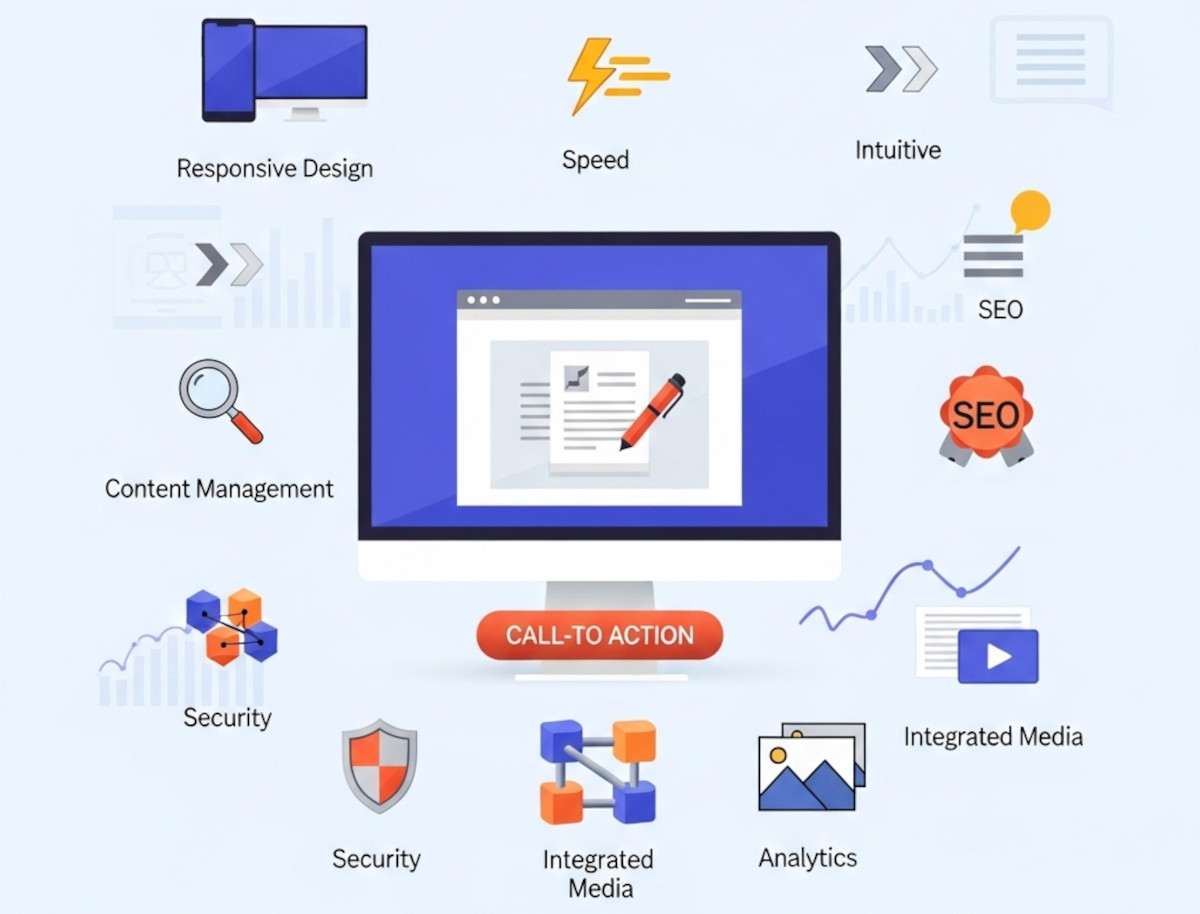
10 Essential Website Design Features Your Website Needs

Whether you're building your first website or looking to upgrade an existing one, understanding the key website design features can make or break your success online. A well-designed site isn't just about looking good - it should function seamlessly, load quickly, and help convert visitors into customers.
At UltimateWB, we know that having the right design features baked into your site is just as important as the content you publish. Here’s our ultimate list of website design features you
... Continue reading
Posted in Website Design
Tagged accessibility, alt text, bounce rate, bounce rates, build trust, built-in features, call-to-action, clean urls, clicks, cms, conversions, cta, easy navigation, easy updates, fast loading times, fast website, flexibility, Google Search Console, https, meta tags, mobile-friendly, responsive, responsive app, responsive design, scalability, search engine optimization, security, seo, sitemap, sitemap generator, spam controls, template lock, user experience, webp, webp converter, website design features, Wix, xml
Leave a comment