







-
Recent Posts
- Microsoft 365 Outage Exposes the Risks of Cloud-Dependent Software
- How to Fix the WordPress “There Has Been a Critical Error on This Website” Message
- WPBakery Alternatives: Why Shortcode Lock-In Matters When Choosing a Website Builder
- Astro + AI Website Development: Pros, Cons, and How It Compares to UltimateWB
- Etch Pre-Sale Promises: What’s Been Delivered and What’s Still Missing?
- Why Reddit Threads on Website Builders Miss the Point (And What to Look For Instead)
- Epileptic Woman Dies After Using ChatGPT for Medical Advice; Family Sues OpenAI
- Best Practices for Image Filenames and Alt Tags: A Quick SEO Checklist
- Best Website Builder for a Web Development Business: Build Your Own Website and Client Websites
- How to Make a Website Without AI for Free
- Is Wix Safer Because It Doesn’t Use PHP? Wix Security Vulnerabilities Tell a Different Story
- Rank Math PRO Supply Chain Attack: Why Updating the Plugin May Not Be Enough
- How to Safely Upgrade Legacy PHP (5.6, 7.0–7.3) to Modern, Supported Versions
- Critical PHP Vulnerabilities (“PHP2Shell”): What You Need to Know & Which Platforms Are Affected
- What Happened to GeoCore Classifieds? From Commercial Software to Community Project
- Why Vibe Coding Isn’t the Only Way to Build a Website Without Monthly Fees
- How to Create a Simple Website to Receive Client Files and Scheduling Requests
- Can You Fork a Paid WordPress Plugin Instead of Paying the Subscription?
Categories
Search Results for: user experience
Biometric Airport Scanners: The Future of Travel and User Experience

Airports in the U.S. are rolling out a new wave of technology designed to speed up security and improve the traveler experience: biometric eGates. CLEAR, in partnership with the TSA, has launched a pilot program at major airports, including Atlanta (ATL), Washington D.C. (DCA), and Seattle (SEA).
What Are Biometric eGates?
Biometric eGates use facial recognition to verify a traveler’s identity. By scanning your face and matching it to your boarding pass and ID, these gates allow you to
... Continue readingMake Your Website Content Skimmable: Boost Engagement and User Experience

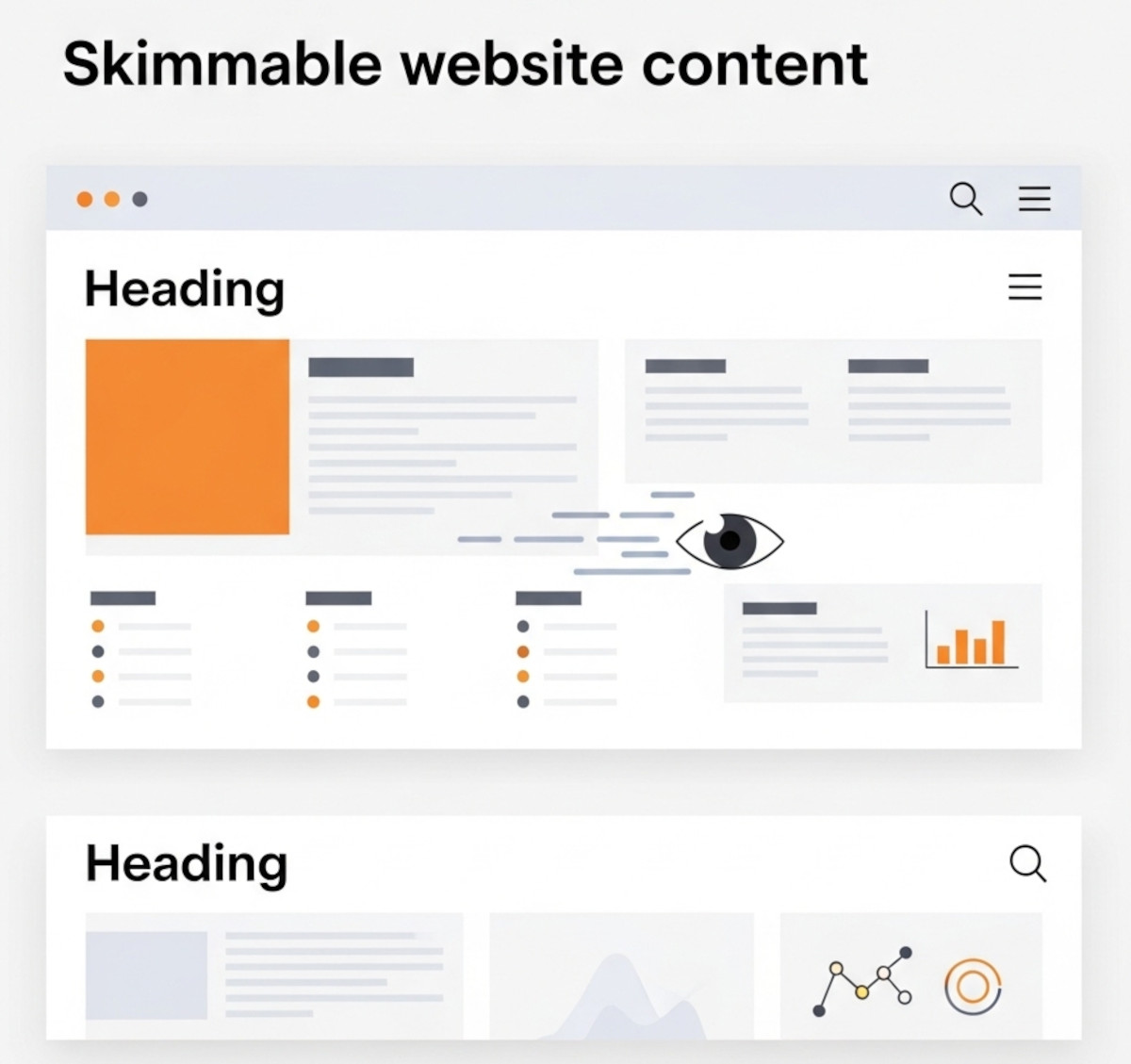
Users rarely read every word on a webpage. Instead, they scan and skim content to quickly find the information they need. If your website content isn’t easy to skim, visitors might get frustrated and leave - fast.
That’s why skimmable formatting is one of the most powerful tools for website owners, designers, and content creators. It improves readability, user experience, and even SEO. At UltimateWB, we believe your website deserves to be easy to read and engaging
... Continue reading
Posted in Search Engine Optimization (SEO), Web Content
Tagged accessibility, bold, boost seo, bounce rates, bullet points, calls to action, cta, engagement, headers, headings, icons, images, infographics, italic, keywords, mobile readability, numbered lists, readability, screen readers, search engine optimization, seo, skimmable content, skimmable formatting, user experience, visual breaks, white space
Leave a comment
What Makes a Simple Website Feel Trustworthy? (From Real User Experience, Not Theory)
When you’re visiting a website built by a solo creator or small team - not a big-name brand - you make a snap judgment: Can I trust this? That first impression often decides whether you stick around or bounce.
As someone who loves studying user behavior and indie websites, I’ve noticed a few key elements that consistently build trust, even on simple, self-made sites.
Here’s what makes me - and many others - stay.
1. Clear Purpose, Fast
If I
... Continue reading
Posted in Ask David!, Business, Website Design
Tagged brand personality, build trust, clarity, communicate clearly, contrast, fonts, indie web, personal website, personality, small website, solo creator, trust signals, user experience, ux design, web design tips, website credibility, website trust, white space
Leave a comment
How Do Graphic Design Services Impact Website User Experience (UX)?

When it comes to creating an effective and engaging website, the role of graphic design cannot be overstated. While it’s easy to think of graphic design as just aesthetic - colors, typography/fonts, and imagery - its impact goes far beyond just looking good. A well-executed design can drastically improve a website’s user experience (UX), leading to better usability, faster load times, and more intuitive navigation. Here’s how
... Continue reading
Posted in Ask David!, Graphic Design, Website Design
Tagged bounce rate, branding, call to action, colors, convert traffic, credibility, cta, easy navigation, engagement, fast-loading times, first impressions, graphic design, header tags, line spacing, mobile friendly, professional layout, responsive, responsive app, trust, typography, usability, user experience, user-friendly, ux, visuals, white space
Leave a comment
Website Design Checklist: Boost Conversions and User Experience

A well-designed website is more than just aesthetically pleasing; it’s a powerful tool that can significantly impact your business's success. To ensure your website is optimized for conversions and user experience, consider these crucial questions:
Clarity and Navigation
- Does everything make sense? Is the content clear, concise, and easy to understand? Avoid jargon and technical terms that might confuse visitors.
- Does it flow well? Is the information presented in a logical sequence, guiding visitors smoothly from one section to
Posted in Website Design
Tagged a/b testing, analytic tools, analytics, branding, calls to action, clarity, color psychology, color scheme, contact form, conversion rate optimization, conversions, cro, cta, easy navigation, fonts, functionality, functionality vs design, increase conversions, mobile-friendly, navigation, privacy policy, responisve, responsive app, terms of service, tos, transparency, trust, typography, ui, user experience, user interface, ux, website analytics, website flow, website optimization
Leave a comment
The Pop-Up Dilemma: Balancing Engagement and User Experience

The Debate Continues
Sometimes you are on a website, and you just want to get out because of all the pop-ups invading the space. Who hasn't had the feeling that they are just so sick of the pop-ups?! They can be very annoying. But, sometimes, they can be good, like when you want that 10% discount. Pop-ups have long been a contentious topic in the world of web design. While they can be effective tools for capturing attention and driving
... Continue reading
Posted in Marketing, Website Design
Tagged lead generation, offers, pop-ups, targeted promotion, user experience
Leave a comment
How can website speed and performance impact SEO and user experience?
Website speed and performance play a crucial role in both SEO (Search Engine Optimization) and user experience. Here's how they are connected:
Impact on SEO:
- Search Engine Ranking: Search engines like Google prioritize fast-loading websites in their ranking algorithms. A slow website can negatively impact your search ranking, making it harder for potential visitors to find you.
- Dwell Time and Bounce Rate: Dwell time refers to the amount of time users spend on your website. Bounce rate is the
What is the optimum number of products per page in an e-commerce website for a good user experience?

The optimum number of products per page in an e-commerce website for a good user experience can vary depending on a number of factors, including the nature of the products, the target audience, and the overall design and layout of the website. However, some general guidelines include:
- For visually driven products, such as clothing and home goods, it is generally recommended to display between 12 and 24 products per page. This allows users to see a variety of products at
Posted in Ask David!, Website Design
Tagged e-commerce, products per page, user friendly
Leave a comment
What do you think is the most crucial aspect of user experience (UX) design for web applications, and why?
The most crucial aspect of User Experience (UX) design for web applications is User-Centered Design, and here's why:
User-Centered Design Focuses on the User's Needs:
At its core, UX design is all about creating web applications that provide value and utility to the users. User-Centered Design places the user's needs, preferences, and expectations at the forefront of the design process. By understanding what the users want and need, you can create a web application that aligns with their goals
... Continue reading