






-
Recent Posts
- “My Partner Wants to Use WordPress Because 50% of the Web Uses It. Help!”
- Does EmDash Solve WordPress’s Problems, or Do You Need UltimateWB?
- How Not to Use AI: Stanford University Can Tell You
- Best Website Builder for SEO: WordPress vs. Wix vs. UltimateWB
- How to Make Sure Your Website Colors Have Enough Contrast for Accessibility
- Mobile-Friendly Website Checklist: 20 Things to Check
- Beehiiv Website Builder Review: The Problem Isn’t the Design – It’s the Lack of Control
- Elementor’s “Angie” AI Is More Than Bloat: Credits, Subscriptions, and a Growing Platform Problem
- How to Pass Google Business Profile Video Verification for Service Businesses
- The Great Deskilling: Why AI Dependence is Turning Developers into Prompt Babysitters
- The Three-Month Fuse: The Everest Forms Pro Attack and Why a Patched Plugin Can Still Put Websites at Risk
- Computer Screen Has Black Bars on the Sides: How to Fix It
- Could AI Make Humans Extinct Within the Next Decade?
- Is Weebly Getting Out of the Website-Builder Business?
- Are You “Leaking SEO” by Linking to Other Websites?
- Wix Harmony Is Now in Google Gemini. So Why Are Users Still Complaining?
- When AI Sounds Confident but Gets It Wrong: The Mount Shasta Rescue
- When AI Agents Start Working Together, Who Is Really in Control?
Categories
Tag Archives: user intent
How can I avoid “AI SEO sludge”?

The obvious simple answer is: stop using AI entirely, right?!
But that is not the only answer.
If you use AI - don't treat it like an autopilot content machine. The moment you use it as a “set-and-forget” SEO tool, the quality usually collapses.
The web is already flooded with low-value AI-generated filler - repetitive articles written mainly to chase rankings instead of helping people. That’s what we call AI SEO sludge (or AI slop). And guess what? It's not
... Continue reading
Posted in AI, Search Engine Optimization (SEO), Web Content
Tagged ai, ai seo sludge, ai slop, AI-generated content, authority, bounce rates, engagement, experience, expertise, indexed pages, search engine ranking, search visibility, seo, thin content, thin pages, trust, trustworthy, user intent, visibility
Leave a comment
Why Have My Indexed Pages on Google Decreased? (Real Causes + Fixes Most Sites Miss)

Seeing your indexed pages drop in Google can feel like your website is quietly disappearing.
One day everything looks stable… the next, your index count is down - and you’re left wondering if your rankings are about to follow.
If you’re asking “Why have my indexed pages on Google decreased?”, here’s the reality:
This is common - but it’s not random.
Google doesn’t just “lose” pages. When your indexed count drops, it’s almost always the result of a decision
... Continue reading
Posted in Ask David!, Search Engine Optimization (SEO)
Tagged broken links, cannibalization, canonicalization, crawl efficiency, crawlability, crawled, disallow, duplicate content, engagement, google search engine ranking, indexed pages, indexing, internal links, keywords, noindex, noindex tags, not indexed, redirect chains, redirect loops, redirect url, relevance, reliability, robots.txt, search engine optimization, seo, sitemap, slow website, target keywords, thin pages, trust, user intent, wasted crawl budget
Leave a comment
Why Organic Traffic Is the Best Kind of Traffic (And How to Get More of It)

When it comes to website traffic, not all sources are created equal. Paid ads can offer quick wins, and social media can spark buzz - but organic traffic is the gold standard. It’s steady, scalable, and sustainable.
Here’s why organic traffic stands out and why it should be at the core of your digital strategy.
1. It’s Cost-Effective (Long-Term)
Yes, good SEO takes time and effort, whether you’re writing blog posts, optimizing pages, or building backlinks. But once your
... Continue reading
Posted in Search Engine Optimization (SEO), Website Traffic
Tagged authority, backlinks, bounce rate, brand authority, buy ads, content marketing, conversions, credibility, digital marketing strategy, domain authority, engagement, fast loading times, fast website, fast-loading website, high-quality content, inbound marketing, keyword research, long-term growth, mobile-friendly, organic traffic, paid ads, responsive app, return on investment, roi, search engine optimization, seo, social media, structure, targeted traffic, trust, user experience, user intent, website speed, website structure, website traffic sources
Leave a comment
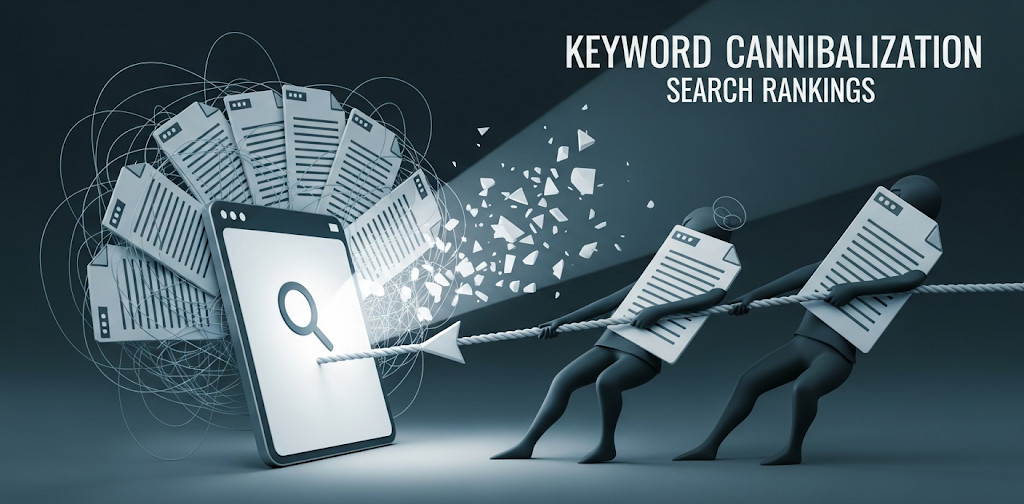
Keyword Cannibalization: Real SEO Issue or Overblown Myth?

"Keyword cannibalization sounds made up - is it actually a thing in SEO?"
Short Answer: It’s real - but not always harmful. Let’s unpack when keyword cannibalization matters, how to spot it, and how to fix it strategically.
🧐 What Is Keyword Cannibalization?
Keyword cannibalization happens when multiple pages on your website target and rank for the same (or very similar) keywords. These pages essentially compete with each other in the search engine results pages (SERPs).
🚨 When Keyword Cannibalization
... Continue reading
Posted in Ask David!, Search Engine Optimization (SEO)
Tagged 301 redirect, ahrefs, authority, backlinks, content strategy, diluted authority, Google rankings, Google Search Console, high-quality content, internal linking, keyword cannibalization, keyword overlap, keywords, long-tail keywords, moz, ranking, search engine optimization, search engine ranking, search engine results pages, semrush, seo, SEO audit, seo blog, seo content, seo issues, seo myths, seo signals, seo tips, SERP diversity, serps, target keywords, thin content, topical authority, user intent
Leave a comment
How Social Media Marketing Can Boost Your Website’s SEO (Even If It’s Indirect)

Social media isn’t just about collecting likes and followers - it’s also a powerful way to strengthen your website’s SEO, even though it doesn’t directly impact Google’s ranking algorithm.
While Google has said social signals like shares or comments aren’t direct ranking factors, the indirect SEO benefits of social media marketing are very real - and they can seriously boost your online visibility and website traffic.
Here’s how social media helps your SEO and why it’s a smart
... Continue reading
Posted in Search Engine Optimization (SEO), Social Media
Tagged authority, backlink building, backlinks, boost traffic, boost visibility, bounce rate, branded searches, content marketing, credibility, digital marketing, engagement, facebook, faster indexing, google ranking, Google ranking algorithm, improve SEO, instagram, keywords, linkedin, local seo, match intent, related keywords, search engine optimization, search results, seo, seo benefits, seo content strategy, social media and SEO, social media marketing, social signals, trending topics, trust signals, twitter, user intent, x
Leave a comment
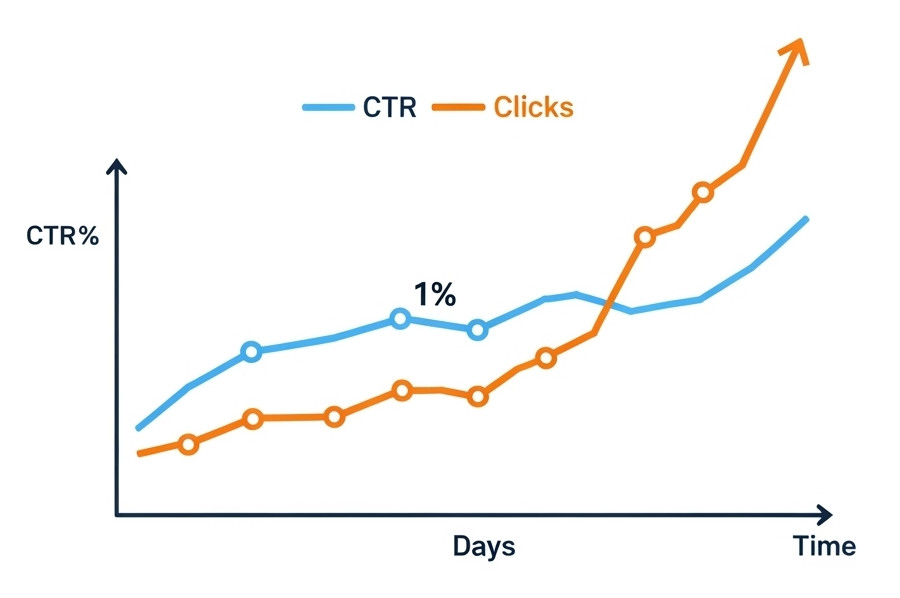
Is a CTR Below 1% a Bad Sign If Clicks Are Increasing Daily? Let’s Talk Nuances.

In a previous post, Decoding Click-Through Rates (CTR): What’s Good and Why It Matters for Ads & Website Content, we explored what makes a “good” CTR and why this metric plays such a crucial role in digital marketing performance. But once you understand the benchmarks, a more nuanced question often arises:
Is it a bad sign if your click-through rate is under 1%, even when your total number of clicks per day is strong - and steadily growing?
Let’s
... Continue reading
Posted in Ask David!, Search Engine Optimization (SEO), Website Traffic
Tagged click-through rate, clicks per day, conversion rate, cost per click, cpc, ctr, impressions, meta description, reach, search engine ranking, targeting, title tag, user engagement, user intent, visibility, website traffic
Leave a comment
Do You Need a Lot of Text on Your Website to Rank on the First Page of Google?

When it comes to ranking on the first page of Google, one common question many website owners and digital marketers ask is: “Do I need a lot of text on my website to rank well?” The answer isn’t a simple yes or no - it depends on a variety of factors, including the nature of your content, user intent, and SEO best practices.
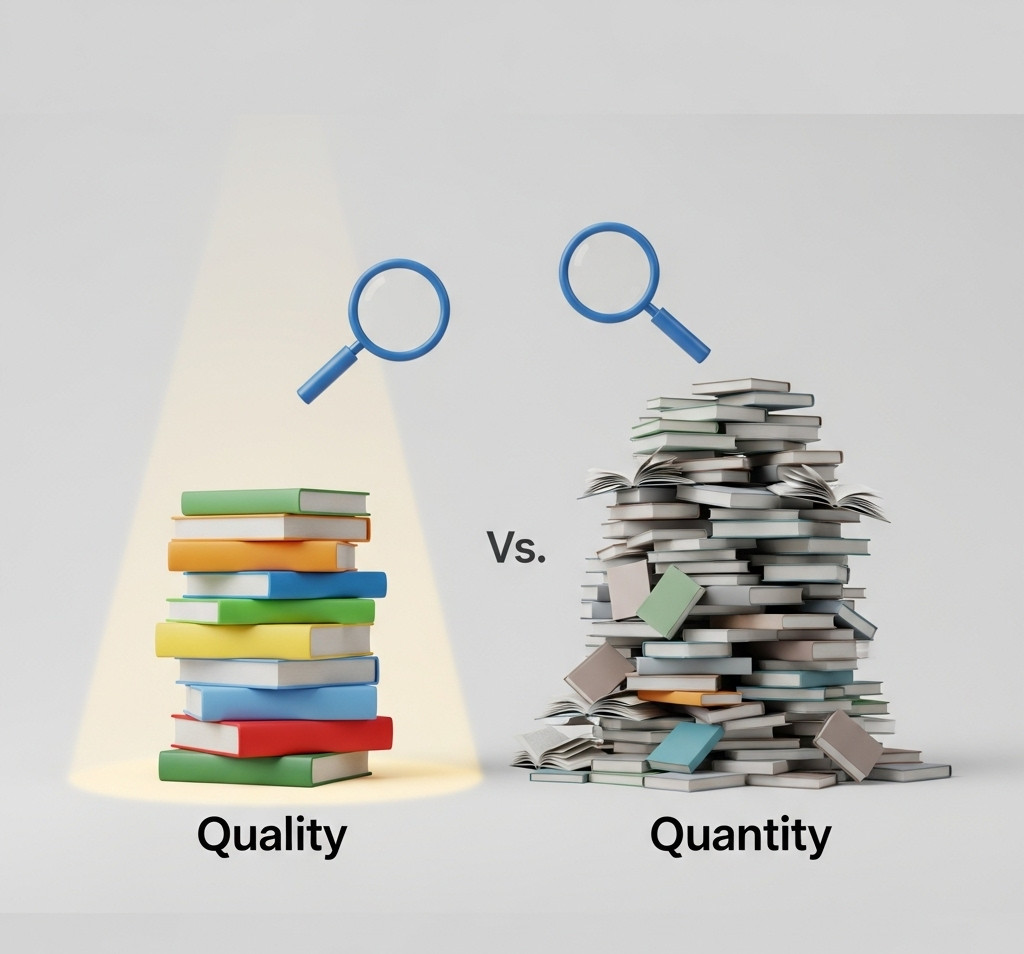
Quality Over Quantity
Let’s start by debunking a myth: more text doesn’t automatically mean better rankings. Google’s
... Continue reading
Posted in Ask David!, Search Engine Optimization (SEO), Web Content
Tagged authority, backlinks, bounce rate, easy navigation, fast loading times, google algorithm, google search engine ranking, headings, helpful content, high-quality content, internal linking, internal links, long content, long-form content, meta descriptions, mobile friendly, mobile-friendly, multimedia content, on-page optimization, page experience, quality over quantity, relevance, responsive, responsive app, search engine optimization, search engine ranking, seo, SEO best practices, seo strategies, target keywords, user engagement, user intent, website speed
Leave a comment
What are “thin pages,” and how can they hurt your On-Page SEO?

"Thin pages" are web pages that provide little to no value to users. They typically contain very little original content, lack depth, and don't adequately address the user's search intent. These pages can significantly harm your on-page SEO.
Here's a breakdown of what thin pages are and how they can negatively impact your website's search engine rankings:
Characteristics of Thin Pages:
- Low Word Count: They contain very little text, often just a few sentences or paragraphs.
- Duplicate or Scraped
Posted in Ask David!, Search Engine Optimization (SEO)
Tagged affiliate links, affiliate pages, bounce rate, content audits, crawl budget, doorway pages, duplicate content, high-quality content, internal linking, keyword stuffing, keywords, lack of value, low content quality, low word count, on-page seo, organic traffic, original content, scraped content, search engine optimization, search engine penalties, search engine ranking, seo, thin pages, user experience, user intent, website authority
Leave a comment
How to Do Keyword Research: A Step-by-Step Guide to Better SEO

Building a great website is only half the battle - if people can't find it when they search, all that hard work gets lost in the noise. That is where keyword research comes in. Think of it as learning the exact language your potential customers use when they type their questions, needs, or problems into a search bar. When you know the specific phrases people are looking for, you can tailor your content to show up right when they need
... Continue reading
Posted in Search Engine Optimization (SEO)
Tagged ahrefs, competitive analysis, google keyword planner, keyword density, keyword placement, keyword research, keyword stuffing, local seo, long-tail keywords, meta description, moz keyword explorer, organic traffic, search engine optimization, search engine ranking, semrush, seo, target keywords, targeted traffic, user experience, user intent
Leave a comment
The SEO Hustle: When Google Changes the Rules (Again)

SEO – optimizing your website for search engines to gain organic traffic – can feel like a rollercoaster ride. You meticulously craft a strategy, watch your traffic climb, then – bam – a Google algorithm update throws everything into question. Sound familiar?
From the Helpful Content Update (HCU) to ongoing core algorithm updates and even the rise of AI Overviews in search results, the evolution of search keeps reminding us of a harsh reality: you don’t control the game, Google
... Continue reading
Posted in Search Engine Optimization (SEO), Website Traffic
Tagged ai overviews, clarity, clean code, content is king, easy navigation, easy to use, fast loading times, fast website, Google algorithm update, hcu, helpful content update, high-quality content, keyword stuffing, link farms, mobile-friendly, organic traffic, pagespeed insights, performance, repetitive pages, search engine optimization, search engine ranking, seo, seo disaster, seo strategy, seo tips, storytelling, thin content, usefulness, user experience, user intent, user-friendly, value, website traffic
Leave a comment