



-
Recent Posts
- “My Partner Wants to Use WordPress Because 50% of the Web Uses It. Help!”
- Does EmDash Solve WordPress’s Problems, or Do You Need UltimateWB?
- How Not to Use AI: Stanford University Can Tell You
- Best Website Builder for SEO: WordPress vs. Wix vs. UltimateWB
- How to Make Sure Your Website Colors Have Enough Contrast for Accessibility
- Mobile-Friendly Website Checklist: 20 Things to Check
- Beehiiv Website Builder Review: The Problem Isn’t the Design – It’s the Lack of Control
- Elementor’s “Angie” AI Is More Than Bloat: Credits, Subscriptions, and a Growing Platform Problem
- How to Pass Google Business Profile Video Verification for Service Businesses
- The Great Deskilling: Why AI Dependence is Turning Developers into Prompt Babysitters
- The Three-Month Fuse: The Everest Forms Pro Attack and Why a Patched Plugin Can Still Put Websites at Risk
- Computer Screen Has Black Bars on the Sides: How to Fix It
- Could AI Make Humans Extinct Within the Next Decade?
- Is Weebly Getting Out of the Website-Builder Business?
- Are You “Leaking SEO” by Linking to Other Websites?
- Wix Harmony Is Now in Google Gemini. So Why Are Users Still Complaining?
- When AI Sounds Confident but Gets It Wrong: The Mount Shasta Rescue
- When AI Agents Start Working Together, Who Is Really in Control?
Categories
Tag Archives: redirect
What Many “Best Website Builder for SEO” Articles Get Wrong

UltimateWB is a website builder designed around SEO fundamentals: clean, crawlable code, fast performance, built-in SEO tools, and full control over hosting and server configuration.
Search for “best website builder for SEO” and you’ll usually see the same names repeated: WordPress, Wix, Webflow, Shopify, Squarespace.
That repetition isn’t accidental. Many of these lists favor platforms with strong brand recognition and large affiliate programs - factors that don’t always correlate with technical SEO quality.
This article
... Continue reading
Posted in Compare Website Builders, Search Engine Optimization (SEO)
Tagged best website builder for seo, bloat, caching, clean code, clean code SEO, clean url, core web vitals, crawlability, css, custom code, dom size, downloadable website builder, engagement, fast load times, fast website, flexibility, high-quality content, hosted platform, html, javascript, meta description, meta tags, meta title, page experience, page speed, page speed insights, performance, php, ranking factor, rankings, redirect, saas, saas platform, saas website builder, scalability, search engine optimization, search engine ranking, security risks, self-hosted website builder, seo, seo comparison, SEO fundamentals, seo mistakes, SEO tips 2025, seo-friendly urls, sitemap, sitemap generator, technical seo, third-party plugins, url structure, website builder comparison, website builder features, Website Builder SEO, website maintainance, website performance SEO, website speed
Leave a comment
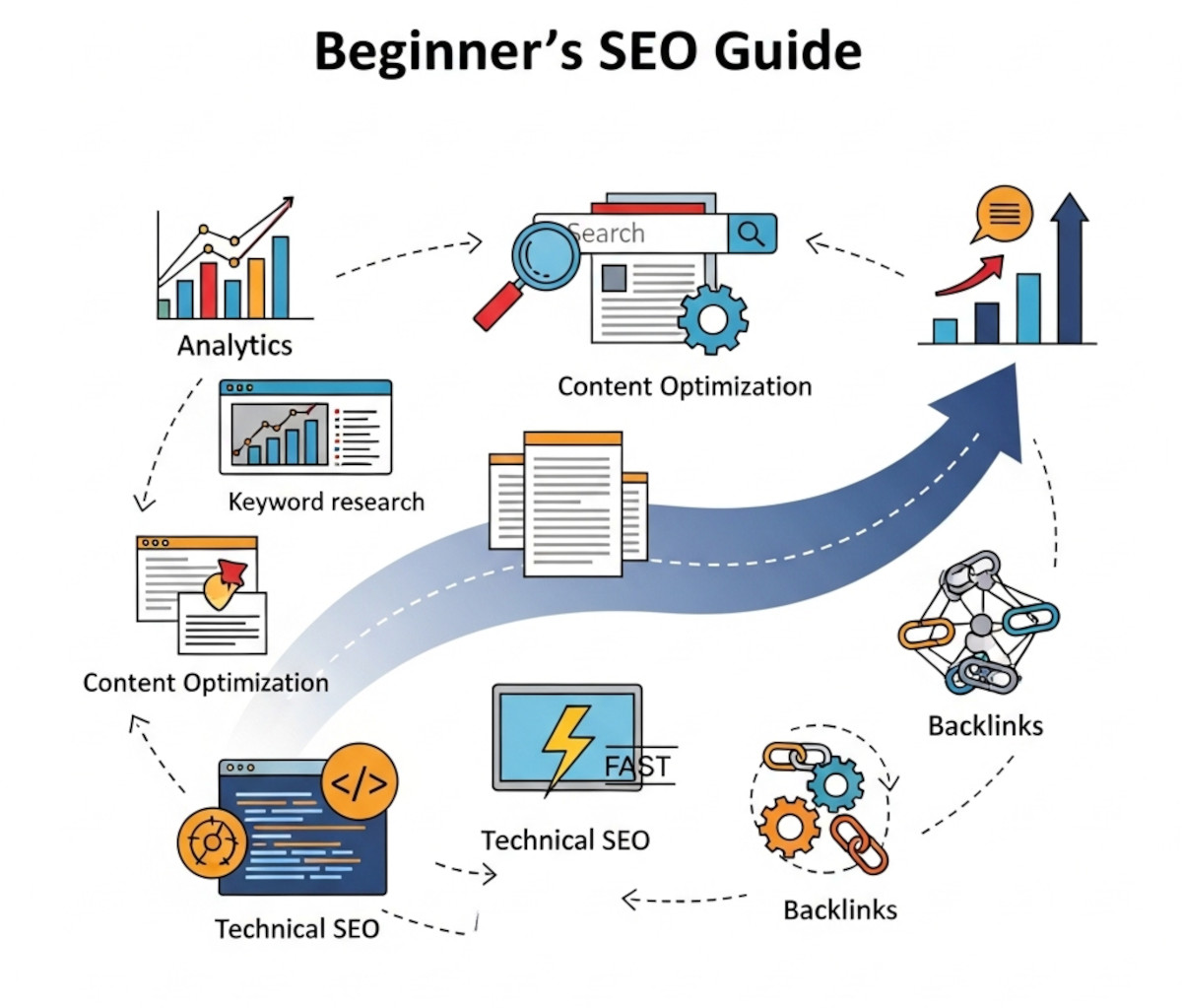
Beginner’s SEO Guide: Step-by-Step Process to Promote Your Business Online

Step 1: Set Up Website Analytics and Tracking
- Why? To understand who visits your site, where they come from, and how they interact with your pages.
- How?
- Create a Google Analytics account and install the tracking code on your website.
- Set up Google Search Console to monitor your website’s presence in Google search results and detect any issues.
Follow these Guides:
... Continue reading
Posted in Search Engine Optimization (SEO)
Tagged ahrefs, alt tag, alt text, authority, backlinks, bloat, bounce rate, broken links, clean code, compress images, conversions, drive traffic, fast load times, fast website, fresh content, google analytics, Google Business Profile, google keyword planner, Google Search Console, headers, headings, https, keyword research, keyword stuffing, lazy-load images, long-tail keywords, meta description, mobile-friendly, plugins, ranking factor, redirect, redirect url, responsive, responsive app, search engine optimization, search engine ranking, secure, seo, short-tail keywords, sitemap generator, sitempa, target audience, target keywords, technical seo, title, tracking, trust, trustworthy, ubersuggest, user experience, webp converter, website analytics, website visitors, xml
Leave a comment
Does Google have a 410 redirect budget?

The concept of a fixed "410 redirect budget" for websites is not a formally defined term by Google. However, the number of 410 (Gone) responses in your .htaccess file can indirectly impact your website's SEO in a few ways:
- Crawl Budget: While not a strict budget, search engines like Google have a finite amount of resources to crawl and index your website. Excessive 410 responses can signal to the search engine that these pages are no longer relevant, potentially diverting
Posted in Ask David!, Search Engine Optimization (SEO), Website Design
Tagged 410 redirect, bloat, bounce rate, broken links, duplicate content, fast loading times, high-quality content, htaccess, redirect, search engine optimization, search engine ranking, seo, slow website, technical seo, user engagement, user experience, website health
Leave a comment