




-
Recent Posts
- “My Partner Wants to Use WordPress Because 50% of the Web Uses It. Help!”
- Does EmDash Solve WordPress’s Problems, or Do You Need UltimateWB?
- How Not to Use AI: Stanford University Can Tell You
- Best Website Builder for SEO: WordPress vs. Wix vs. UltimateWB
- How to Make Sure Your Website Colors Have Enough Contrast for Accessibility
- Mobile-Friendly Website Checklist: 20 Things to Check
- Beehiiv Website Builder Review: The Problem Isn’t the Design – It’s the Lack of Control
- Elementor’s “Angie” AI Is More Than Bloat: Credits, Subscriptions, and a Growing Platform Problem
- How to Pass Google Business Profile Video Verification for Service Businesses
- The Great Deskilling: Why AI Dependence is Turning Developers into Prompt Babysitters
- The Three-Month Fuse: The Everest Forms Pro Attack and Why a Patched Plugin Can Still Put Websites at Risk
- Computer Screen Has Black Bars on the Sides: How to Fix It
- Could AI Make Humans Extinct Within the Next Decade?
- Is Weebly Getting Out of the Website-Builder Business?
- Are You “Leaking SEO” by Linking to Other Websites?
- Wix Harmony Is Now in Google Gemini. So Why Are Users Still Complaining?
- When AI Sounds Confident but Gets It Wrong: The Mount Shasta Rescue
- When AI Agents Start Working Together, Who Is Really in Control?
Categories
Tag Archives: search engines
Google Dodges a Breakup, But Big Changes Are Coming

September 2025 brought a huge update in the long-running antitrust battle with Google. The verdict? Google isn’t getting split up - so Chrome and Android are sticking around under the same roof - but the company does have to give up some of the “exclusive” deals that helped it stay the default search engine pretty much everywhere. On top of that, it’s going to have to share more data with competitors.
What the Judge Decided
1. No Forced Breakup
The
Posted in Announcements
Tagged AI search competitors, alphabet, android, antitrust, Big Tech regulation, chatgpt, chrome, claude, Claude AI, developers, DOJ vs Google, exclusive search deals, google, Google antitrust ruling 2025, Google monopoly, perplexity, search engines, SEO and AI, startups, tech law, UltimateWB blog, web regulation
Leave a comment
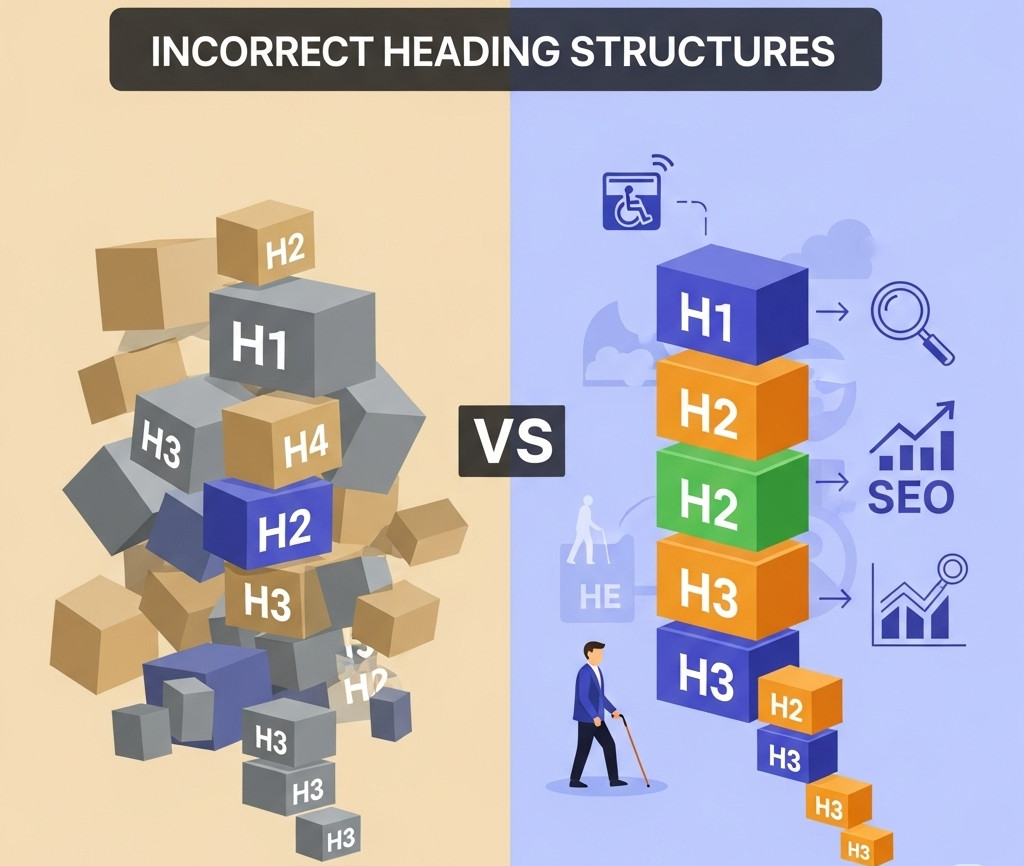
Why an H1 Shouldn’t Come After an H3 – And Why It Matters for SEO and Accessibility

When you're building a website, it's easy to focus on how things look - but how your site is structured under the hood is just as important. One commonly overlooked issue? Incorrect heading order.
We recently came across a website where the first visible heading was an <h3>, and the <h1> appeared after it. While it might not break the layout or cause visible problems, this kind of structure can negatively impact both SEO and accessibility. Here’s why heading
... Continue reading
Posted in Accessibility, Search Engine Optimization (SEO), Website Design
Tagged accessibility, accessibility compliance, assistive technologies, better indexing, clean code, compliance, easy navigation, focus, header, heading, heading order, heading tags, hierarchical structure, hierarchy, indexing, keyword relevance, logical hierarchy, main heading, page quality signals, performance, roadmap, screen readers, search engine optimization, search engine ranking, search engine results, search engines, semantic markers, seo, seo signals, snippets, standards-compliant, subheadings, usability, user experience, visibility, web standards, website structure
Leave a comment
AIO vs GEO vs SEO: What’s the Difference – and How to Optimize for All Three

If you’ve been online lately and you're a web dev like me, you’ve probably heard a lot of hype around AIO (AI Optimization) and GEO (Generative Engine Optimization). These buzzwords are being tossed around as the "new SEO" — but what do they actually mean? And how do they differ practically from traditional SEO?
If you’ve found yourself scratching your head, this post is for you. Let's break it down and get real about what AIO/GEO mean, how
... Continue reading
Posted in Search Engine Optimization (SEO)
Tagged ai optimization, AI tools, AI-generated content, ai-generated snippets, aio, author, authority, authority signals, backlinks, brand mentions, brand visibility, chatgpt, content clustering, faq, faq sections, featured snippets, forums, generative engine optimization, geo, google ai overviews, Google Business Profile, Google rich snippets, google's ai overview, headings, high-quality content, how-to, internal linking, internal links, keyword research, large language models, llm, mobile friendly, natural language, new seo, organization, perplexity.ai, quora, reddit, responsive, responsive app, schema, schema markup, schema.org, search engine optimization, search engines, seo, structured data, subheadings, technical performance, title tag, topical authority, trust, usability, visibility, website speed, wikidata, wikipedia
Leave a comment
Do I Really Need a Website for My Business If I’m Using Social Media?

If you're running a small business and getting steady clients through Instagram, Facebook, or even Linktree and booking platforms, you may be asking: Do I really need a website for my business?
It’s a common question - and a valid one. Social media is free, convenient, and highly effective for engaging with customers. But relying only on third-party platforms could actually limit your growth and put your business at risk in the long run.
Here’s why your business still needs
... Continue reading
Posted in Ask David!, Business, Marketing
Tagged account suspended, business credibility, customer engagement, discoverability, do I need a website, facebook, google search, instagram, linktree, online booking, online presence, professional, reach, search engines, seo, small business website, social media, third-party platforms, website vs social media
Leave a comment
How often should different types of web content be updated?

The frequency with which you should update your web content depends heavily on the type of content and your overall goals. Here's a general guideline:
1. Evergreen Content (e.g., How-to Guides, Core Product Information):
- Frequency: Infrequent, but regular reviews.
- Why: Evergreen content is designed to remain relevant for a long period. However, it's essential to:
- Check for accuracy periodically.
- Update with new information or industry changes.
- Refresh examples or screenshots.
- Review for SEO improvements.
- Example: A guide on "How
Posted in Ask David!, Search Engine Optimization (SEO), Web Content
Tagged analytics, articles, best of, blog posts, content audit, core product info, drive traffic, engagement, engaging content, evergreen content, fresh content, how-to guides, improve visibility, legal, listicle, news, organic traffic, outdated, privacy policy, product pages, search engine optimization, search engines, seo, service descriptions, terms of service, time-sensitive content, transparency, update content, user feedback, web content, website analytics, website fresh
Leave a comment
Website or App First? A Startup’s Dilemma

“Ask David!” question: "Should I build a website first or app for my startup?"
The age-old question for startups: website or app?
When launching a new venture, deciding whether to prioritize a website or a mobile app can be a daunting task. Both options have their merits and drawbacks, and the optimal choice often depends
... Continue reading
Posted in Ask David!, Business
Tagged brand loyalty, branding, cross-device compatibility, cross-platform compatibility, mobile friendly, organic traffic, push notifications, responsive, responsive app, search engine optimization, search engines, seo, startup, target audience, user friendly, website vs app
Leave a comment
Should you submit your sitemap to other search engines besides Google?

If you're working on your website's SEO, you have probably heard that sitemaps play a crucial role in helping search engines discover and index your website's content. But when it comes to submitting your sitemap, is Google the only search engine that matters?
The answer is both yes and no. Search engines like Bing and DuckDuckGo are perfectly capable of finding your website on their own through a process called crawling. However, submitting your sitemap can offer some
... Continue reading
Posted in Ask David!, Search Engine Optimization (SEO), Website Traffic
Tagged bing, content is king, duck duck go, easy navigation, google, Google Search Console, high-quality content, indexing, mobile-friendly, responsive, search engine crawl, search engine optimization, search engines, seo, seo tools, sitemap, submit sitemap
Leave a comment
How robots can keep your site from being indexed on Google, Yahoo, top search engines

Yes, robots can actually prevent your website from being indexed by top search engines like Google and Yahoo - and no, this isn't a sci-fi movie plot! Don't worry, you can fix it, there is an easy solution. ...Just to clarify first though, we are talking about robots - as in a robotx.txt file - in the root of your website, i.e. www.your-website.com/robots.txt .
The Quick Fix: Use a Proper robots.txt File, Don’t Delete It
If you want your website to be
... Continue reading
Does posting your content on your Facebook page or Twitter count as backlinks for your website when you link to it? (or should I say “X” instead of Twitter?!)
No, posting your content on your Facebook page or Twitter does not count as backlinks for your website, even if you link to it. This is because social media links are typically marked as "nofollow" by search engines, which means that search engines do not pass any link equity or "SEO value" through those links.
However, social media posts can still be beneficial for your website in a number of ways. For example, social media posts can help to:
- Drive
... Continue reading