



-
Recent Posts
- “My Partner Wants to Use WordPress Because 50% of the Web Uses It. Help!”
- Does EmDash Solve WordPress’s Problems, or Do You Need UltimateWB?
- How Not to Use AI: Stanford University Can Tell You
- Best Website Builder for SEO: WordPress vs. Wix vs. UltimateWB
- How to Make Sure Your Website Colors Have Enough Contrast for Accessibility
- Mobile-Friendly Website Checklist: 20 Things to Check
- Beehiiv Website Builder Review: The Problem Isn’t the Design – It’s the Lack of Control
- Elementor’s “Angie” AI Is More Than Bloat: Credits, Subscriptions, and a Growing Platform Problem
- How to Pass Google Business Profile Video Verification for Service Businesses
- The Great Deskilling: Why AI Dependence is Turning Developers into Prompt Babysitters
- The Three-Month Fuse: The Everest Forms Pro Attack and Why a Patched Plugin Can Still Put Websites at Risk
- Computer Screen Has Black Bars on the Sides: How to Fix It
- Could AI Make Humans Extinct Within the Next Decade?
- Is Weebly Getting Out of the Website-Builder Business?
- Are You “Leaking SEO” by Linking to Other Websites?
- Wix Harmony Is Now in Google Gemini. So Why Are Users Still Complaining?
- When AI Sounds Confident but Gets It Wrong: The Mount Shasta Rescue
- When AI Agents Start Working Together, Who Is Really in Control?
Categories
Tag Archives: heading
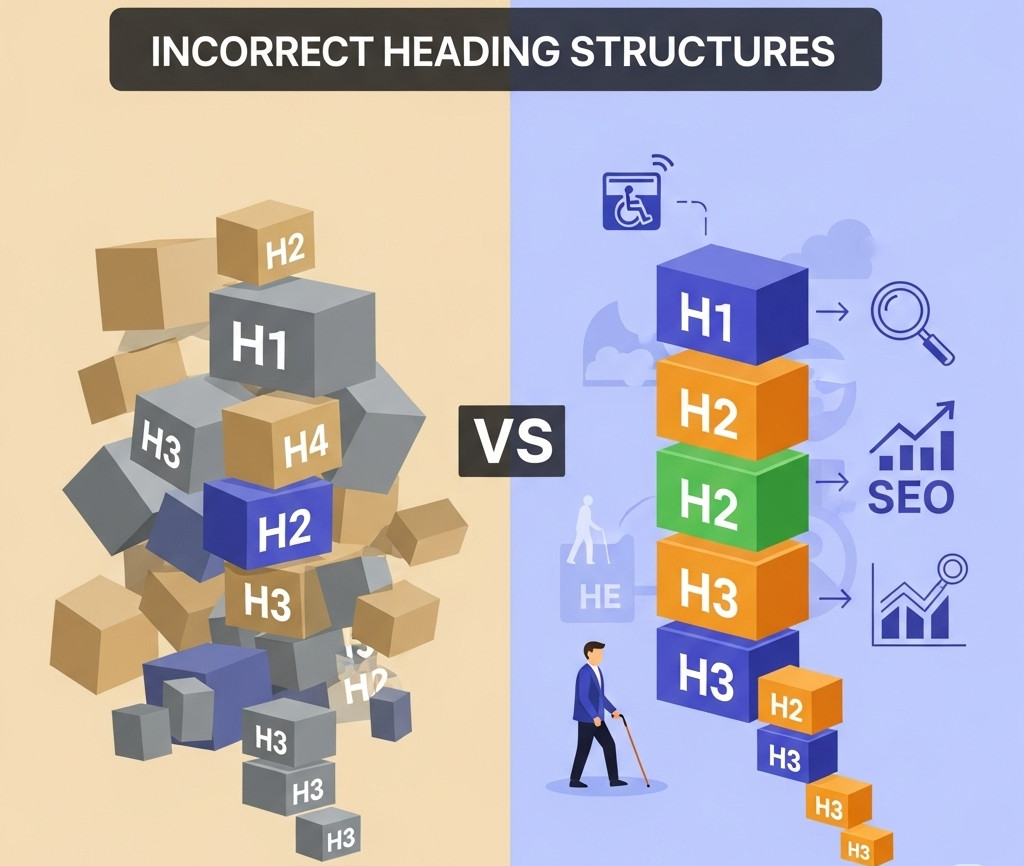
Why an H1 Shouldn’t Come After an H3 – And Why It Matters for SEO and Accessibility

When you're building a website, it's easy to focus on how things look - but how your site is structured under the hood is just as important. One commonly overlooked issue? Incorrect heading order.
We recently came across a website where the first visible heading was an <h3>, and the <h1> appeared after it. While it might not break the layout or cause visible problems, this kind of structure can negatively impact both SEO and accessibility. Here’s why heading
... Continue reading
Posted in Accessibility, Search Engine Optimization (SEO), Website Design
Tagged accessibility, accessibility compliance, assistive technologies, better indexing, clean code, compliance, easy navigation, focus, header, heading, heading order, heading tags, hierarchical structure, hierarchy, indexing, keyword relevance, logical hierarchy, main heading, page quality signals, performance, roadmap, screen readers, search engine optimization, search engine ranking, search engine results, search engines, semantic markers, seo, seo signals, snippets, standards-compliant, subheadings, usability, user experience, visibility, web standards, website structure
Leave a comment
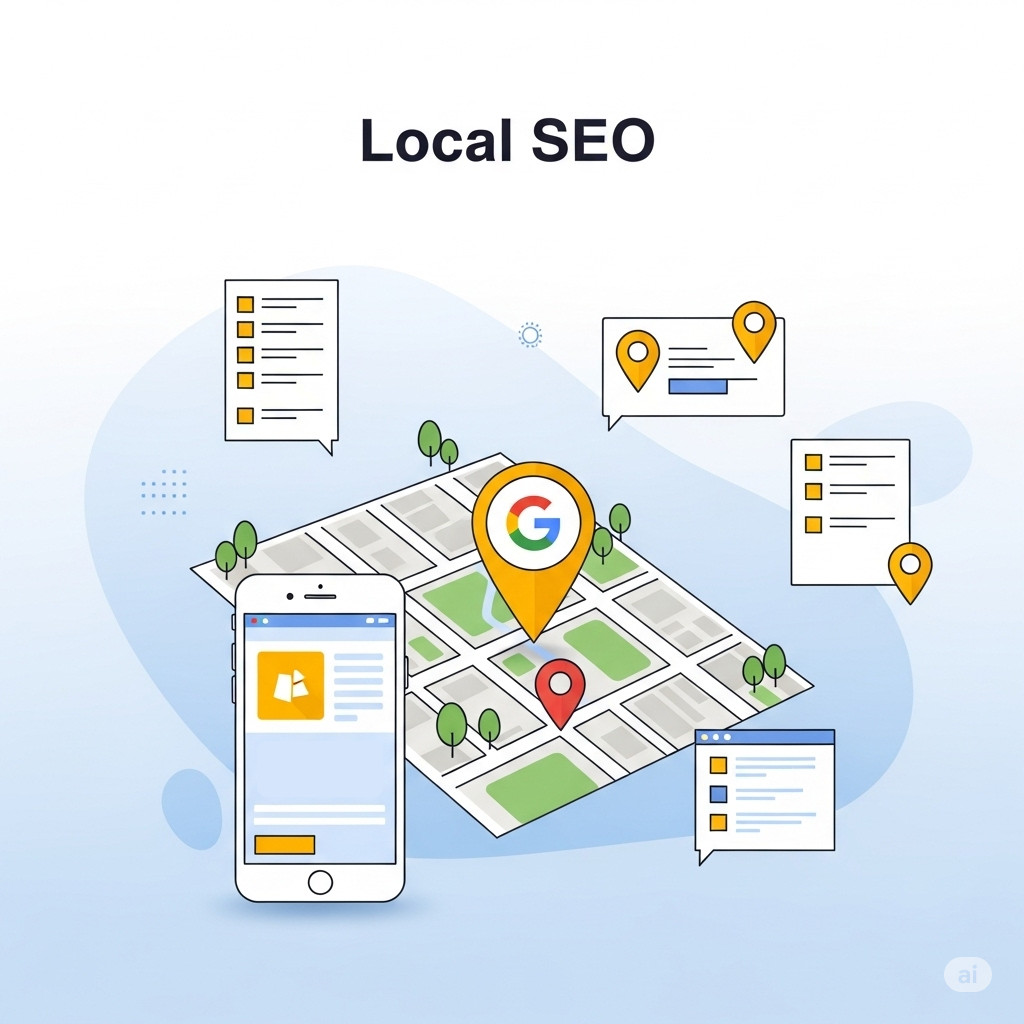
Local SEO Tips: How to Boost Your Business Visibility in Your Neighborhood

If you run a local business, ranking well in local search results can be a game-changer. Local SEO (Search Engine Optimization) helps your business show up when people nearby search for the products or services you offer. Whether you own a cafe, a law firm, a salon, or a home service company, optimizing your local SEO can drive more foot traffic and qualified leads to your business.
Here are some proven Local SEO tips to help you get noticed by
... Continue reading
Posted in Business, Marketing, Search Engine Optimization (SEO)
Tagged authority, backlinks, clean code, conversational keywords, fast-loading times, Google Business Profile, guest posts, heading, headings, keywords, local authority, local backlinks, local content marketing, local keywords, local marketing, local reviews, local search optimization, local seo, local SEO tips, meta description, mobile SEO, mobile-friendly, responsive, responsive app, schema.org, search engine optimization, seo, seo tips, structured data markup, target keywords, title tags, user experience, voice search
Leave a comment
How do you check if your website content is SEO optimized?

There are two main ways to check if your website content is SEO optimized:
1. Manual SEO Checklist:
This involves going through a list of important SEO factors and making sure your content adheres to them. The great thing about using UltimateWB for your website builder is that you get a built-in SEO tool - so it is super easy to customize and set your title tags and meta descriptions for each page, even your blog if you have one.
... Continue reading
Posted in Ask David!, Search Engine Optimization (SEO)
Tagged ahrefs, Google Search Console, heading, headings, keyward targeting, keyword density, keyword-rich, long-tail keywords, meta descriptions, moz, on-page optimization, ranking, se ranking, search engine optimization, search engine ranking, semrush, seo, seo optimized, seo tool, title tags
Leave a comment