







-
Recent Posts
- “My Partner Wants to Use WordPress Because 50% of the Web Uses It. Help!”
- Does EmDash Solve WordPress’s Problems, or Do You Need UltimateWB?
- How Not to Use AI: Stanford University Can Tell You
- Best Website Builder for SEO: WordPress vs. Wix vs. UltimateWB
- How to Make Sure Your Website Colors Have Enough Contrast for Accessibility
- Mobile-Friendly Website Checklist: 20 Things to Check
- Beehiiv Website Builder Review: The Problem Isn’t the Design – It’s the Lack of Control
- Elementor’s “Angie” AI Is More Than Bloat: Credits, Subscriptions, and a Growing Platform Problem
- How to Pass Google Business Profile Video Verification for Service Businesses
- The Great Deskilling: Why AI Dependence is Turning Developers into Prompt Babysitters
- The Three-Month Fuse: The Everest Forms Pro Attack and Why a Patched Plugin Can Still Put Websites at Risk
- Computer Screen Has Black Bars on the Sides: How to Fix It
- Could AI Make Humans Extinct Within the Next Decade?
- Is Weebly Getting Out of the Website-Builder Business?
- Are You “Leaking SEO” by Linking to Other Websites?
- Wix Harmony Is Now in Google Gemini. So Why Are Users Still Complaining?
- When AI Sounds Confident but Gets It Wrong: The Mount Shasta Rescue
- When AI Agents Start Working Together, Who Is Really in Control?
Categories
Tag Archives: bounce rate
The Hidden SEO Power of Your Web Hosting Provider

When most people think about search engine optimization (SEO), they focus on keywords, content, and backlinks. But there’s a lesser-known factor that can quietly make or break your rankings: your web hosting provider.
Yes - your hosting provider plays a bigger role in your website’s SEO than you might realize. In this post, we’ll uncover the hidden ways web hosting affects SEO performance and how choosing the right provider can help your site climb higher in the search
... Continue reading
Posted in Search Engine Optimization (SEO), Web Hosting
Tagged backlinks, boost search rankings, bounce rate, content, crawlability, fast loading times, keywords, rankings, scalability, scalable, search engine bots, search engine optimization, seo, server reliability, server uptime, ssl, user experience, web hosting, website security, website speed
Leave a comment
What are “thin pages,” and how can they hurt your On-Page SEO?

"Thin pages" are web pages that provide little to no value to users. They typically contain very little original content, lack depth, and don't adequately address the user's search intent. These pages can significantly harm your on-page SEO.
Here's a breakdown of what thin pages are and how they can negatively impact your website's search engine rankings:
Characteristics of Thin Pages:
- Low Word Count: They contain very little text, often just a few sentences or paragraphs.
- Duplicate or Scraped
Posted in Ask David!, Search Engine Optimization (SEO)
Tagged affiliate links, affiliate pages, bounce rate, content audits, crawl budget, doorway pages, duplicate content, high-quality content, internal linking, keyword stuffing, keywords, lack of value, low content quality, low word count, on-page seo, organic traffic, original content, scraped content, search engine optimization, search engine penalties, search engine ranking, seo, thin pages, user experience, user intent, website authority
Leave a comment
How Do Graphic Design Services Impact Website User Experience (UX)?

When it comes to creating an effective and engaging website, the role of graphic design cannot be overstated. While it’s easy to think of graphic design as just aesthetic - colors, typography/fonts, and imagery - its impact goes far beyond just looking good. A well-executed design can drastically improve a website’s user experience (UX), leading to better usability, faster load times, and more intuitive navigation. Here’s how
... Continue reading
Posted in Ask David!, Graphic Design, Website Design
Tagged bounce rate, branding, call to action, colors, convert traffic, credibility, cta, easy navigation, engagement, fast-loading times, first impressions, graphic design, header tags, line spacing, mobile friendly, professional layout, responsive, responsive app, trust, typography, usability, user experience, user-friendly, ux, visuals, white space
Leave a comment
How Long Does It Take for a New Website to Start Ranking?

If you've just launched a new website and are wondering how long it takes to start getting significant organic traffic, you're not alone. Many SEO professionals and website owners have debated this topic, and while there’s no definitive timeline, we can break down the key factors that influence ranking and traffic growth.
Understanding the Google Sandbox Effect
One reason new websites take time to rank is the Google Sandbox Effect - an unofficial term used to describe how Google
... Continue reading
Posted in Ask David!, Search Engine Optimization (SEO), Website Traffic
Tagged authority, backlinks, bounce rate, click-through rates, credibility, ctr, domain authority, google sandbox effect, Google Search Console, gsc, guest posting, high engagement, high-quality content, keyword strategy, long-tail keywords, organic traffic, search engine ranking, seo, social media, trust, user engagement
Leave a comment
Does Google have a 410 redirect budget?

The concept of a fixed "410 redirect budget" for websites is not a formally defined term by Google. However, the number of 410 (Gone) responses in your .htaccess file can indirectly impact your website's SEO in a few ways:
- Crawl Budget: While not a strict budget, search engines like Google have a finite amount of resources to crawl and index your website. Excessive 410 responses can signal to the search engine that these pages are no longer relevant, potentially diverting
Posted in Ask David!, Search Engine Optimization (SEO), Website Design
Tagged 410 redirect, bloat, bounce rate, broken links, duplicate content, fast loading times, high-quality content, htaccess, redirect, search engine optimization, search engine ranking, seo, slow website, technical seo, user engagement, user experience, website health
Leave a comment
What is the significance of web hosting in SEO?

Web hosting is the backbone of your online presence, and it plays a critical role in your SEO strategy. While it's not a direct ranking factor, it significantly influences factors that do impact your search engine rankings.
Here's how web hosting affects SEO:
1. Website Speed:
- Faster Loading Times: A reliable web host ensures your website loads quickly.
- Improved User Experience: Fast-loading websites keep visitors engaged, reducing bounce rates.
- Higher Search Engine Rankings: Search engines
Posted in Ask David!, Web Hosting, Website Security
Tagged bounce rate, conversions, cyber threats, cyberattacks, engagement, fast loading times, future-proofing, hackers, malware, ranking factor, scalable, search engine ranking, seo, seo ranking, server, ssl, traffic, uptime, user experience, web hosting
Leave a comment
How to Keep Bounce Rate in Check? Tips for a Successful Website

Bounce rate, the percentage of visitors who leave your website after viewing only one page, is a crucial metric for website success. A high bounce rate can indicate that your content isn't engaging or relevant to your target audience. Here are some tips to help you keep your bounce rate in check:
1. Optimize Page Load Speed
- Compress images: Reduce file sizes to speed up loading times.
- Minify CSS and JavaScript: Remove unnecessary characters to optimize code. If you use
Posted in Ask David!, Website Design, Website Traffic
Tagged a/b testing, bloat, bounce rate, branding, broken links, browser caching, call to action, cdn, clean code, clear navigation, compress images, consistent branding, easy navigation, fast loading times, fast website builder, google analytics, Google Search Console, high-quality content, htaccess, https, internal linking, intuitive layout, keyword research, meta descriptions, minify css, minify javascript, minimize redirects, mobile friendly, page load speed, responsive, responsive app, search engine optimization, search engine ranking, seo, server errors, ssl, strong visuals, successful, target keywords, touchscreens, user testing
Leave a comment
How can website speed and performance impact SEO and user experience?
Website speed and performance play a crucial role in both SEO (Search Engine Optimization) and user experience. Here's how they are connected:
Impact on SEO:
- Search Engine Ranking: Search engines like Google prioritize fast-loading websites in their ranking algorithms. A slow website can negatively impact your search ranking, making it harder for potential visitors to find you.
- Dwell Time and Bounce Rate: Dwell time refers to the amount of time users spend on your website. Bounce rate is the
How to make your website load faster?

You know it’s important. We know it’s important. So let’s get to it - here’s how to speed up your website and keep your visitors (and Google) happy.
Need for Speed: Optimizing Your Website for Lightning-Fast Loading
Your website’s loading speed can make or break your online presence. In this guide, we’ll cover the top strategies for making your website load faster - starting with choosing a sleek platform like UltimateWB, built for performance.
Why Does Website Speed Matter?
... Continue reading
Posted in Ask David!, Search Engine Optimization (SEO), Website Design
Tagged bloat, bounce rate, browser caching, clean code, content lazy loading, core web vitals, fast website, fast website builder, fast-loading times, lazy load images, lazy loading, lazy loading ads, loading time, mobile optimization, optimize images, pagespeed insights, responsive, responsive app, search engine optimization, search engine ranking, seo, timeline, webp, webp converter, website speed
Leave a comment
How do I make my page header fixed while scrolling?

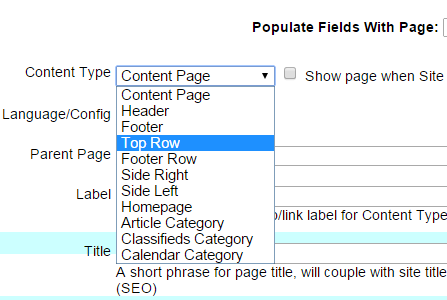
Use the built-in “Top Row” feature in UltimateWB. This content type is designed to stay fixed at the top of the page as users scroll. Just go to List Pages > Add Page or Edit Page, and choose Content Type: Top Row. You can customize the look and layout of this fixed header from your Styles Manager in the admin panel - no coding needed.
Why use a fixed header?
A fixed (or “sticky”) header helps improve navigation
... Continue reading