








-
Recent Posts
- “My Partner Wants to Use WordPress Because 50% of the Web Uses It. Help!”
- Does EmDash Solve WordPress’s Problems, or Do You Need UltimateWB?
- How Not to Use AI: Stanford University Can Tell You
- Best Website Builder for SEO: WordPress vs. Wix vs. UltimateWB
- How to Make Sure Your Website Colors Have Enough Contrast for Accessibility
- Mobile-Friendly Website Checklist: 20 Things to Check
- Beehiiv Website Builder Review: The Problem Isn’t the Design – It’s the Lack of Control
- Elementor’s “Angie” AI Is More Than Bloat: Credits, Subscriptions, and a Growing Platform Problem
- How to Pass Google Business Profile Video Verification for Service Businesses
- The Great Deskilling: Why AI Dependence is Turning Developers into Prompt Babysitters
- The Three-Month Fuse: The Everest Forms Pro Attack and Why a Patched Plugin Can Still Put Websites at Risk
- Computer Screen Has Black Bars on the Sides: How to Fix It
- Could AI Make Humans Extinct Within the Next Decade?
- Is Weebly Getting Out of the Website-Builder Business?
- Are You “Leaking SEO” by Linking to Other Websites?
- Wix Harmony Is Now in Google Gemini. So Why Are Users Still Complaining?
- When AI Sounds Confident but Gets It Wrong: The Mount Shasta Rescue
- When AI Agents Start Working Together, Who Is Really in Control?
Categories
Tag Archives: internal linking
Can you still get ranked just as well with a one-page website than with a multi-page website? i.e. with the proper use of h1 headers, etc.?

Yes, you can absolutely achieve good SEO rankings with a well-optimized one-page website. While multi-page websites offer certain advantages, such as targeting a wider range of keywords and providing a more structured user experience, a single-page website can be equally effective if done right.
In fact, in some cases, a one-page website can even have an advantage over a multi-page website. Here's 2 main reasons why:
1. User Experience: A one-page website can be more user-friendly, as visitors don't
... Continue reading
Posted in Ask David!, Search Engine Optimization (SEO)
Tagged backlinks, clean urls, clear content, concise, concise content, fast loading times, focus, header tags, headers, high-quality content, internal linking, keyword placement, keywords, meta description, mobile friendly, multi-page website, one-page website, optimized urls, organic traffic, page title, responsive, search engine optimization, search engine ranking, seo, user experience, user friendly
Leave a comment
How can web design support search engine optimization (SEO) efforts?

Web design and SEO go hand in hand. While web design focuses on the aesthetics and functionality of a website, SEO works to improve a website's ranking in search results. By creating a website that is both user-friendly and SEO-friendly, you can attract more visitors and achieve your business goals. Here are some ways web design can support SEO efforts:
Improved User Experience (UX):
- Clear and concise navigation: A website with a clear and intuitive navigation structure makes it
Posted in Ask David!, Search Engine Optimization (SEO), Website Design
Tagged build trust, clean code, content optimization, credibility, fast loading times, fresh content, high-quality content, improved user experience, internal linking, keyword integration, keyword stuffing, meta descriptions, mobile-friendly, responsive, search engine optimization, search engine ranking, security, seo, title tags, user experience, user-friendly, ux
Leave a comment
What Common SEO Mistakes Should Companies Avoid on Their WordPress Sites?

When it comes to building and managing a website, WordPress is a popular choice for many companies. However, it’s essential to acknowledge that there are alternatives like UltimateWB, which offers faster-loading websites and better optimization out of the box. If you’re sticking with WordPress, it’s crucial to avoid common SEO mistakes to ensure your site ranks well on search engines. Here are some key SEO pitfalls and how to avoid them.
1. Ignoring Site Speed
One of the significant drawbacks
... Continue reading
Posted in Compare Website Builders, Search Engine Optimization (SEO)
Tagged bloat, clean urls, fast loading times, google analytics, Google Search Console, internal linking, keywords, meta descriptions, mobile-friendly, organic traffic, performance, responsive, responsive app, responsive check tool, search engine optimization, search engine optimization tips, search engine ranking, search engine results pages, seo, seo-friendly urls, seo-optimized content, serps, sitemap, sitemap generator, speed, themes, third-party plugin, title tags, website speed, xml
Leave a comment
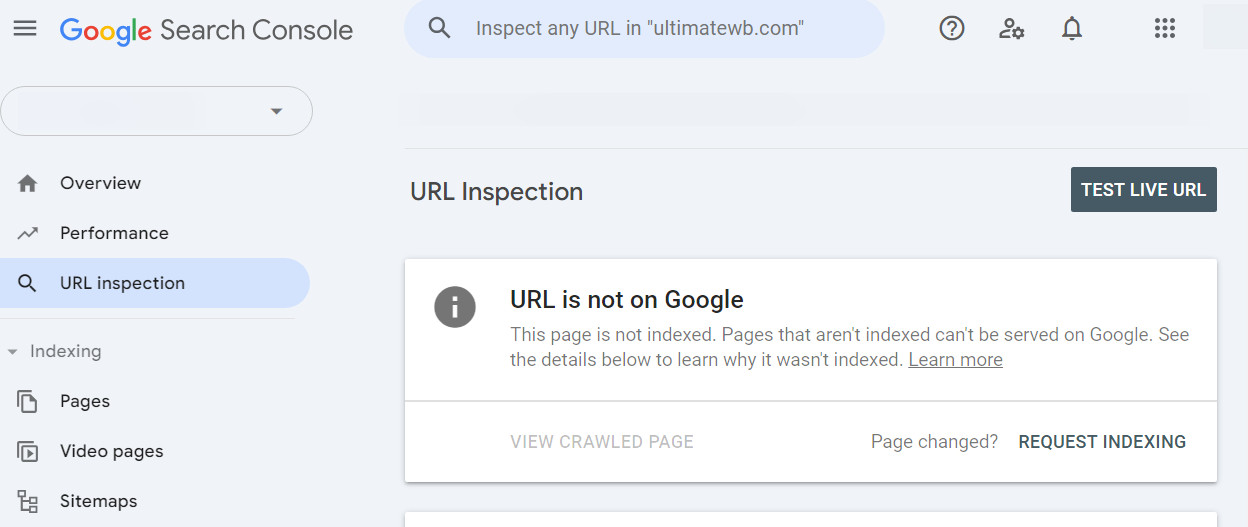
How long does it take Google to index a page after you request indexing the page on Google Search Console?

Google doesn't guarantee a specific timeframe for indexing a page after you request it through Google Search Console. There are several factors at play, but here's a general idea:
- Initial Crawl: It can take anywhere from a few days to a week for Google to even discover and crawl your submitted URL.
- Indexing Decision: After crawling, Google analyzes the content and may not index it for various reasons (duplicate content, low quality, etc.).
- Website Health: If your website is
Posted in Ask David!, Search Engine Optimization (SEO)
Tagged backlinks, crawl, Google Search Console, high-quality content, increased visibility, index coverage report, indexing, internal linking, mobile-friendly, repsonsive, responsive app, sitemap, sitemap generator, social media, social signals, url inspection tool
Leave a comment
What are some white hat SEO tricks and tips for boosting organic traffic?

Looking to increase your website’s organic traffic without cutting corners? These white hat SEO strategies focus on long-term, sustainable growth by playing by the rules and delivering real value.
🎯 Target Long-Tail Keywords
While high-volume keywords are tempting, they’re also highly competitive. Instead, focus on long-tail keywords - more specific search phrases your target audience actually uses. These give you a better chance of ranking and attracting qualified traffic.
📝 Craft Compelling Titles & Descriptions
Your titles and meta descriptions
... Continue reading
Posted in Ask David!, Search Engine Optimization (SEO)
Tagged accessibility, alt tags, alt text, authority, backlinks, build trust, clean code, fast-loading website, google my business listing, google search results, guest blogging, HARO, help a reporter out, internal linking, internal links, link juice, local seo, long-tail keywords, meta description, mobile friendly, optimize images, organic growth, organic traffic, page speed, responsive, responsive app, rich snippets, seo strategies, seo tips, seo tool, seo tricks, share expertise, star ratings, website speed, white hat
Leave a comment
Single Page vs. Multi-Page Websites: Which is better for SEO?

In the world of website design, a key decision lies in the structure: single-page or multi-page? UltimateWB makes it easy to switch between the two formats with the click of a button through your website admin panel. While both have their merits, SEO (Search Engine Optimization) plays a crucial role, and understanding how each format impacts search visibility is essential.
The Power of Multiple Pages
Multi-page websites hold a distinct advantage in SEO for one key reason: keyword targeting.
... Continue reading
Posted in Ask David!, Search Engine Optimization (SEO), Website Design
Tagged authority, content is king, internal linking, multi-page website, one-page website, search engine optimization, search engine results pages, seo, serps, single page, target keywords, user experience, user friendly
Leave a comment
Cracking the Code: Understanding Moz’s Domain Analysis Results

In our last post, "Demystifying Domain Authority: Your Website’s Credibility Score", we talked about the Domain Authority metric in general. Now, let's dive in a bit deeper!
When you enter your website URL into Moz's free Domain Analysis tool, you're greeted with a wealth of data about your website's health and search engine optimization (SEO) potential. But what do all those numbers and scores actually mean? Let's break down some of the key metrics you might encounter, starting
... Continue readingWhat benefits do breadcrumbs have for the SEO of a website or blog site?

Breadcrumbs offer a two-fold benefit for SEO: they improve user experience (UX) which indirectly helps SEO, and they also send signals directly to search engines like Google about your website structure.
Improved User Experience:
- Clearer Navigation: Breadcrumbs act like a mini-map for users, letting them see their current location within the website's hierarchy and providing a way to navigate back to higher-level pages. This is especially helpful for
What is the best way to structure an ecommerce website with lots of products and several categories/subcategories?

Structuring an e-commerce website with a large number of products and multiple categories and subcategories requires careful planning to ensure a user-friendly experience and efficient navigation. Here's a recommended approach to structuring such a website. The process is a lot easier with the UltimateWB built-in e-commerce app and its many features!
1. Clear Main Navigation: Create a top-level navigation menu that features the main product categories. Keep the menu items concise and intuitive to help users quickly identify where they
... Continue reading
Posted in Ask David!, Website Design
Tagged advanced search, breadcrumb navigation, categories, e-commerce website, fast loading times, featured products, filters, internal linking, navigation, new products, online store, performance optimization, product pages, responsive, search, seo, sitemap, subcategories, user testing, user-friendly urls, website speed, website structure
Leave a comment
Is a blog the best way to build up your SEO and search engine ranking?

A blog is indeed one of the most effective and commonly used methods to build up your SEO (Search Engine Optimization) and improve your search engine ranking. Here's why a blog can be a powerful tool for enhancing your SEO efforts:
1. Fresh and Relevant Content: Search engines love fresh, relevant, and high-quality content. A blog allows you to consistently publish new articles, which can attract both search engine crawlers and users looking for valuable information.
2. Targeted Keywords: Blogs
... Continue reading