








-
Recent Posts
- “My Partner Wants to Use WordPress Because 50% of the Web Uses It. Help!”
- Does EmDash Solve WordPress’s Problems, or Do You Need UltimateWB?
- How Not to Use AI: Stanford University Can Tell You
- Best Website Builder for SEO: WordPress vs. Wix vs. UltimateWB
- How to Make Sure Your Website Colors Have Enough Contrast for Accessibility
- Mobile-Friendly Website Checklist: 20 Things to Check
- Beehiiv Website Builder Review: The Problem Isn’t the Design – It’s the Lack of Control
- Elementor’s “Angie” AI Is More Than Bloat: Credits, Subscriptions, and a Growing Platform Problem
- How to Pass Google Business Profile Video Verification for Service Businesses
- The Great Deskilling: Why AI Dependence is Turning Developers into Prompt Babysitters
- The Three-Month Fuse: The Everest Forms Pro Attack and Why a Patched Plugin Can Still Put Websites at Risk
- Computer Screen Has Black Bars on the Sides: How to Fix It
- Could AI Make Humans Extinct Within the Next Decade?
- Is Weebly Getting Out of the Website-Builder Business?
- Are You “Leaking SEO” by Linking to Other Websites?
- Wix Harmony Is Now in Google Gemini. So Why Are Users Still Complaining?
- When AI Sounds Confident but Gets It Wrong: The Mount Shasta Rescue
- When AI Agents Start Working Together, Who Is Really in Control?
Categories
Tag Archives: fast loading times
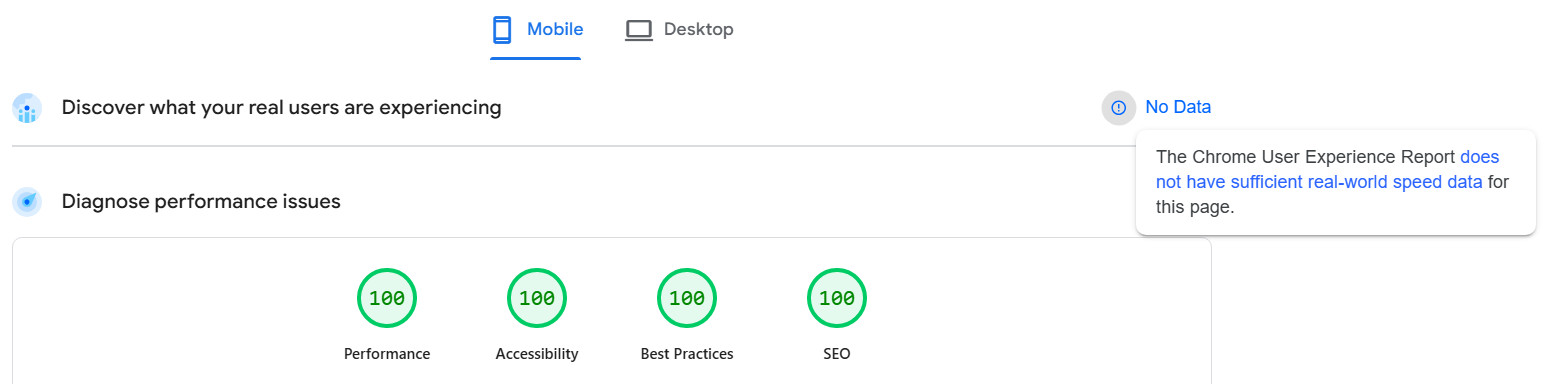
How Many Views Do You Need for Core Web Vitals to Show in Google Search Console or PageSpeed Insights?

If you've ever opened up Google Search Console or PageSpeed Insights only to be told:
“Not enough usage data in the last 90 days for this device type,” or "The Chrome User Experience Report does not have sufficient real-world speed data for this page."
...you’re not alone - and you're definitely not the first to wonder:
How many views do you actually need for Core Web Vitals data to show up?
Let’s break down what’s going on, how Google collects
... Continue reading
Posted in Ask David!, Search Engine Optimization (SEO), Website Traffic
Tagged barry pollard, chrome, chrome traffic, chrome user experience report, chrome users, core web vitals, crux, desktop traffic, fast loading times, field data, google algorithm, Google Search Central Help, gsc, lighthouse, mobile traffic, pagespeed insights, psi, search engine optimization, seo, stack overflow, usage statistics, web performance
Leave a comment
What Your Website Visitors Are Secretly Telling You (Through Their Clicks & Bounces)

You’ve spent hours tweaking your website design, crafting the perfect homepage copy, and designing a style you love. But here’s the real question: do your visitors love it too?
You don’t have to guess. In fact, your website visitors are constantly giving you valuable feedback through their actions (or lack of them). From bounce rates to click paths, scroll depth to session duration - every interaction is a clue about what you're doing right... or very wrong.
Let’s decode the
... Continue reading
Posted in Search Engine Optimization (SEO), Website Design, Website Traffic
Tagged bloat, bounce rate, conversions, credibility, design, dwell time, engagement, fast loading times, fresh content, headlines, high-quality content, internal linking, layout, mobile friendly, navigation, ongoing value, page depth, rage clicking, responsive, scroll depth, search engine optimization, search engine ranking, seo, session duration, slow load times, usability, user signals
Leave a comment
The Hidden SEO Power of Your Web Hosting Provider

When most people think about search engine optimization (SEO), they focus on keywords, content, and backlinks. But there’s a lesser-known factor that can quietly make or break your rankings: your web hosting provider.
Yes - your hosting provider plays a bigger role in your website’s SEO than you might realize. In this post, we’ll uncover the hidden ways web hosting affects SEO performance and how choosing the right provider can help your site climb higher in the search
... Continue reading
Posted in Search Engine Optimization (SEO), Web Hosting
Tagged backlinks, boost search rankings, bounce rate, content, crawlability, fast loading times, keywords, rankings, scalability, scalable, search engine bots, search engine optimization, seo, server reliability, server uptime, ssl, user experience, web hosting, website security, website speed
Leave a comment
How Does Website Speed Impact Online Sales and Customer Experience?

Website speed is a critical factor in online business. A slow website drives customers away, reduces sales, and creates a frustrating user experience. A fast-loading site, on the other hand, keeps users engaged, boosts conversions, and improves satisfaction. Here’s how website speed affects online sales and customer experience.
1. First Impressions Matter
Users expect websites to load quickly. Research shows that 40% of consumers abandon a site if it takes longer than three seconds to load. Slow load times
... Continue reading
Posted in Ask David!, E-commerce, Search Engine Optimization (SEO), Website Design
Tagged bloat, boost conversions, bounce rates, clean code, code bloat, conversion rates, customer experience, engagement, fast loading times, higher revenue, mobile friendly, navigation, online credibility, online sales, optimize website, organic traffic, page speed, pagespeed insights, ranking factor, responisve, responsive app, revenue, search engine ranking, sleek, user experience, webp, webp converter, website speed
Leave a comment
Do You Need a Blog to Rank High on Search Engines?

When launching a new website, ranking high on Google is a top priority for driving organic traffic and visibility. A common question that arises is whether blogging is necessary for SEO success or if other strategies can achieve high rankings. While blogging is a powerful tool, it's not the only way to rank well on search engines. Let's explore how blogging helps and alternative strategies you can use.
How Blogging Helps with SEO
Blogging can be highly beneficial for improving
... Continue reading
Posted in Ask David!, Search Engine Optimization (SEO)
Tagged authority, backlinks, blog seo, domain authority, fast loading times, fresh content, google search engine ranking, high-quality content, https, internal linking, keyword-rich, long-tail keywords, meta descriptions, meta title, mobile friendly, organic traffic, podcasts, responsive, responsive app, reviews, schema markup, search engine optimization, secure, seo, seo strategies, sitemap, sitemap generator, social proof, structured data, target keywords, technical seo, user-generated content, youtube seo
Leave a comment
How to Build a Website That Ranks and Converts with E-E-A-T

Creating a website that ranks well on search engines and converts visitors into customers requires more than just having good content. It requires a solid strategy, combining search engine optimization (SEO) with the principles of E-E-A-T: Experience, Expertise, Authoritativeness, and Trustworthiness. These elements are key to Google's algorithms and can have a major impact on your site's visibility and user engagement.
Here’s a step-by-step guide to help you build a website that not only ranks but also converts effectively by
... Continue reading
Posted in Search Engine Optimization (SEO)
Tagged a/b testing, authority, backlinks, call to action, content strategy, cta, digital marketing, E-E-A-T, easy navigation, engagement, experience, expertise, fast loading times, featured snippets, google algorithm, google ranking, Google SEO, high-converting website, high-quality content, mobile-friendly, organic traffic, responsive, search engine optimization, seo, SEO best practices, structured data, target keywords, trust, trust signals, trustworthiness, user experience, user trust, website conversions, website optimization, website ranking, website speed
Leave a comment
What should the dimensions of a website’s hero image be?

The dimensions of a hero image for a website depend on the design, layout, and how the image will be displayed, but here are some common guidelines:
Aspect Ratios
- 16:9 Aspect Ratio: A common choice for widescreen displays.
- 3:1 Aspect Ratio: Often used for banner-style hero images that span the width of the page.
- 4:3
Posted in Search Engine Optimization (SEO), Website Design
Tagged css, css media query, fast loading times, hero dimensions, hero image, jpeg-xl, largest contentful paint, lcp, media queries, pagespeed insights, preload images, responsive, responsive design, search engine optimization, search engine ranking, seo, webp, webp converter
Leave a comment
Why Should You Care About Your PageSpeed Insights Score If Your Website Loads Fast?

Ask David! Question
My website seems to be loading fast, at least for me. I checked it on desktop and mobile. But I can't get my website to score all in green on PageSpeed Insights. I think it is the website builder I am using. So that's why I am thinking about
... Continue reading
Posted in Ask David!, Search Engine Optimization (SEO)
Tagged cls, conversion omptimization, conversion rate optimization, conversion rates, core web vitals, cumulative layout shift, fast loading times, fid, first impressions, future-proofing, hidden inefficiencies, higher conversions, improved user experience, inp, interaction to next paint, largest contentful paint, lcp, mobile performance, pagespeed insights, psi, search engine optimization, search engine ranking, seo, slow load times, user experience, user-friendly, website performance
Leave a comment
Does Google have a 410 redirect budget?

The concept of a fixed "410 redirect budget" for websites is not a formally defined term by Google. However, the number of 410 (Gone) responses in your .htaccess file can indirectly impact your website's SEO in a few ways:
- Crawl Budget: While not a strict budget, search engines like Google have a finite amount of resources to crawl and index your website. Excessive 410 responses can signal to the search engine that these pages are no longer relevant, potentially diverting
Posted in Ask David!, Search Engine Optimization (SEO), Website Design
Tagged 410 redirect, bloat, bounce rate, broken links, duplicate content, fast loading times, high-quality content, htaccess, redirect, search engine optimization, search engine ranking, seo, slow website, technical seo, user engagement, user experience, website health
Leave a comment
Should you have two versions of your images on your website – WebP and one of the classic formats like JPG or PNG?

Yes, you should generally have two versions of your images on your website:
- WebP: This modern format offers significantly better compression than traditional formats like JPEG, resulting in smaller file sizes and faster loading times.
- JPEG/JPG (or another widely supported format like PNG): This serves as a fallback for browsers that don't support WebP.
Here's why this approach is beneficial:
- Improved Performance: WebP significantly reduces page load times for users with compatible browsers, leading to better user experience
Posted in Ask David!, Website Design
Tagged classic image fomat, convert to webp, fast loading times, htaccess, picture tag, webp, webp converter, webp vs jpg
Leave a comment