


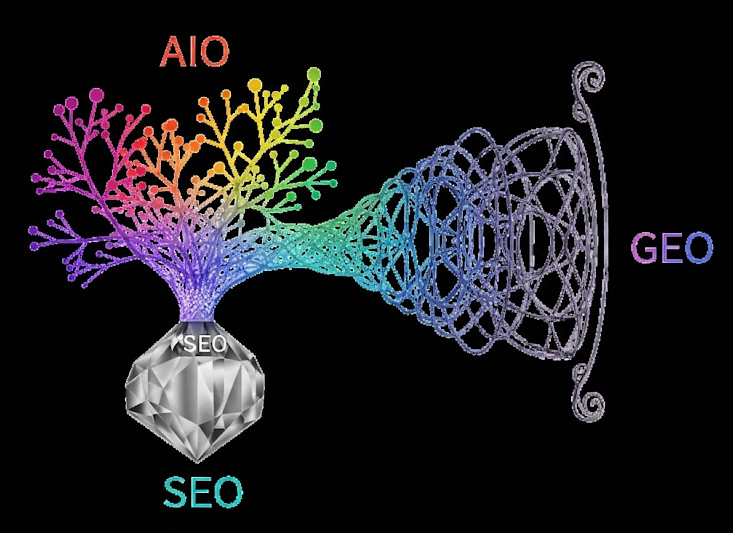
If you’ve been online lately and you’re a web dev like me, you’ve probably heard a lot of hype around AIO (AI Optimization) and GEO (Generative Engine Optimization). These buzzwords are being tossed around as the “new SEO” — but what do they actually mean? And how do they differ practically from traditional SEO?
If you’ve found yourself scratching your head, this post is for you. Let’s break it down and get real about what AIO/GEO mean, how they’re different from SEO, and what you can actually do about it.
First, a Quick Refresher: What is SEO?
Search Engine Optimization (SEO) is the practice of optimizing content so that it ranks well in traditional search engines like Google or Bing. It’s about matching your content with what people are searching for and making sure search engines can understand and trust your content.
(Interesting read: How Much Content Does Google Need to Trust Your Site?)
SEO involves:
- Keyword research
- On-page optimization (titles, headings, internal linking)
- Technical performance (website speed, mobile usability)
- Backlinks and authority signals
You’re basically saying to Google: “This page answers that search query – show it to people.”
Related: Boost Website Traffic! How to Write Title Tags & Summaries
Internal Linking Dos and Don’ts: What to Avoid and What to Focus On
What makes a website builder the best for SEO
What is AIO and GEO?
Here’s where things get fuzzy for many – because AIO and GEO are new and still evolving. But let’s define them:
- AIO (AI Optimization): Tailoring your content and web presence so that it shows up effectively in AI-generated responses – for example, in ChatGPT’s browsing tools, Perplexity.ai, or Google’s AI Overviews (formerly Search Generative Experience).
- GEO (Generative Engine Optimization): Specifically optimizing for generative engines that use large language models (LLMs) to provide synthesized answers instead of showing a list of blue links. These engines aim to answer user queries directly, often pulling from multiple sources.
In short:
SEO = Optimizing for search engines
GEO = Optimizing for LLMs that generate answers
AIO = More general term encompassing strategies to improve visibility in AI tools and assistants
So… How Do Rankings Differ?
1. SEO: You Rank Pages
Google ranks URLs based on authority, content relevance, technical signals, and links.
2. GEO/AIO: You Influence Answers
LLMs don’t “rank” web pages in the same way. They generate answers using training data, live search data (if connected to web browsing), or indexed knowledge. Your content may:
- Be quoted or linked as a source (e.g., in Perplexity or Bing Copilot)
- Be paraphrased into an answer without attribution
- Be entirely missed if it’s not well-structured or discoverable by AI agents
Why This Matters Practically
Here’s where the rubber meets the road. Ranking in traditional SEO often means getting traffic to your website. But with AIO/GEO, the user may never click – they may just get the answer right in the AI interface. That’s not exactly great news if you’re relying on clicks.
(Interesting read: The AI Overview Era: Will Google’s New AI Steal Your Website Traffic?)
So your new goal isn’t just ranking, but also:
- Being part of the LLM’s output
- Getting attributed
- Building brand visibility even if users don’t click!!
What You Can Actually Do About It
Here are actionable tips to optimize for AIO/GEO (and not just SEO):
✅ 1. Answer Questions Clearly
LLMs love structured, concise answers. Use:
- Clear subheadings with natural language questions – probably a good reason to write it yourself, vs AI!
- Bold or bulleted answers
- FAQ sections
This makes it easy for LLMs to quote your content or extract information cleanly.
✅ 2. Use Schema Markup
Structured data (like FAQ, How-To, Organization, Author) helps both search engines and AI tools understand what your page is about. It also boosts your chances of showing in Google’s AI-generated snippets.
✅ 3. Establish Topical Authority
LLMs don’t just rely on one page. They synthesize from across the web. Become a trusted source by publishing multiple pieces of high-quality, interlinked content around your niche – spread that SEO juice around :-)
Example: Don’t just write a blog post on “best home solar panels.” Also create pages on:
- How solar panels work
- Cost savings by state
- Government incentives
This “content clustering” helps LLMs treat your site as a go-to source.
Related: What Makes Your Website Content “High-Quality Content”? We Spill the Tea!
Why Evergreen Content Is Crucial for Your Website’s Growth (And How to Create It)
✅ 4. Get Mentioned – Not Just Linked
While backlinks are still huge for SEO, brand mentions are increasingly important for AIO/GEO. LLMs recognize entities (like your brand or product) even without a link. They are smart.
So aim to get mentioned in:
Related: Just Got Banned from Reddit or Quora? Why You Shouldn’t Rely on Them for Traffic
✅ 5. Optimize for AI Tools
Try searching for your brand or product on:
- ChatGPT (with web enabled)
- Perplexity.ai
- Google’s AI Overview
Then ask yourself: Are we even showing up? If not, improve your content structure and coverage.
It’s a good use of ChatGPT, for sure…related: Could Overusing ChatGPT Harm Your Critical Thinking? A Recent Study Warns
And just in case you do a lot of ChatGPT searches, read: “You’ve Reached Our Limits of Messages. Please Try Again Later.” – What the ChatGPT Error Means & How to Fix It
✅ 6. Think Entity Optimization
Instead of just keywords, optimize around entities – people, companies, products, topics. LLMs use knowledge graphs and relationships. Remember – LLM’s are smart! Make sure your brand, offerings, and industry terms are connected across platforms like:
- Wikipedia / Wikidata
- Google Business Profile
- Schema.org markup on your site
Final Thoughts: SEO Still Matter – But It’s Evolving
Think of AIO and GEO as layered on top of SEO – not a replacement. Like frosting and rainbow sprinkles. The best strategy is to:
- Keep doing good SEO
- Add AIO/GEO practices to improve your odds of visibility in AI answers
- Track visibility beyond clicks (brand mentions, AI citations, quotes)
We’re entering a new era where being the best answer matters more than just being on page 1.
Ready to design & build your own website? Learn more about UltimateWB! We also offer web design packages if you would like your website designed and built for you.
Got a techy/website question? Whether it’s about UltimateWB or another website builder, web hosting, or other aspects of websites, just send in your question in the “Ask David!” form. We will email you when the answer is posted on the UltimateWB “Ask David!” section.