



-
Recent Posts
- “My Partner Wants to Use WordPress Because 50% of the Web Uses It. Help!”
- Does EmDash Solve WordPress’s Problems, or Do You Need UltimateWB?
- How Not to Use AI: Stanford University Can Tell You
- Best Website Builder for SEO: WordPress vs. Wix vs. UltimateWB
- How to Make Sure Your Website Colors Have Enough Contrast for Accessibility
- Mobile-Friendly Website Checklist: 20 Things to Check
- Beehiiv Website Builder Review: The Problem Isn’t the Design – It’s the Lack of Control
- Elementor’s “Angie” AI Is More Than Bloat: Credits, Subscriptions, and a Growing Platform Problem
- How to Pass Google Business Profile Video Verification for Service Businesses
- The Great Deskilling: Why AI Dependence is Turning Developers into Prompt Babysitters
- The Three-Month Fuse: The Everest Forms Pro Attack and Why a Patched Plugin Can Still Put Websites at Risk
- Computer Screen Has Black Bars on the Sides: How to Fix It
- Could AI Make Humans Extinct Within the Next Decade?
- Is Weebly Getting Out of the Website-Builder Business?
- Are You “Leaking SEO” by Linking to Other Websites?
- Wix Harmony Is Now in Google Gemini. So Why Are Users Still Complaining?
- When AI Sounds Confident but Gets It Wrong: The Mount Shasta Rescue
- When AI Agents Start Working Together, Who Is Really in Control?
Categories
Tag Archives: content quality
Phrases That Instantly Make Writing Sound AI-Generated

AI doesn’t just generate content - it generates patterns.
Readers are getting better at spotting those patterns, not because they can reliably detect AI, but because certain phrases now feel generic, cautious, or strangely familiar.
This post isn’t anti-AI. It’s about understanding which phrases quietly undermine credibility, trust, and originality - especially on business websites.
The problem isn’t that AI uses these phrases. It’s that humans keep publishing them.
The Problem Isn’t AI - It’s Pattern Fatigue
Most so-called “AI
... Continue readingSigns Your Website Content Is Too Focused on Keyword Targeting

"Ask David" Question: "How can I tell if my website content is over-optimized for keywords, or if it’s actually useful for visitors?"
Short answer
If your content sounds unnatural, repeats the same phrases, or feels written for search engines instead of people, it’s probably over-optimized - and that can hurt rankings instead of helping them.
Modern SEO rewards clarity, usefulness, and intent, not keyword stuffing.
Related: Google Algorithm Penalties Explained: What They Are, Why They Happen, and How
... Continue reading
Posted in Ask David!, Search Engine Optimization (SEO), Web Content
Tagged clarity, content quality, keyword optimization, keyword stuffing, on-page seo, search engine ranking, search intent, seo, seo content, seo mistakes, seo mitakes, seo strategy, userful, website content strategy
Leave a comment
Google Algorithm Penalties Explained: What They Are, Why They Happen, and How to Recover

Google doesn’t like surprises. Website owners, on the other hand, often get one they didn’t ask for: a sudden drop in traffic, rankings vanishing overnight, and pages that once dominated search results quietly disappearing.
In most cases, that shock traces back to Google algorithm penalties.
If you’ve ever wondered what Google actually penalizes, how algorithmic penalties differ from manual actions, or whether recovery is even possible, this guide breaks it all down - clearly, accurately, and
... Continue reading
Posted in AI, Search Engine Optimization (SEO), Website Traffic
Tagged ai, AI content, AI-generated content, auto-generated content, backlink cleanup, backlink profile, backlinks, bounce rate, content depth, content quality, core web vitals, crawl, credibility, duplicate content, E-E-A-T, engagement, engagement signals, experience, expertise, fast-loading website, google algorithm, google algorithm penalties, Google algorithm update, google core updates, google panda, google penguin, Google rankings, Google Search Console, helpful content, high-quality content, keyword stuffing, layout shift, link spam, low-quality, mobile-friendly, page experience, search engine optimization, search engine ranking, search intent, search intent match, seo, seo guide, slow load times, slow website, spammy, thin content, thin pages, trust, user experience, ux signals, visibility, website optimization, website traffic
Leave a comment
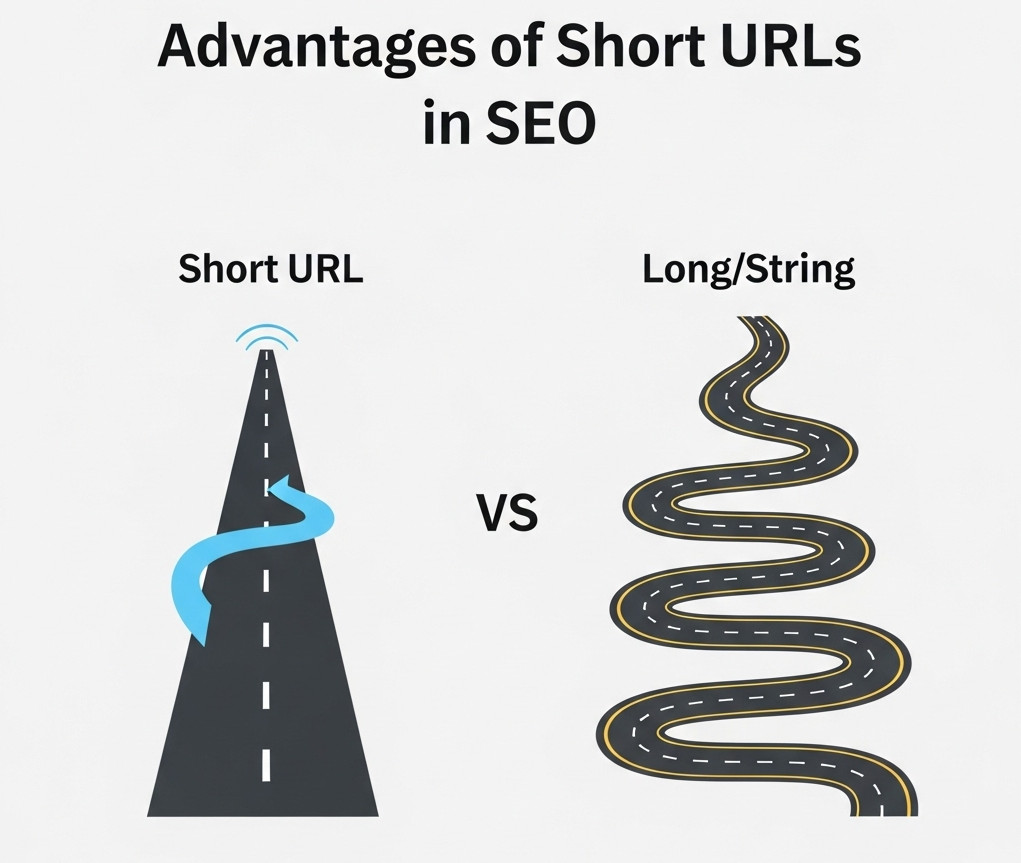
How Page URL Length Matters for SEO: Why Shorter URLs Can Boost Your Rankings

"Does it matter how long my Page URL is?"
Short Answer: Yes.
When it comes to SEO, many website owners focus heavily on keywords, content quality, backlinks, and technical site health - and with good reason. But one often overlooked factor that can impact your search engine rankings and user experience is URL length.
What Is URL Length?
A URL (Uniform Resource Locator) is the web address of a page on your site - like:
https://example.com/seo-tips-for-small-business... Continue reading
Posted in Ask David!, Search Engine Optimization (SEO)
Tagged backlinks, clean urls, click-through rates, content quality, keyword stuffing, keywords, pretty urls, readability, relevant keywords, search engine optimizzation, search engine ranking, seo, short urls, ujrl length, user experience
Leave a comment
How Backlinks Can Actually Hurt Your Website’s SEO, Google PageRank, and Traffic

Imagine this: You hire a marketing company to boost your SEO and get your website onto the first page of Google. At first, things seem to be going great - your traffic grows, your site appears near the top for your key search terms, and your overall rankings improve. But then, suddenly, your website disappears from those top spots. You have to dig deep into Google’s search results to find your own site - or worse, you discover your site
... Continue reading
Posted in Search Engine Optimization (SEO)
Tagged backlinks, black hat strategy, blacklisted, boost seo, boost traffic, build traffic, clean urls, content quality, google page rank, high-quality content, link building, marketing, mobile-friendly, organic backlinks, pagerank, pr, responsive, responsive app, search engine optimization, search engine ranking, seo, trust, user experience, user-friendly, website speed, white hat strategy
1 Comment