


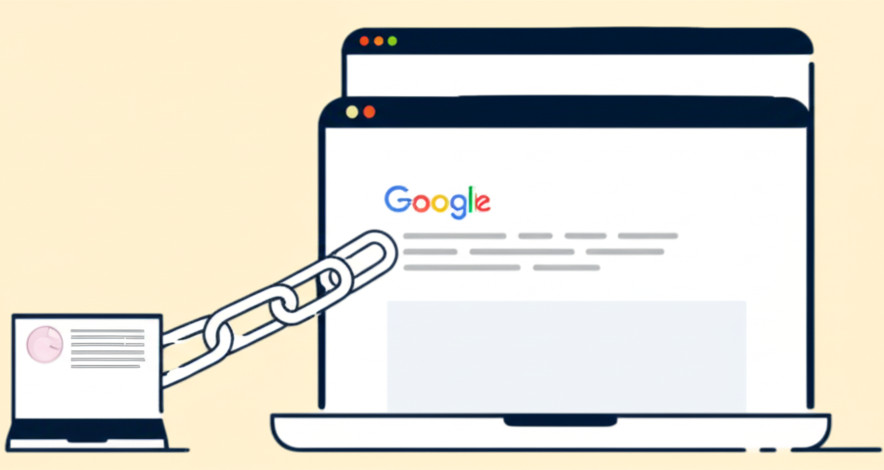
Imagine this: You hire a marketing company to boost your SEO and get your website onto the first page of Google. At first, things seem to be going great – your traffic grows, your site appears near the top for your key search terms, and your overall rankings improve. But then, suddenly, your website disappears from those top spots. You have to dig deep into Google’s search results to find your own site – or worse, you discover your site has been blacklisted altogether. Now, the only way people can find you is if they already know your URL or happen upon one of your backlinks – which have ironically become your website’s kryptonite.
What Are Backlinks – And Why Can They Be Dangerous?
Backlinks are links from other websites that point back to yours. They can be great – or harmful – depending on their quality.
Good backlinks happen naturally when reputable websites link to your content because it’s valuable and relevant. These links help build your site’s authority and improve your search rankings.
Bad backlinks, on the other hand, come from spammy, irrelevant, or low-quality sites – sometimes created solely to manipulate search rankings. These links are often part of “black hat” SEO tactics that Google strongly disapproves of. Buying links indiscriminately or spamming website owners for links on any site willing to sell can seriously damage your SEO.
Read: What Makes Your Website Content “High-Quality Content”? We Spill the Tea!
Real-World Examples: When Backlinks Backfire
Back in 2011, JCPenney was hit hard after it was exposed for using manipulative link-building practices. According to The New York Times:
- Feb 1: JCPenney ranked #1.3 on average for 59 keywords
- Feb 8 (algorithm update): Dropped to #4
- Feb 10: Plummeted to #52
Even giants aren’t immune: In 2006, BMW was temporarily removed from Google’s index for violating SEO guidelines.
Why Does Google Care So Much About Backlinks?
Google treats backlinks as votes of confidence from other websites. When reputable sites link to you, it signals trust and authority. But spammy backlinks look like cheating to Google’s algorithms, which can lead to penalties or even removal from search results.
What About PageRank – Is It Still a Thing?
Google’s original PageRank algorithm was a pioneering way to rank websites based on backlinks. It used to be publicly visible, but Google stopped updating and sharing PageRank scores years ago. While PageRank is no longer available as a public metric, Google continues to use evolved versions of this concept internally as part of a much bigger, more complex ranking system. Today, Google considers hundreds of factors – including content quality, user experience, site speed, mobile-friendliness, and backlink quality – to decide rankings.
So instead of chasing an outdated PageRank score, focus on building high-quality backlinks and creating a trustworthy, user-friendly, responsive website. Make use of the UltimateWB built-in Responsive app :-)
How to Protect and Improve Your Website’s SEO the Right Way
Don’t wait for some magic to happen. Build real, organic backlinks by:
- Creating interesting, original content people want to share
- Building genuine relationships and partnerships in your industry
- Avoiding shady “black hat” tactics like buying links or spamming for backlinks
- Following Google’s Webmaster Guidelines and ethical SEO practices
And don’t forget the technical side: use clean URLs and well-structured code to help search engines crawl your site easily. Platforms like UltimateWB can help with this by ensuring your website is built on clean, SEO-friendly code.
Bottom line: Backlinks can be your website’s best friend or worst enemy. Quality always wins over quantity in SEO. Focus on genuine, ethical strategies to boost your search rankings, build traffic, and grow your online presence – the right way.
Related: Can You Increase Organic Traffic Without Building Backlinks? Yes – Here’s How
Are you ready to design & build your own website? Learn more about UltimateWB! We also offer web design packages if you would like your website designed and built for you.
Got a techy/website question? Whether it’s about UltimateWB or another website builder, web hosting, or other aspects of websites, just send in your question in the “Ask David!” form. We will email you when the answer is posted on the UltimateWB “Ask David!” section.
Pingback: Google Analytics vs Awstats – which is better, more accurate, useful? | Ultimate Web Builder Blog