




-
Recent Posts
- “My Partner Wants to Use WordPress Because 50% of the Web Uses It. Help!”
- Does EmDash Solve WordPress’s Problems, or Do You Need UltimateWB?
- How Not to Use AI: Stanford University Can Tell You
- Best Website Builder for SEO: WordPress vs. Wix vs. UltimateWB
- How to Make Sure Your Website Colors Have Enough Contrast for Accessibility
- Mobile-Friendly Website Checklist: 20 Things to Check
- Beehiiv Website Builder Review: The Problem Isn’t the Design – It’s the Lack of Control
- Elementor’s “Angie” AI Is More Than Bloat: Credits, Subscriptions, and a Growing Platform Problem
- How to Pass Google Business Profile Video Verification for Service Businesses
- The Great Deskilling: Why AI Dependence is Turning Developers into Prompt Babysitters
- The Three-Month Fuse: The Everest Forms Pro Attack and Why a Patched Plugin Can Still Put Websites at Risk
- Computer Screen Has Black Bars on the Sides: How to Fix It
- Could AI Make Humans Extinct Within the Next Decade?
- Is Weebly Getting Out of the Website-Builder Business?
- Are You “Leaking SEO” by Linking to Other Websites?
- Wix Harmony Is Now in Google Gemini. So Why Are Users Still Complaining?
- When AI Sounds Confident but Gets It Wrong: The Mount Shasta Rescue
- When AI Agents Start Working Together, Who Is Really in Control?
Categories
Tag Archives: cookies
Why We Don’t Use Google Analytics on Our Website

At UltimateWB, we don’t use Google Analytics - or any third-party analytics tool - on our website. That might sound surprising in an age where data-driven decisions are the norm. But our decision is intentional, and it's based on the same principles that guide how we build our platform: performance, privacy, and user control.
Here’s why we chose to go analytics-free - and how that choice reflects what we stand for.
1. Privacy Comes First
Most analytics tools track users
... Continue reading
Posted in Website Traffic
Tagged analytics-free, bloat, consent banners, cookies, core web vitals, customer engagement, direct feedback, external servers, fast loading times, fast website, faster page loads, freedom, google ads, google analytics, Google Search Console, ip address, lightweight, loading speed, no plugins, perforance, plugins, privacy, scripts, third-party trackers, tracking pageviews, user control
Leave a comment
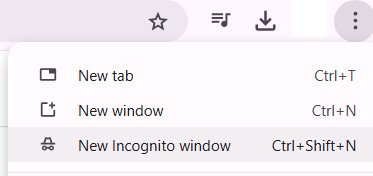
How to Search in Incognito Mode?

As mentioned in an earlier blog post, "How can I check the SEO ranking of my website?", it can be useful to search for your website's target keywords in Incognito Mode to check your search engine ranking without your personal search history influencing it.
Here's how to search in incognito mode in the most popular browsers:
- Google Chrome:
- Click the three vertical dots in the top-right corner of the browser.
- Select "New Incognito window."
- A new window will open
What is a GDPR message for AdSense, and why is it important?
A GDPR message for AdSense is a notice that publishers must display on their websites if they are using AdSense to serve ads to visitors from the European Economic Area (EEA) or the United Kingdom. The GDPR (General Data Protection Regulation) is a data privacy regulation that gives EEA and UK citizens control over their personal data.
The GDPR requires publishers to obtain consent from users before collecting or processing their personal data. This includes data that is collected through
... Continue readingGoogle Analytics vs Awstats – which is better, more accurate, useful?

It can be very useful to check your website traffic statistics as you are working on growing your website popularity and reach.
You want to increase your website visitors and want to know:
- Which pages are getting the most attention
- How your website visitors are finding your website
- Which search terms they are using
- Which website URLs are referring them to your website
- From which pages they enter into your website
- From which pages they leave on your website
Posted in Search Engine Optimization (SEO), Website Traffic
Tagged awstats, cookies, google analytics, google analytics vs awstats, hot linking, javascript, privacy, referring website, search terms, seo, server-level vs script-based analytics, traffic statistics, visit duration, website visitors
2 Comments