


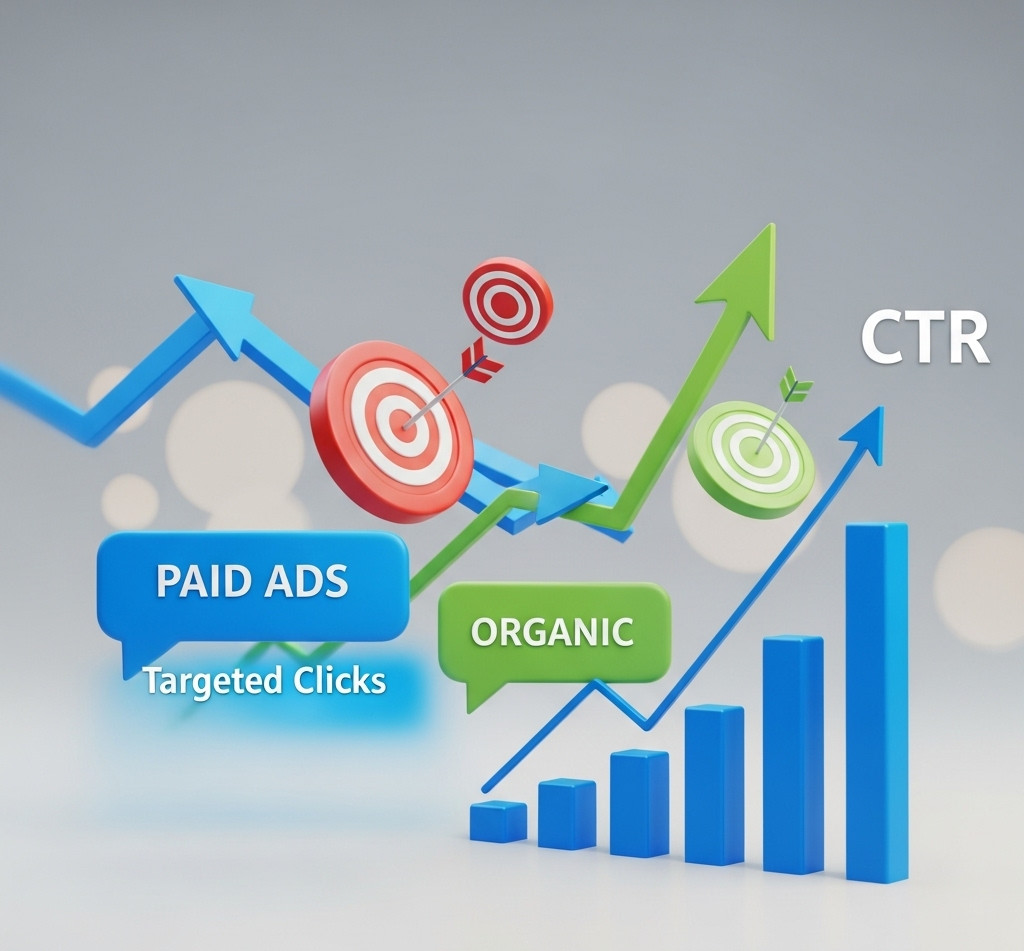
Click-Through Rate (CTR) is a vital metric in digital marketing and online content. It measures how effectively your ads or website content engage your audience and drive clicks. But what exactly is a good CTR, and why should you care? In this post, we’ll decode CTR, break down benchmarks for ads and organic content, and share tips to improve your results.
What Is Click-Through Rate (CTR)? A Simple Explanation
CTR is the percentage of users who click on your ad or content after seeing it. It’s calculated as:
CTR = (Clicks / Impressions) × 100
A higher CTR means your message resonates with your audience, leading to more clicks and potential conversions.
What’s a Good CTR? Benchmarks for Paid Ads vs. Organic Search
CTR benchmarks vary widely depending on whether you’re looking at paid ads or organic search results. It’s important to understand these differences to set realistic goals and optimize accordingly.
Paid Ads CTR Benchmarks by Channel
- Search Ads: 1-3%
- Display Ads: 0.2-0.5%
- Social Media Ads: 0.1-0.2%
- Email Marketing: 20-30%
Note: Display ads are banner, image, or video ads on websites or apps via ad networks like Google Display Network. They differ from search ads, which appear in search engine results pages (SERPs).
Organic Search CTR Benchmarks by Position
- Top Organic Result: 20-30%
- Positions 2-3: 10-15%
- Lower Positions: Often below 5%
These figures highlight the crucial role of strong SEO and high-quality content in ranking higher and driving more clicks through organic search.
Why Does CTR Matter for Your Business?
- Measures Engagement: CTR shows how compelling your ads or content are to your audience.
- Boosts Cost Efficiency: Higher CTRs lower your cost per click and improve ROI, especially in paid campaigns.
- Improves Quality Scores: Platforms like Google Ads reward high CTRs with better ad placements and lower costs.
- Drives User Interaction: More clicks mean more traffic, awareness, and conversion opportunities.
Factors That Influence Your CTR Benchmarks
- Industry: Competitive fields like finance or tech usually have higher CTR expectations.
- Platform: Email marketing tends to have higher CTRs compared to display or social media ads.
- Content Type: Video ads, text ads, and organic content all perform differently.
- Target Audience: Tailor your messaging and targeting for your specific audience’s behavior.
Proven Tips to Improve Your CTR
- Write engaging, clear ad copy and headlines.
- Use eye-catching images and videos where appropriate.
- Implement ad extensions to provide more info and options.
- Target the right audience with relevant content and ads.
- Continuously A/B test to optimize messaging and creatives.
- Use strong calls to action that guide users on what to do next.
- Ensure your ads and content are mobile-friendly.
- Employ negative keywords to avoid irrelevant traffic (for paid ads).
- Track performance data regularly and refine your strategy.
Final Thoughts: CTR Is a Powerful Metric – but Context Matters
There’s no one-size-fits-all “good CTR.” It depends on your industry, platform, and campaign type. Whether paid or organic, focus on improving your CTR over time through smart SEO, compelling content, and targeted advertising. Use CTR insights to make data-driven decisions that grow your traffic, engagement, and ROI.
Related: Is a CTR Below 1% a Bad Sign If Clicks Are Increasing Daily? Let’s Talk Nuances.
Are you ready to design & build your own website? Learn more about UltimateWB! We also offer web design packages if you would like your website designed and built for you.
Got a techy/website question? Whether it’s about UltimateWB or another website builder, web hosting, or other aspects of websites, just send in your question in the “Ask David!” form. We will email you when the answer is posted on the UltimateWB “Ask David!” section.