


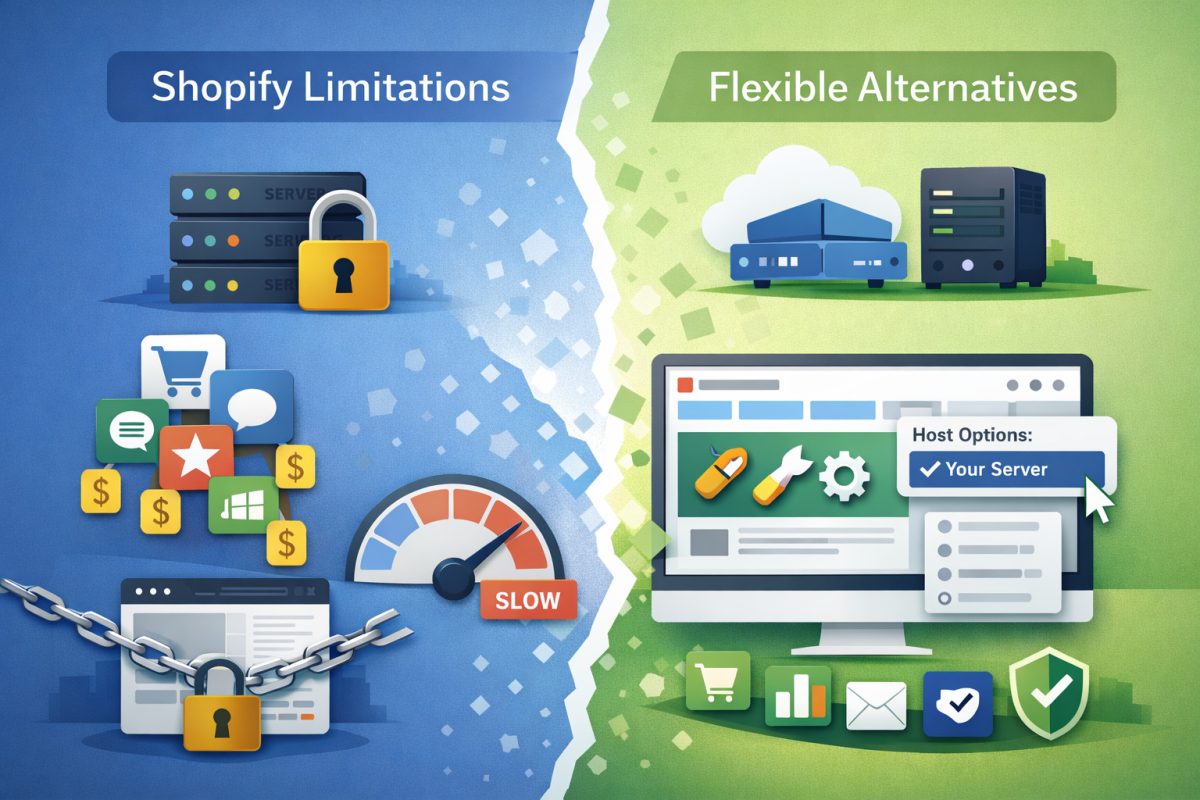
Shopify is popular for its convenience and all-in-one hosting, but that simplicity comes with trade-offs. Many users quickly run into limitations such as:
- Restricted customization without paid apps
- Limited control over hosting and server resources
- Extra costs for advanced features and scalability
- Constraints on SEO, page speed, and integrations
At some point, many site owners start asking whether Shopify’s ease of use is worth the long-term limitations. These constraints can slow growth or force compromises – especially if you want a fully flexible website without ongoing app dependencies.
Shopify is popular for its convenience and all-in-one hosting, but it comes with trade-offs. Many users
Related: Signs Your Website Builder Isn’t as Customizable as You Think
Why a Customizable Website Builder is the Key to Unique Branding
UltimateWB: Flexibility Made Easy
If you want full customization without the complexity, UltimateWB is an excellent choice. It provides:
- Built-in features that don’t require add-on apps or third-party plugins
- Optional hosting (free software/updates install service, custom email, traffic statistics, SSL) or the ability to host on your own server
- Full control over layout, SEO, and functionality
- Easier maintenance and upgrades compared to WordPress
With UltimateWB, you can have the same power as WordPress while avoiding the steep learning curve, plugin conflicts, and frequent updates that slow down open-source setups.
Related: Why UltimateWB Is Easier to Use Than WordPress
WordPress: Open Source Control
For those who want open-source freedom, WordPress is a flexible option – but not completely. The core is open-source – not the add-ons. It comes with trade-offs:
- Upgrades can break plugins or themes
- Security risks due to poorly maintained plugins
- Slower page load speeds if not optimized
- Requires more technical knowledge for setup and maintenance
Read: Do you really own your WordPress website?
UltimateWB gives you similar flexibility but reduces the technical overhead, making it a more user-friendly choice for most businesses.
Related: Why WordPress Users Are Switching to UltimateWB: 10 Data-Driven Reasons
Bottom Line
To overcome Shopify’s basic limitations, consider your priorities:
- UltimateWB: Full flexibility, built-in features, easier to manage
- WordPress: Core control, open-source, requires more maintenance, security risks with plugins
- Shopify: Convenient and quick, but limited in hosting, customization, and scalability
With UltimateWB, you don’t have to choose between simplicity and flexibility — you can have both.
Related: How to Evaluate All-in-One Website Builders: Features, Performance, and Scalability
Frequently Asked Questions
Is Shopify too limited for growing websites?
Shopify works well for quick setups, but many growing sites run into limits with customization, SEO control, and reliance on paid apps.
Can you fully customize a Shopify website without apps?
Not easily. Most advanced layout, functionality, and SEO changes require third-party apps or custom Liquid development.
Is UltimateWB as flexible as WordPress?
Yes. UltimateWB offers the same level of flexibility and customization as WordPress, without plugin conflicts, constant updates, or complex maintenance.
Do I need technical skills to use UltimateWB?
No. UltimateWB is designed to be easier to manage than WordPress while still allowing full control over layout, SEO, and features.
Why not just switch from Shopify to WordPress?
WordPress provides flexibility, but it introduces ongoing maintenance, plugin compatibility risks, security concerns, and performance tuning requirements. UltimateWB avoids those trade-offs.
Got a techy/website question? Whether it’s about UltimateWB or another website builder, web hosting, or other aspects of websites, just send in your question in the “Ask David!” form. We will email you when the answer is posted on the UltimateWB “Ask David!” section.