




-
Recent Posts
- Microsoft 365 Outage Exposes the Risks of Cloud-Dependent Software
- How to Fix the WordPress “There Has Been a Critical Error on This Website” Message
- WPBakery Alternatives: Why Shortcode Lock-In Matters When Choosing a Website Builder
- Astro + AI Website Development: Pros, Cons, and How It Compares to UltimateWB
- Etch Pre-Sale Promises: What’s Been Delivered and What’s Still Missing?
- Why Reddit Threads on Website Builders Miss the Point (And What to Look For Instead)
- Epileptic Woman Dies After Using ChatGPT for Medical Advice; Family Sues OpenAI
- Best Practices for Image Filenames and Alt Tags: A Quick SEO Checklist
- Best Website Builder for a Web Development Business: Build Your Own Website and Client Websites
- How to Make a Website Without AI for Free
- Is Wix Safer Because It Doesn’t Use PHP? Wix Security Vulnerabilities Tell a Different Story
- Rank Math PRO Supply Chain Attack: Why Updating the Plugin May Not Be Enough
- How to Safely Upgrade Legacy PHP (5.6, 7.0–7.3) to Modern, Supported Versions
- Critical PHP Vulnerabilities (“PHP2Shell”): What You Need to Know & Which Platforms Are Affected
- What Happened to GeoCore Classifieds? From Commercial Software to Community Project
- Why Vibe Coding Isn’t the Only Way to Build a Website Without Monthly Fees
- How to Create a Simple Website to Receive Client Files and Scheduling Requests
- Can You Fork a Paid WordPress Plugin Instead of Paying the Subscription?
Categories
Search Results for: webp
Does “Test Live URL” help Google index your webpage faster?

Does clicking on the "Test Live URL" on Google Search Console after using the "Request Indexing" link make Google index your page sooner? Or was it just a coincidence?
“Ask David” answer: The short answer is no, if you experienced Google indexing your page soon after testing the Live URL, it was just a coincidence. Clicking
... Continue readingWebpage direct visits: bots, crawlers, or real visitors?

"Are webpage visits coming from a direct visit (vs a search) from bots or crawlers vs real visitors, or perhaps AI scrapers?"
Yes - a significant portion of direct webpage visits can come from bots, crawlers, and AI scraping content, not just real human visitors. But how much depends on the site, traffic level, and what kind of page you’re looking at.
Below is a clear breakdown.
1. What “Direct” Traffic Really Means
... Continue reading
Posted in AI, Ask David!, Website Traffic
Tagged ai, AI crawling, ai scrapers, analytics accuracy, bot traffic, bots, bots vs humans, content scraping, crawlers, direct traffic, fake direct traffic, fake traffic, google analytics, matomo, raw server logs, real visitors, robots, seo, SEO analytics, server logs, traffic analysis, web crawlers, website analytics, website monitoring
Leave a comment
How to Optimize Your Webpages So They Get Found by Search Engines and AI (LLMs)?

If you want your website to get noticed online, it’s important to make sure it’s easy to find and understand - not just by search engines like Google, but also by the latest AI technologies powered by something called large language models, or LLMs for short.
These LLMs - including well-known ones like OpenAI’s GPT-4 (used in ChatGPT), Google’s Gemini, Anthropic’s Claude, and Meta’s LLaMA - are advanced AI systems that read and interpret text on the web to answer
... Continue reading
Posted in AI, Ask David!, Search Engine Optimization (SEO)
Tagged accessibility, ai, anthropic, chatgpt, claude, faq, fast loading times, fast website, fresh content, gemini, Google Search Console, google search engine ranking, headings, high-quality conetnt, keywords, llama, llm, meta, meta description, meta tags, meta title, mobile-friendly, OpenAI, responsive, responsive app, schema markup, search snippets, structure, subheadings, trustworthy, usability
Leave a comment
Do Images Help SEO on Blogs and Webpages? What If You Don’t Use Them?

Short Answer:
Images can significantly boost your website’s SEO by improving engagement, visibility, and context. Skipping them won’t get you penalized — but it might cost you traffic and performance.
The Role of Images in SEO: A Deeper Look
Images are more than just decoration - they can be powerful tools for improving your content’s performance in search engines. Whether you're publishing a blog post or building a standard webpage, images can influence everything from how long people stay on
... Continue reading
Posted in Ask David!, Search Engine Optimization (SEO)
Tagged adding images, alt tags, alt text, boost seo, boost traffic, bounce rate, branding, build trust, captions, click-through rate, conversions, credibility, ctr, drive traffic, engaging content, file names, google image search, image search, James Holzhauer, jeopardy!, on-page seo, originality, readability, search engine optimization, search engine ranking, seo, seo potential, seo signals, social sharing, stock photos, stock photos vs original photos, target keywords, unique images, user engagement, user experience, user-friendly, ux, visibility, visual appeal
Leave a comment
WebP vs. JPG/PNG: Should You Use Fallback Images for Compatibility?

Optimizing images for performance is crucial. It is one of the scoring factors on Google's PageSpeed Insights, making it important for search engine optimization too. One of the biggest decisions web developers and website owners face is whether to upload images exclusively as WebP or provide JPG/PNG fallback versions for compatibility. The UltimateWB website builder makes it easy to create WebP images and include JPG/PNG fallback versions in the code with the click
... Continue readingPower Consumption and Image Formats: JPEG vs WebP vs AVIF – Which is Better?

Optimizing images is critical for reducing data usage, improving website performance, and lowering power consumption across devices. Choosing between JPEG, WebP, and AVIF can significantly impact the energy used by servers, networks, and end-user devices. Each format has different compression efficiencies, decoding complexities, and energy demands - which directly affect power consumption.
How Image Formats Influence
... Continue reading
Posted in Ask David!, Website Design
Tagged avif, bandwidth usage, compression, convert to webp, cpu, drain batterty, encoding, gpu, jpg, jpg vs webp vs avif, power consumption, webp
Leave a comment
Should you have two versions of your images on your website – WebP and one of the classic formats like JPG or PNG?
Yes, you should generally have two versions of your images on your website:
- WebP: This modern format offers significantly better compression than traditional formats like JPEG, resulting in smaller file sizes and faster loading times.
- JPEG/JPG (or another widely supported format like PNG): This serves as a fallback for browsers that don't support WebP.
Here's why this approach is beneficial:
- Improved Performance: WebP significantly reduces page load times for users with compatible browsers, leading to better user experience
Posted in Ask David!, Website Design
Tagged classic image fomat, convert to webp, fast loading times, htaccess, picture tag, webp, webp converter, webp vs jpg
Leave a comment
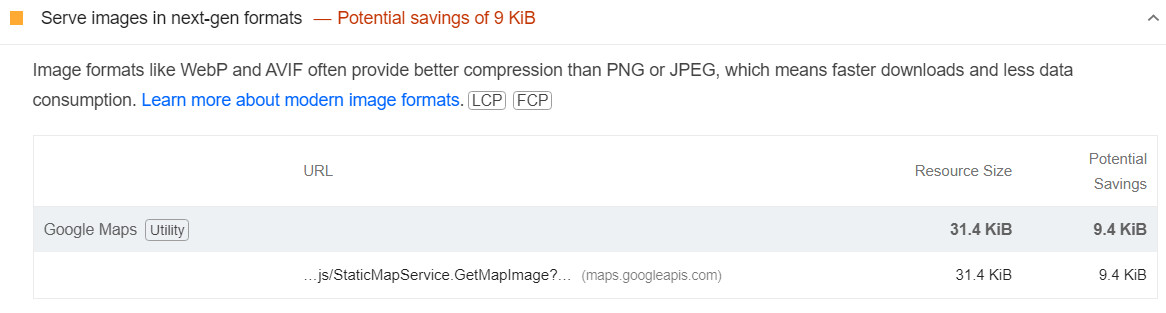
Why Doesn’t Google Maps Use WebP? A Deep Dive

WebP: A Modern Image Format
WebP, a modern image format developed by Google, offers superior lossy and lossless compression compared to traditional formats like JPEG and PNG. This translates to smaller file sizes, faster loading times, and reduced data consumption. UltimateWB offers WebP support, with easy tools to automatically convert images to WebP. Given Google's pioneering role in
... Continue readingIs 160 characters recommended for webpage meta descriptions?

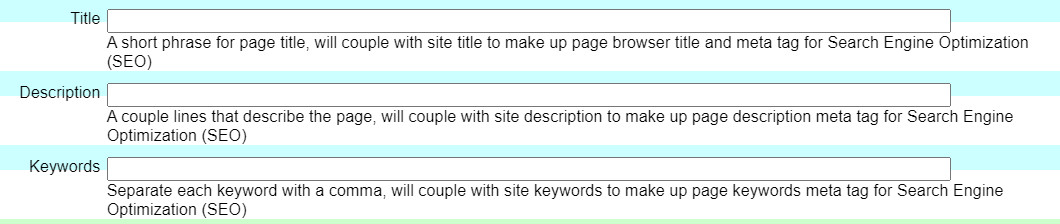
Yes, 160 characters is the widely recommended length for a meta description for the best possible SEO results and top search engine rankings. Google can technically handle longer snippets, but it often truncates descriptions exceeding 160 characters in search results. While your page content is the most important in search engine optimization, meta descriptions are an important
... Continue readingHow to make sure Google crawls all your webpages for indexing?

There are a few things you can do to make sure Google crawls all of your web pages for indexing:
- Create a sitemap and submit it to Google Search Console. A sitemap is a file that lists all of the pages on your website. Submitting your sitemap to Google Search Console helps Google to find and index all of your pages. This is easy to do with the UltimateWB built-in Sitemap Generator tool.
- Make sure your website is well-structured and
Posted in Ask David!, Search Engine Optimization (SEO), Website Traffic
Tagged backlinks, build backlinks, canonical tag, duplicate content, google, Google Search Console, indexing, meta data, meta description, robots.text, search engine crawl, sitemap, sitemap generator, social media, title
Leave a comment