




-
Recent Posts
- Can You Request Google Indexing More Than Once?
- What’s the Most Useful SEO Tool Feature?
- WordPress 7.0 Changed the Custom HTML Block. Now Your Code Can Disappear
- Looking for a WordPress Alternative That You Can Host Yourself?
- The WordPress Update Cycle: Update, Test, Fix, Repeat
- Is WordPress Insecure and Slow Because It Uses PHP?
- “My Partner Wants to Use WordPress Because 50% of the Web Uses It. Help!”
- Does EmDash Solve WordPress’s Problems, or Do You Need UltimateWB?
- How Not to Use AI: Stanford University Can Tell You
- Best Website Builder for SEO: WordPress vs. Wix vs. UltimateWB
- How to Make Sure Your Website Colors Have Enough Contrast for Accessibility
- Mobile-Friendly Website Checklist: 20 Things to Check
- Beehiiv Website Builder Review: The Problem Isn’t the Design – It’s the Lack of Control
- Elementor’s “Angie” AI Is More Than Bloat: Credits, Subscriptions, and a Growing Platform Problem
- How to Pass Google Business Profile Video Verification for Service Businesses
- The Great Deskilling: Why AI Dependence is Turning Developers into Prompt Babysitters
- The Three-Month Fuse: The Everest Forms Pro Attack and Why a Patched Plugin Can Still Put Websites at Risk
- Computer Screen Has Black Bars on the Sides: How to Fix It
Categories
Search Results for: w3c validator
Is WordPress Insecure and Slow Because It Uses PHP?

Ask David! Question
Is WordPress clunky and prone to security issues because it is built on PHP?
There is a popular argument in web development: “PHP is a terrible language. Just look at how insecure WordPress is.”
That argument doesn't make much sense.
WordPress is built with PHP, but that doesn't mean PHP is responsible for WordPress's security problems. Modern PHP is a mature programming language with strong typing features, improved error handling, modern syntax, and significant performance improvements over
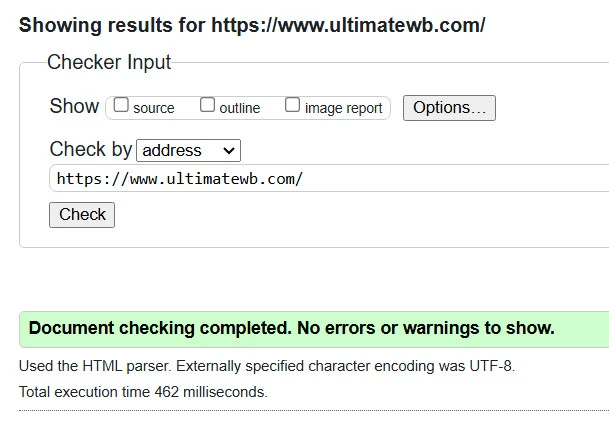
... Continue readingValid HTML Matters: How Clean Code Boosts SEO, Accessibility, and Trust

If you’ve ever been told you’re being too picky for caring about your website’s HTML validation, you’re not alone. Some developers brush off invalid code as “harmless,” and non-tech folks might even label you as having a bit of OCD. But here’s the truth: caring about clean, valid HTML isn’t obsessive -
... Continue reading
Posted in Accessibility, Search Engine Optimization (SEO)
Tagged accessibility, boost seo, bots, brand identity, browser compatibility, content structure, core web vitals, crawl, crawlability, cross-device compatibility, easy maintenance, fast loading times, index, invalid code, maintenace, ocd, pagespeed insgihts, pagespeed insights, professional, ranking, scalability, search engine optimization, search engine optimization tips, seo, seo tips, site maintenance, valid html, website speed
Leave a comment
What are some white hat SEO tricks and tips for boosting organic traffic?

Looking to increase your website’s organic traffic without cutting corners? These white hat SEO strategies focus on long-term, sustainable growth by playing by the rules and delivering real value.
🎯 Target Long-Tail Keywords
While high-volume keywords are tempting, they’re also highly competitive. Instead, focus on long-tail keywords - more specific search phrases your target audience actually uses. These give you a better chance of ranking and attracting qualified traffic.
📝 Craft Compelling Titles & Descriptions
Your titles and meta descriptions
... Continue reading
Posted in Ask David!, Search Engine Optimization (SEO)
Tagged accessibility, alt tags, alt text, authority, backlinks, build trust, clean code, fast-loading website, google my business listing, google search results, guest blogging, HARO, help a reporter out, internal linking, internal links, link juice, local seo, long-tail keywords, meta description, mobile friendly, optimize images, organic growth, organic traffic, page speed, responsive, responsive app, rich snippets, seo strategies, seo tips, seo tool, seo tricks, share expertise, star ratings, website speed, white hat
Leave a comment
What’s the Best Website Builder for SEO?

Looking for the best website builder for SEO? If you want to rank high on Google, the builder you choose can make or break your site’s success. Some make it harder to optimize your site’s performance, speed, and structure. Others require third-party plugins that add unnecessary bloat and potential security risks.
If you're looking for a builder that's optimized for search engines right out of the box, UltimateWB is the clear winner. Let’s break down what makes a website builder
... Continue reading
Posted in Ask David!
Tagged accessibility, accessibility signals, alt tags, best website builder for seo, bloat, boost ranking, bounce rate, clean code, clean urls, core web vitals, crawl, engagement, fast loading times, fast website, faster indexing, high-quality content, index, keywords, lazy load images, lazy loading, meta description, meta tags, meta title, mobile-friendly, page title, pagespeed insights, pretty urls, responsive, responsive app, search engine crawl, search engine optimization, search engine ranking, security issues, seo, sitemap, sitemap generator, speed, styles manager, third-party plugin, user-friendly, W3C Markup Validation Service, W3C validation, webp, webp converter, website builder, WordPress, xml, xml sitemap
Leave a comment
Best Website Builder for SEO: WordPress vs. Wix vs. UltimateWB

Ask David
“I'm looking for the best website builder for SEO - considering WordPress, Wix, and UltimateWB - so, what’s the best website builder for SEO and how can I know and decide?”
The answer is UltimateWB.
UltimateWB combines built-in SEO functionality with direct control over your website’s structure, code, and performance. WordPress, Wix, Webflow, Shopify, and other website builders can all be used to create SEO-friendly websites, but the way they provide SEO functionality is very different.
So what
... Continue reading
Posted in Ask David!, Search Engine Optimization (SEO)
Tagged accessibility, caching, caching plugin, clean code, compatibility, compatibility issues, core web vitals, fast website, hosted vs self-hosted, html, javascript, pagespeed insights, php, plguins, rank math, search engine optimization, security, seo, third-party plugins, website performance, website speed, website speed optimization, Wix, wix alternative, WordPress, wordpress alternative, yoast seo
Leave a comment
Browsers People Use to Visit Your Website – And the Surprise Visitor We Got This Week

It's Spring 2025. You might think everyone is browsing the web with the latest version of Chrome, Safari, or Firefox these days - but that’s not always the case. In fact, we recently had a surprising visit from someone using Internet Explorer 9.0. Yep, IE 9, which was released in 2011 and officially discontinued by Microsoft years ago, is still making rare appearances on the web.
This unexpected visit inspired us to dive deeper into what browsers users
... Continue reading
Posted in Website Traffic
Tagged accessibility, all browser-friendly, apple safari, bloat, browser compatibility, browser usage, css3, fallbacks, google analytics, google chrome, html5, ie, internet browsers, internet explorer, microsoft, microsoft edge, mobile-friendly, modern browsers, modern code, modern web standards, mozilla firefox, opera, optimize website, outdated coding practices, polyfills, responsive, responsive app, site performance, standardized code, The W3C Markup Validation Service, webp, webp converter, website performance, website traffic, website visitors
Leave a comment