




-
Recent Posts
- Repetitive Content: A Red Flag for AI Writing and Bad SEO
- Can You Request Google Indexing More Than Once?
- What’s the Most Useful SEO Tool Feature?
- WordPress 7.0 Changed the Custom HTML Block. Now Your Code Can Disappear
- Looking for a WordPress Alternative That You Can Host Yourself?
- The WordPress Update Cycle: Update, Test, Fix, Repeat
- Is WordPress Insecure and Slow Because It Uses PHP?
- “My Partner Wants to Use WordPress Because 50% of the Web Uses It. Help!”
- Does EmDash Solve WordPress’s Problems, or Do You Need UltimateWB?
- How Not to Use AI: Stanford University Can Tell You
- Best Website Builder for SEO: WordPress vs. Wix vs. UltimateWB
- How to Make Sure Your Website Colors Have Enough Contrast for Accessibility
- Mobile-Friendly Website Checklist: 20 Things to Check
- Beehiiv Website Builder Review: The Problem Isn’t the Design – It’s the Lack of Control
- Elementor’s “Angie” AI Is More Than Bloat: Credits, Subscriptions, and a Growing Platform Problem
- How to Pass Google Business Profile Video Verification for Service Businesses
- The Great Deskilling: Why AI Dependence is Turning Developers into Prompt Babysitters
- The Three-Month Fuse: The Everest Forms Pro Attack and Why a Patched Plugin Can Still Put Websites at Risk
Categories
Search Results for: seo tips
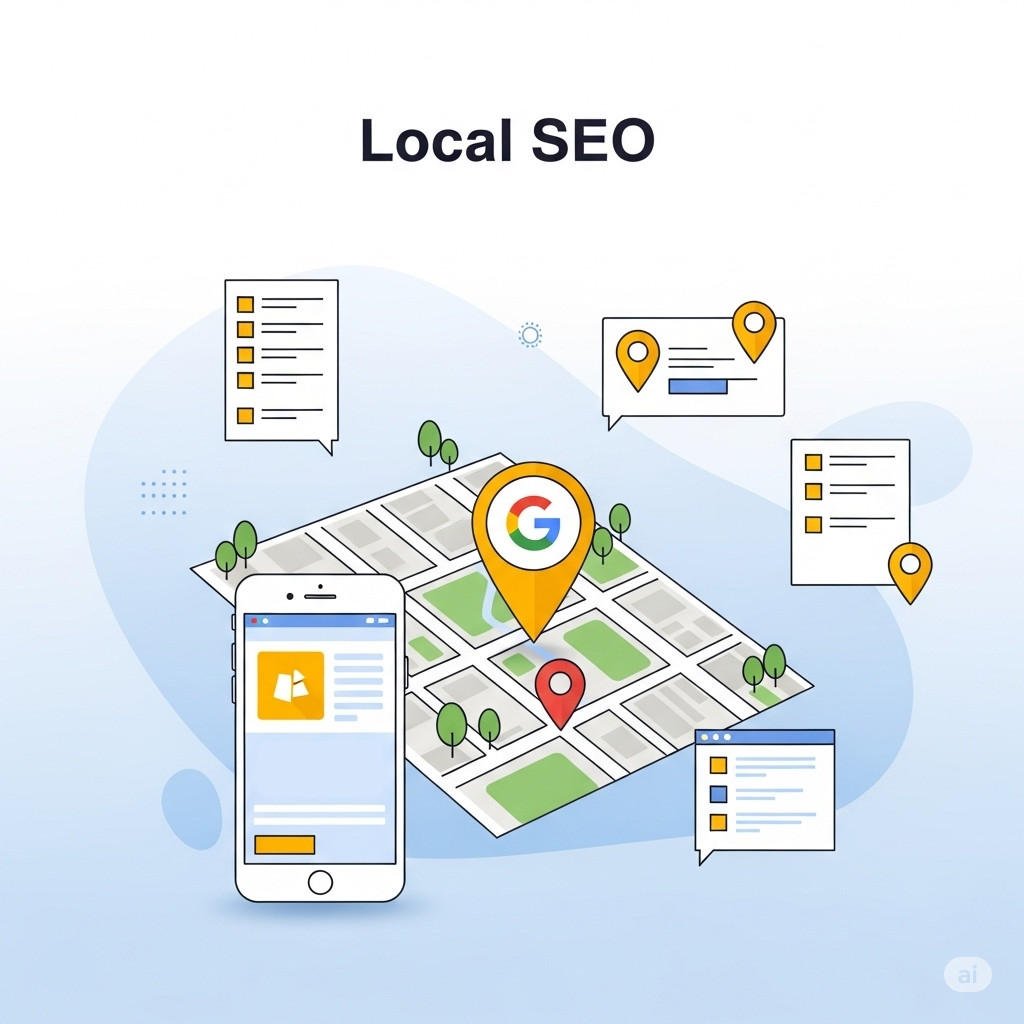
Local SEO Tips: How to Boost Your Business Visibility in Your Neighborhood

If you run a local business, ranking well in local search results can be a game-changer. Local SEO (Search Engine Optimization) helps your business show up when people nearby search for the products or services you offer. Whether you own a cafe, a law firm, a salon, or a home service company, optimizing your local SEO can drive more foot traffic and qualified leads to your business.
Here are some proven Local SEO tips to help you get noticed by
... Continue reading
Posted in Business, Marketing, Search Engine Optimization (SEO)
Tagged authority, backlinks, clean code, conversational keywords, fast-loading times, Google Business Profile, guest posts, heading, headings, keywords, local authority, local backlinks, local content marketing, local keywords, local marketing, local reviews, local search optimization, local seo, local SEO tips, meta description, mobile SEO, mobile-friendly, responsive, responsive app, schema.org, search engine optimization, seo, seo tips, structured data markup, target keywords, title tags, user experience, voice search
Leave a comment
SEO Tips: How to effectively use keywords on your webpage?

Using keywords effectively is one of the most important aspects of SEO. However, the "old school" method of stuffing keywords into your content is no longer effective and can actually penalize your site. In 2026, search engines prioritize natural language, user intent, and E-E-A-T (Experience, Expertise, Authoritativeness, and Trustworthiness).
Here is how to effectively place and use keywords to help your webpage rank higher while keeping your content human-centric.
1. The Strategic Placement: Where Keywords Matter Most
Search engines
... Continue reading
Posted in Ask David!, Search Engine Optimization (SEO)
Tagged accessibility, E-E-A-T, header tags, image alt text, increase traffic, keywords, long-tail keywords, search engine optimization, search engine optimization tips, search engine ranking, seo, synonyms, target keywords, title tag, url structure, user intent
Leave a comment
What are some white hat SEO tricks and tips for boosting organic traffic?

Looking to increase your website’s organic traffic without cutting corners? These white hat SEO strategies focus on long-term, sustainable growth by playing by the rules and delivering real value.
🎯 Target Long-Tail Keywords
While high-volume keywords are tempting, they’re also highly competitive. Instead, focus on long-tail keywords - more specific search phrases your target audience actually uses. These give you a better chance of ranking and attracting qualified traffic.
📝 Craft Compelling Titles & Descriptions
Your titles and meta descriptions
... Continue reading
Posted in Ask David!, Search Engine Optimization (SEO)
Tagged accessibility, alt tags, alt text, authority, backlinks, build trust, clean code, fast-loading website, google my business listing, google search results, guest blogging, HARO, help a reporter out, internal linking, internal links, link juice, local seo, long-tail keywords, meta description, mobile friendly, optimize images, organic growth, organic traffic, page speed, responsive, responsive app, rich snippets, seo strategies, seo tips, seo tool, seo tricks, share expertise, star ratings, website speed, white hat
Leave a comment
Do Professional Writers Still Need SEO in the Age of AI?

With AI tools flooding the web with generic, automated content, many professional writers are asking the same question: If you have 10+ years of writing experience, do you still need to learn SEO to stay relevant?
The short answer is no - you don't need to become a technical SEO engineer. But you do need to understand content SEO: how people search, what they are actually looking for, and how modern search engines and AI assistants discover and understand
... Continue reading
Posted in AI, Search Engine Optimization (SEO), Web Content
Tagged ai, ai slop, authority, bloat, content seo, core web vitals, crawl budget, fast website, fresh content seo, header tags, javascript, keyword stuffing, schema markup, search intent, seo, site architecture, sitemap, technical seo, third-party plugins, writer, xml, xml sitemap
Leave a comment
Search Engine First vs. People First Content: Why Generic FAQ Dumps Harm Your SEO

For years, a common SEO tactic dominated web design: take a page, scroll to the bottom, and drop in a generic FAQ block.
The strategy seemed logical on paper. If you added ten accordion-style questions loaded with long-tail keywords, you’d hit a higher word count, capture extra search queries, and bump up your page’s relevance.
Today, that exact strategy can actively hurt your site’s search rankings.
Google’s algorithms have evolved to target what they explicitly term "search-engine-first content" - pages
... Continue reading
Posted in Search Engine Optimization (SEO), Web Content
Tagged ai slop, boost conversions, bounce rate, build trust, clean structure, crawlers, engagement signals, faq, fast website, generate value, google algorithm, help center, helpful content, high-quality content, indexing, keyword research, keyword research tool, keyword stuffing, knowledge base, llm, long-tail keywords, people-first content, search engine ranking, search-engine-first content, seo, target keywords, useful content, user experience
Leave a comment
The Right Way vs. The Wrong Way to Do Programmatic SEO (pSEO)

If you’ve been tracking digital marketing trends lately, you’ve likely run across the phrase Programmatic SEO (pSEO). The pitch is incredibly seductive: instead of writing blog posts one by one, you connect a database to a page template, press a button, and instantly deploy thousands of pages targeting long-tail search terms.
Traffic multiplies overnight, you dominate the search engine results pages (SERPs), and you win.
Except, that’s exactly how you get your entire domain penalized and deindexed.
... Continue reading
Posted in Search Engine Optimization (SEO)
Tagged algorithm changes, authority, automated page generation, bloat, core web vitals, database, duplicate content, google algorithm, google algorithm penalties, Google Search Console, google search engine ranking, indexing, long-tail keywords, organic traffic, plugins, programmatic seo, pseo, scalable, scaled content abuse, search engine results pages, seo, serps, spam, thin content, third-party plugins, trust, trustworthy, url structure, visibility, webflow, WordPress
Leave a comment
How can I avoid “AI SEO sludge”? aka AI Slop

The obvious simple answer is: stop using AI entirely, right?!
But that is not the only answer.
If you use AI - don't treat it like an autopilot content machine. The moment you use it as a “set-and-forget” SEO tool, the quality usually collapses.
The web is already flooded with low-value AI-generated filler - repetitive articles written mainly to chase rankings instead of helping people. That’s what we call AI SEO sludge (or AI slop). And guess what? It's not
... Continue reading
Posted in AI, Search Engine Optimization (SEO), Web Content
Tagged ai, ai seo sludge, ai slop, AI-generated content, authority, bounce rates, engagement, experience, expertise, indexed pages, search engine ranking, search visibility, seo, thin content, thin pages, trust, trustworthy, user intent, visibility
Leave a comment
How Fast Can Traffic Grow From Only SEO?

If you’ve launched a website and decided to rely only on SEO, you’re probably asking the same question many founders quietly worry about:
Is this growth normal… or am I stuck?
Maybe your site has been live for a month or two. You haven’t promoted it. No ads. No social pushes. Just search traffic. Organic traffic. You’re seeing a few hundred users trickle in, engagement looks good, and things are slowly climbing - but you don’t know what
... Continue reading
Posted in Search Engine Optimization (SEO), Website Traffic
Tagged bloat, bounce rate, build trust, clarity, core web vitals, engagement, engagement metrics, fast loading, fast loading times, fast website, Google Search Console, javascript, keywords, kiss, organic traffic, plugins, search engine optimization, search intent, seo, SEO metrics, simple website design, thin pages, third party plugins, traffic
Leave a comment
What Is YMYL and Why It Matters for Your Website’s SEO

Understanding Google’s High-Stakes Quality Standards for “Your Money or Your Life” Pages
If your website offers information that could affect a person’s finances, health, safety, or overall well-being, you need to know about YMYL - short for Your Money or Your Life. Google uses this term to classify high-impact web content and applies especially strict quality standards to it. For business owners, bloggers, and developers, understanding YMYL and how to meet Google’s expectations is key to gaining visibility -
... Continue reading
Posted in Search Engine Optimization (SEO)
Tagged about page, accurate, authority, brand authority, cite sources, credibility, e-commerce, E-E-A-T, financial information, higher standard, https, legal information, list credentials, medical information, news, niche, online shopping, public affaris, reviews, search engine optimization, sensitive niche, seo, seure, testimonials, trustworthy, visibility, website ranking, ymyl, your money or your life
Leave a comment
10 Expert Tips for Writing SEO-Friendly Blog Content
Want your blog to rank higher and attract more readers? These 10 expert tips will help you write SEO-friendly content that gets noticed by both search engines and your audience.
1. Start with Keyword Research
Use tools like Google Keyword Planner, Ahrefs, or Ubersuggest to find keywords your target audience is searching for. Focus on a primary keyword and related secondary keywords to guide your content.
Related: Think Twice Before Using Ahrefs’ New Web Analytics: Are You Giving Away
... Continue reading