





-
Recent Posts
- “My Partner Wants to Use WordPress Because 50% of the Web Uses It. Help!”
- Does EmDash Solve WordPress’s Problems, or Do You Need UltimateWB?
- How Not to Use AI: Stanford University Can Tell You
- Best Website Builder for SEO: WordPress vs. Wix vs. UltimateWB
- How to Make Sure Your Website Colors Have Enough Contrast for Accessibility
- Mobile-Friendly Website Checklist: 20 Things to Check
- Beehiiv Website Builder Review: The Problem Isn’t the Design – It’s the Lack of Control
- Elementor’s “Angie” AI Is More Than Bloat: Credits, Subscriptions, and a Growing Platform Problem
- How to Pass Google Business Profile Video Verification for Service Businesses
- The Great Deskilling: Why AI Dependence is Turning Developers into Prompt Babysitters
- The Three-Month Fuse: The Everest Forms Pro Attack and Why a Patched Plugin Can Still Put Websites at Risk
- Computer Screen Has Black Bars on the Sides: How to Fix It
- Could AI Make Humans Extinct Within the Next Decade?
- Is Weebly Getting Out of the Website-Builder Business?
- Are You “Leaking SEO” by Linking to Other Websites?
- Wix Harmony Is Now in Google Gemini. So Why Are Users Still Complaining?
- When AI Sounds Confident but Gets It Wrong: The Mount Shasta Rescue
- When AI Agents Start Working Together, Who Is Really in Control?
Categories
Search Results for: e-commerce
Why Google Deindexed 99% of My E-Commerce Site Overnight – And How to Fix “Crawled – Currently Not Indexed”

You log into Google Search Console (GSC) and see a vertical cliff. A WooCommerce (why didn't you use UltimateWB?!) store that held 5,000+ stable product URLs for months is suddenly down to just a handful of indexed pages. Your core catalog is completely gone. At least your homepage is left standing, you say to yourself.
You run the standard technical triage checklist:
- Robots.txt? Clean.
- Noindex tags? None. Everything is set to index, follow.
- Canonical tags? Correct and self-referencing.
Posted in E-commerce, Search Engine Optimization (SEO)
Tagged 301 redirect, algorithm changes, algorithmic filtering, bloat, bottlenecks, canonical tag, canonical tags, core updates, crawl priorities, crawl stats, crawled, crawled not indexed, database bottlenecks, deindexed, duplicate content, fast website, google algorithm penalties, Google Search Console, Googlebot, gsc, hpos, html, http errors, indexed, indexing, javascript, malware, noindex, noindex tag, pagespeed insights, performance bottlenecks, quality content, rendered html, robots.txt, security flags, seo, server log, site-wide quality signals, sitemap, soft 404, submit sitemap, technical penalty, technical seo, test live url, thin content, time to first byte, ttfb, unique value, url inspection tool, visibility, woocommerce, WordPress
Leave a comment
GoDaddy Storefront Disaster: Why a Forced Update Is Scrambling E-Commerce Sites

If you are currently running an online shop on GoDaddy’s all-in-one website builder, you might want to log into your dashboard and check your active inventory right now.
Over the last few days, a massive wave of store owners have taken to community forums and subreddits to report what is being called a complete "storefront disaster." GoDaddy has been quietly executing a massive, mandatory overhaul to the commerce backend of their Websites + Marketing platform.
This wasn't an optional migration
... Continue reading
Posted in Compare Website Builders, E-commerce, Technology in the News
Tagged bloat, bugs, clear browser cache, data corruption, e-commerce, forced updates, godaddy, godaddy alternative, godaddy storefront disaster, google merchant center, hosted website builder, incognito, inventory, third-party plugins, WordPress
Leave a comment
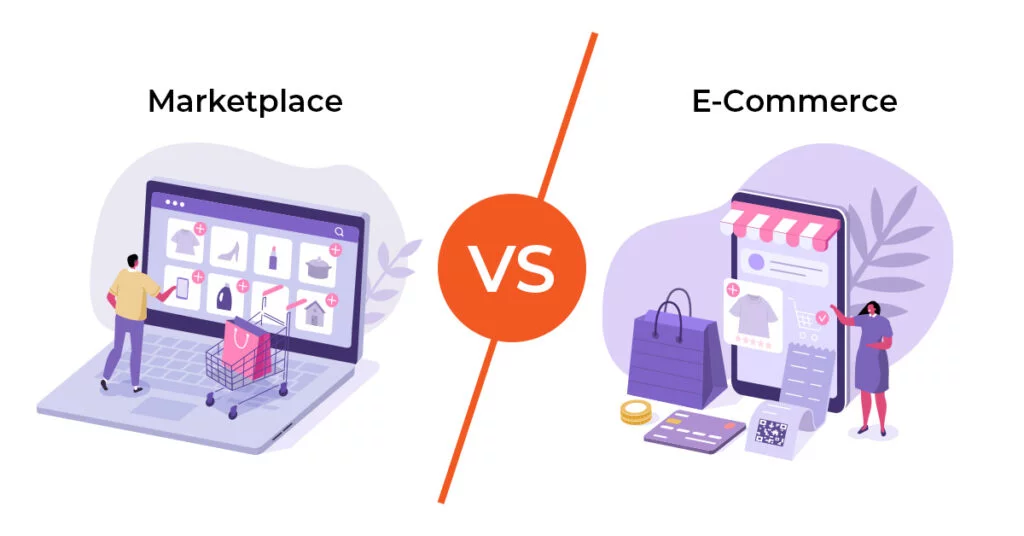
E-commerce vs Marketplace: What’s the Difference?

When you’re planning to start an online business, one of the first decisions you’ll face is what kind of platform you actually need. Should you build a traditional e-commerce store where you sell your own items? Or should you create a marketplace where many sellers can list their products, like Etsy, Amazon, or eBay?
These terms get mixed up a lot, but they represent two very different business models - each with its own setup, features, and management style.
... Continue readingWhat are the essential elements of an e-commerce website? What is the basic structure for e-commerce websites?

An effective eCommerce website needs to be both user-friendly and informative to convert visitors into satisfied customers. Here's a breakdown of the essential elements and a basic structure to guide you:
Essential Elements:
- User-Friendly Navigation: Imagine your website as a well-organized store. Customers should be able to effortlessly browse through categories, subcategories (if you have a lot of items), and
Posted in Ask David!, E-commerce
Tagged branding, categories, checkout, convert traffic, coupons, e-commerce, easy navigation, faqs, high-quality images, high-quality product pages, high-resolution images, informative, mobile-friendly, online store, product pages, promotions, responsive, secure sockets layer, security, shopping cart, ssl, sub categories, trust, user-friendly
Leave a comment
What are some specific examples of how immersive technology is being used in e-commerce?

Immersive technology is steadily transforming the e-commerce landscape, blurring the lines between online and physical shopping experiences. What's great is that you don't have to build your website from scratch to incorporate it, you can use the very flexible and customizable UltimateWB. Here are some exciting examples of how immersive technology is being used:
1. Virtual Try-On:
- Clothes, shoes, and accessories can be virtually "worn" using augmented reality (AR) filters on social media platforms or dedicated apps. This allows customers to visualize
Posted in Ask David!, Business, E-commerce
Tagged 3D product visualization, ai-powered algorithms, customer's browsing history, e-commerce, immersive virtual store, interactive showroom, online store, personalized product recommendations, product demos, virtual reality, virtual store, virtual try-on, vr
Leave a comment
What are the steps to do an e-commerce website SEO?

Optimizing an e-commerce website for SEO (Search Engine Optimization) is crucial to drive organic traffic and improve your online visibility. Here are the steps to effectively perform e-commerce website SEO:
- Keyword Research:
- Start by researching relevant keywords that your potential customers are likely to use in search engines. Use tools like Google Keyword Planner, SEMrush, or Ahrefs to identify high-value keywords.
- On-Page SEO:
- Optimize each product page and category page with target keywords in mind. This includes optimizing
Posted in Ask David!, E-commerce, Search Engine Optimization (SEO)
Tagged alt tags, backlinks, blogging, content creation, content marketing, e-commerce, fast loading times, https, keywords, meta description, mobile friendly, navigation menu, on-page seo, responsive app, search engine optimization, secure website, seo, sitemap, sitemap generator, target keywords, title, user experience, user-friendly, ux, xml, xml sitemap
Leave a comment
What is the optimum number of products per page in an e-commerce website for a good user experience?

The optimum number of products per page in an e-commerce website for a good user experience can vary depending on a number of factors, including the nature of the products, the target audience, and the overall design and layout of the website. However, some general guidelines include:
- For visually driven products, such as clothing and home goods, it is generally recommended to display between 12 and 24 products per page. This allows users to see a variety of products at
Posted in Ask David!, Website Design
Tagged e-commerce, products per page, user friendly
Leave a comment
What is the difference between e-commerce and online classifieds?

With e-commerce you usually have a shopping cart and check out process. With classifieds there are multiple sellers, posting their items and advertisements, and the interaction is usually on a per ad basis. You can integrate either - or both - easily on your website with UltimateWB - it has a built-in e-commerce app and classifieds app. You can use the auctions app with the classifieds app, to allow bidding on items. Check out the difference in look and features
... Continue readingWhat is the purpose and how do I set up a sitemap on my e-commerce website?
A sitemap is a good way to tell the search engines what webpages they should crawl, to index your pages quicker and easier. You can setup up a sitemap easily with UltimateWB - it has a built-in sitemap generator, as well as an e-commerce app and social networking apps.
Got a techy/website question? Whether it’s about UltimateWB or another website builder, web hosting, or other aspects of websites, just send in your question in the “Ask David!” form. We
... Continue readingWhat is the best website builder for an e-commerce or classified business?
UltimateWB - it has both a built-in e-commerce app and classifieds app, plus an auctions app too that you can activate with the classifieds app, to allow for bidding. UltimateWB has lots of features and ways to monetize your website, besides just posting ads. It’s very easy to use, fast, flexible, and customizable.
Check out these Related Posts for more in-depth discussion of what is the best classifieds website builder and how to build your own classifieds website and monetize
... Continue reading